

Table of Contents
Introduction
In today’s competitive manufacturing environment, bringing products to market quickly without compromising quality is a major challenge for engineering teams. Every design decision influences manufacturing, assembly, cost, and project timelines. While traditional 2D drawings continue to play a vital role in production and fabrication, they are no longer sufficient as the primary design approach for developing increasingly complex products.
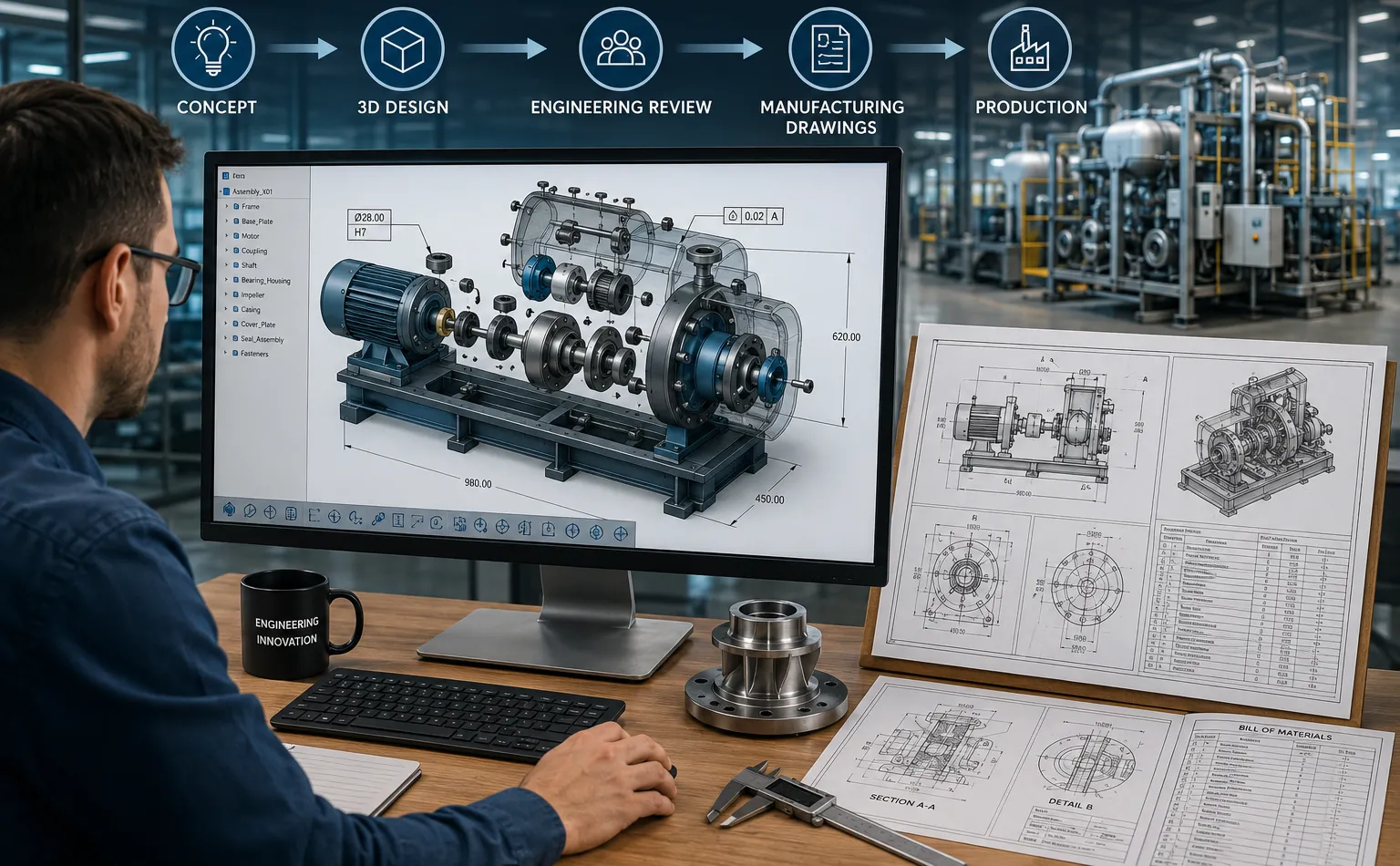
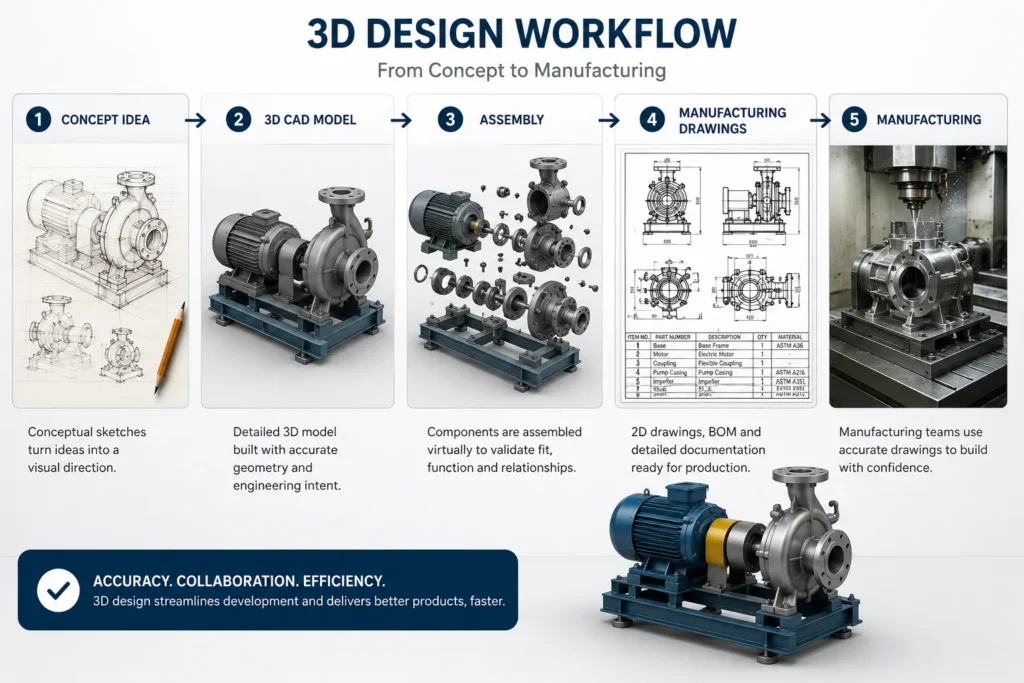
Modern product development relies on 3D Design to create accurate digital representations of products before they are manufactured. A well-developed 3D model enables engineers to visualize components, evaluate assemblies, validate designs, and communicate ideas more effectively across departments. Manufacturing drawings, assembly drawings, and production documentation can then be generated from the approved 3D model, ensuring consistency throughout the product development process.
This model-based approach helps engineering teams identify potential issues earlier, improve collaboration, reduce unnecessary design revisions, and accelerate product development. Whether designing industrial machinery, sheet metal products, process equipment, furniture systems, or custom-engineered assemblies, 3D Design has become an essential part of modern engineering workflows.
In this article, we’ll explore how 3D Design improves product development, why it offers significant advantages over relying solely on 2D drawings during the design phase, and how adopting a 3D-first approach supports better engineering outcomes.
What Is 3D Design in Engineering?
3D Design is the process of creating a digital three-dimensional representation of a product, component, or assembly using CAD (Computer-Aided Design) software. Unlike traditional 2D drafting, which represents an object through separate orthographic views, a 3D model provides a complete and accurate representation of the product from every angle.
A properly developed 3D CAD model contains much more than geometry. It represents the product’s dimensions, relationships between components, assembly structure, and design intent. Engineers can rotate, section, inspect, and evaluate the model long before manufacturing begins.
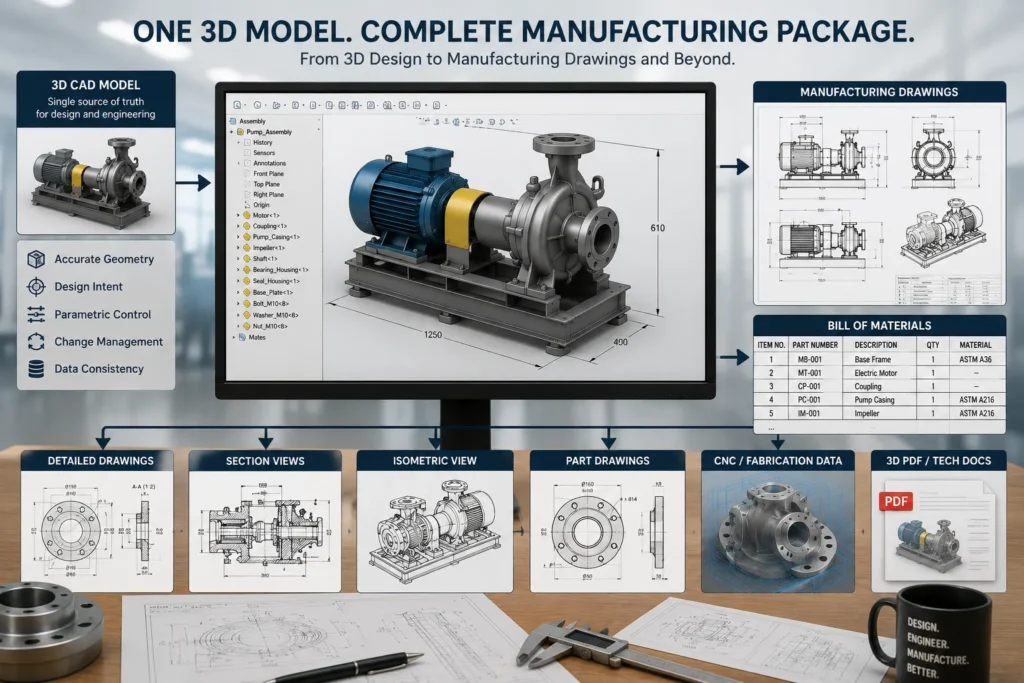
Once the design is finalized, the same 3D model becomes the foundation for generating:
- Manufacturing drawings
- Assembly drawings
- Detail drawings
- Exploded views
- Bills of Materials (BOMs)
- Production documentation
Instead of creating drawings independently, engineering teams maintain a single digital source that keeps design information organized and consistent throughout the project.
As products become more sophisticated and customer expectations continue to rise, 3D Design has evolved from being a competitive advantage to an industry standard across many manufacturing sectors.
Why 2D Drawings Alone Are No Longer Enough
For decades, engineering products were designed primarily using 2D drawings. These drawings remain indispensable for manufacturing, machining, fabrication, quality inspection, and regulatory documentation. However, relying only on 2D drawings during the product development stage can make it more difficult to visualize complex products and communicate design intent effectively.
A 2D drawing represents an object through multiple views such as front, top, side, and sectional views. Engineers with extensive experience can interpret these drawings efficiently, but they often require careful analysis to understand how different components fit together within an assembly.
As products become larger and more complex, interpreting multiple drawing sheets can become time-consuming for engineering teams, manufacturing personnel, suppliers, and clients who may not have the same level of technical expertise.
A 3D model addresses these challenges by allowing stakeholders to view the complete product in a realistic digital environment. Instead of interpreting several orthographic views, teams can inspect the model directly, understand component relationships, and evaluate the overall design with greater confidence.
This improves communication across departments while reducing misunderstandings during design reviews.
It’s important to note that 3D Design does not replace 2D manufacturing drawings. Rather, it complements them. The 3D model becomes the master engineering model, while the required manufacturing drawings are generated from that model for production and documentation purposes.
This model-based workflow provides greater consistency and reduces the risk of discrepancies between design and documentation.
How 3D Design Improves Product Development
Better Product Visualization
One of the biggest advantages of 3D Design is its ability to improve product visualization.
Traditional drawings require viewers to mentally combine multiple views to understand the final product. While experienced engineers are comfortable doing this, it can be challenging for project managers, procurement teams, clients, production supervisors, and other stakeholders.
A 3D model removes much of this complexity.
Engineers can rotate the model, zoom into critical areas, create cross-sections, isolate components, and examine assemblies from any angle. This provides a much clearer understanding of the product before manufacturing begins.
Improved visualization also leads to more productive design review meetings because discussions focus on actual product geometry rather than interpreting drawings.
For organizations working with customers on custom-engineered products, 3D Design also improves communication during concept approval by allowing clients to visualize the proposed solution more clearly.
Improved Communication Across Engineering Teams
Successful product development depends on effective collaboration between multiple teams, including design engineering, manufacturing, procurement, quality, project management, and customers.
When everyone works from the same 3D model, communication becomes more consistent.
Instead of discussing individual drawing sheets, teams can review the complete assembly together. Engineers can explain design intent more effectively, manufacturing teams can identify practical production considerations, and project stakeholders can better understand how different systems interact.
This shared understanding helps reduce confusion during design reviews and supports faster decision-making throughout the development process.
For organizations with distributed engineering teams or international customers, 3D models also simplify technical discussions by providing a common visual reference.
Early Design Validation Before Manufacturing
Identifying design issues during manufacturing is significantly more expensive than identifying them during the design stage.
One of the major strengths of 3D Design is that it enables engineers to evaluate the product digitally before production begins.
Engineers can review:
- Component fitment
- Assembly relationships
- Space availability
- Accessibility for maintenance
- Overall product layout
Many modern CAD systems also provide tools for interference detection and assembly validation, helping engineers identify potential clashes or clearance issues before releasing the design for manufacturing.
Although physical prototypes may still be required depending on the product and application, validating the design digitally helps reduce unnecessary iterations and supports a more efficient product development process.
Easier Design Modifications Throughout the Development Process
Engineering projects rarely remain unchanged from concept to production.
Customer feedback, manufacturing requirements, regulatory updates, supplier availability, and design improvements often require modifications throughout the project lifecycle.
With a well-structured 3D Design, engineers can implement these changes more efficiently than when working primarily with standalone 2D drawings.
Since the model serves as the central engineering reference, updates can be managed in a more controlled manner. Associated manufacturing drawings and documentation can then be regenerated from the updated model, helping maintain consistency across project deliverables.
This reduces the effort involved in manually updating multiple independent drawing sheets and lowers the likelihood of documentation inconsistencies.
As a result, engineering teams can respond more quickly to design changes while maintaining better control over project documentation.
Better Design Reviews and Faster Decision-Making
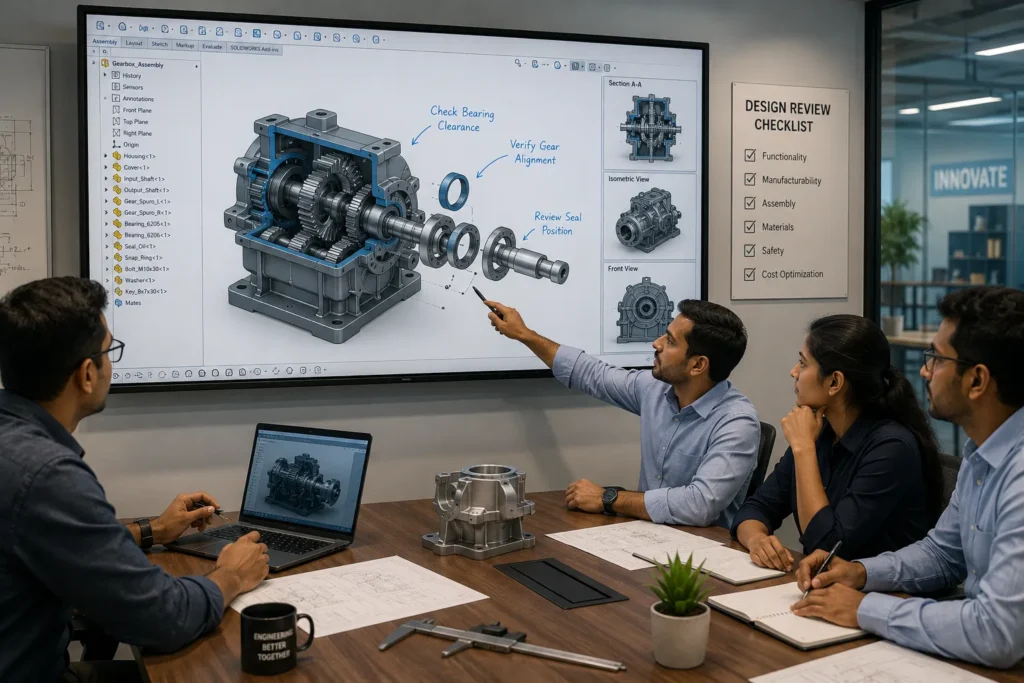
Design reviews play a critical role in ensuring products meet functional, manufacturing, and customer requirements before production begins.
When reviews are conducted using only 2D drawings, participants often spend valuable time interpreting different views, clarifying dimensions, and understanding how components fit together.
A comprehensive 3D model makes these discussions significantly more efficient.
Review teams can examine assemblies interactively, inspect hidden components, evaluate design intent, and communicate observations more effectively. This allows meetings to focus on solving engineering challenges rather than interpreting technical documentation.
Clearer visualization also enables quicker feedback from customers and internal stakeholders, reducing delays between review cycles and helping projects move through development more efficiently.
Improved Accuracy in Manufacturing Drawings
Manufacturing drawings remain the primary reference for fabrication, machining, assembly, and quality inspection. However, their accuracy depends heavily on the design information from which they are created.
When drawings are generated from a well-developed 3D Design, they are based on the latest approved product model. Dimensions, sections, component relationships, and assembly details remain consistent with the design, helping engineering teams produce reliable manufacturing documentation.
This model-based approach also makes it easier to update drawings when design revisions occur. Instead of manually recreating multiple views, engineers can update the 3D model and regenerate the necessary drawings, reducing the possibility of inconsistencies between the model and the documentation.
Accurate manufacturing drawings improve communication between design and production teams, helping manufacturers build products according to the intended design while minimizing clarification requests during fabrication.
Reduced Design Rework and Improved Engineering Efficiency
Engineering rework is one of the most common reasons product development projects exceed their planned timelines. Design changes are a natural part of the development process, but excessive revisions caused by unclear communication or incomplete visualization can significantly affect project efficiency.
A 3D Design helps reduce unnecessary rework by allowing engineers to evaluate the product more thoroughly before manufacturing begins.Once the design has been validated, organizations can further improve engineering efficiency through CAD Automation, which helps streamline repetitive documentation tasks, drawing generation, and other standardized engineering workflows.
Manufacturing teams can provide practical feedback earlier in the development process, while customers can better visualize the final product before approvals are given. This collaborative approach helps identify concerns sooner, reducing the likelihood of major revisions later in the project.
Although every engineering project will require some level of iteration, working from a detailed 3D model supports a more structured and efficient design process.
Supporting Better Collaboration Throughout the Product Lifecycle
Product development involves more than just the design department. Procurement teams, manufacturing engineers, quality personnel, project managers, suppliers, and customers all rely on engineering information to make informed decisions.
A shared 3D Design provides a common visual reference that improves collaboration throughout the entire product lifecycle.
For manufacturing teams, the model offers a clearer understanding of assemblies and component relationships. Procurement teams can better understand purchased parts and assemblies. Quality teams can review inspection requirements with greater clarity, while customers gain confidence by visualizing the product before production begins.
Because everyone works from the same digital model, communication becomes more consistent, reducing misunderstandings and improving coordination across departments.
Applications of 3D Design Across Industries
The benefits of 3D Design extend across a wide range of engineering and manufacturing industries. Regardless of product complexity, creating an accurate digital model before manufacturing helps improve visualization, documentation, and engineering collaboration.
Some common applications include:
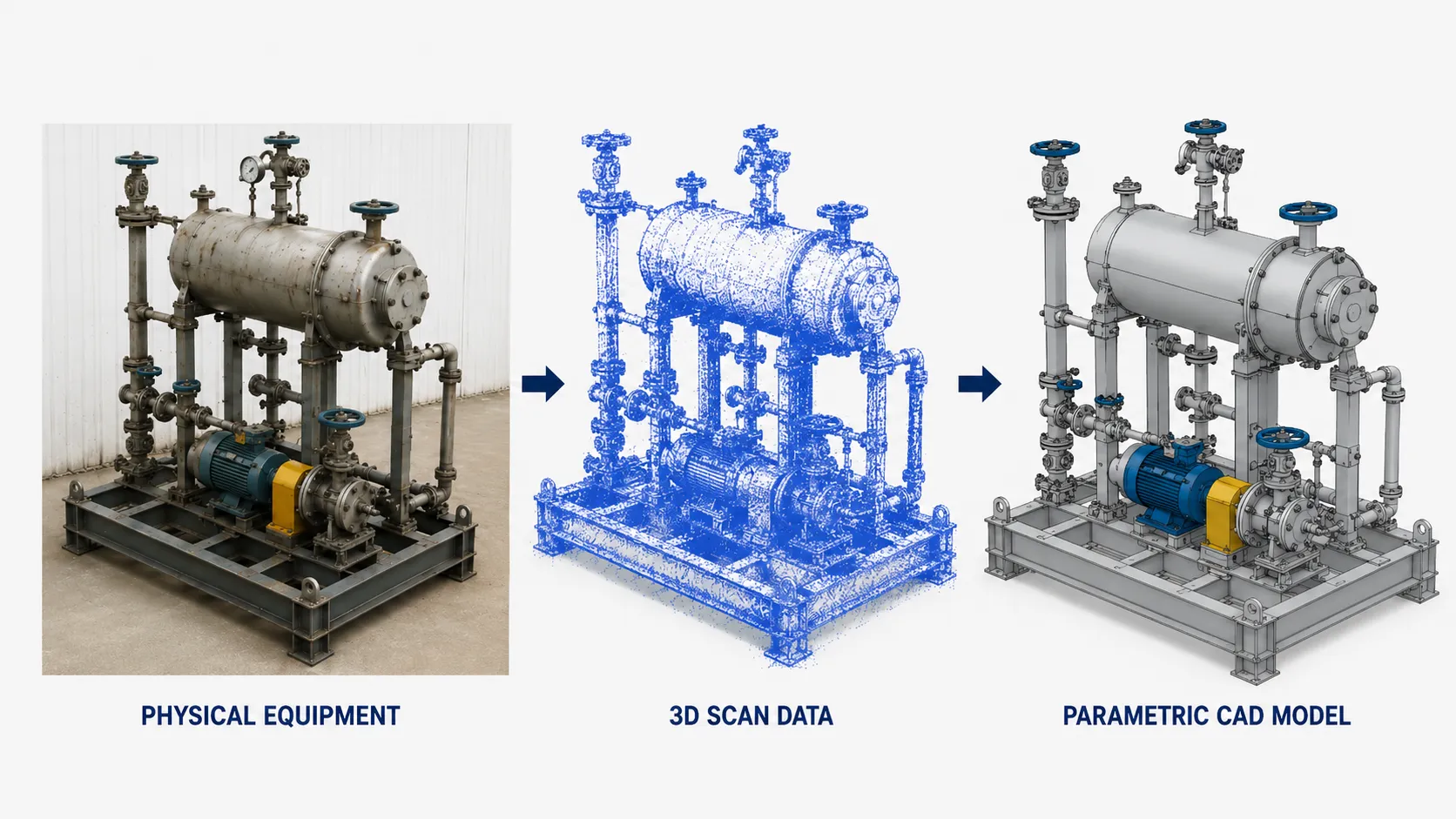
- Industrial Equipment : Industrial machinery often consists of multiple assemblies, structural components, rotating equipment, piping, and fabricated parts. A 3D model allows engineers to evaluate how these systems integrate before manufacturing begins.
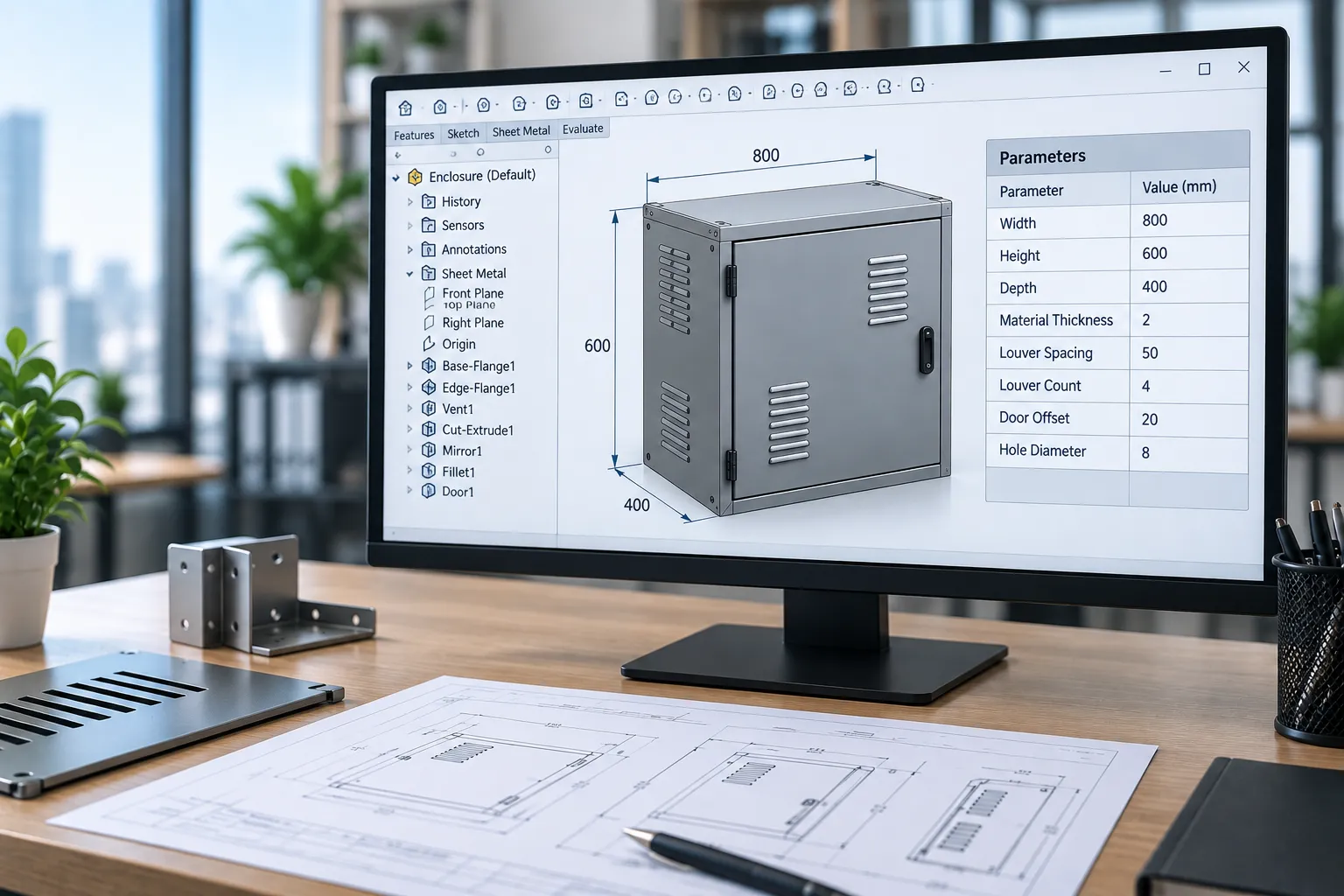
- Sheet Metal Products : From electrical enclosures and cabinets to machine guards and fabricated assemblies, 3D Design helps engineers validate bends, clearances, mounting features, and assembly requirements while producing accurate manufacturing drawings.
- Process Equipment : Pressure vessels, process skids, tanks, piping systems, and other process equipment benefit from 3D modeling by improving layout planning, equipment visualization, and interdisciplinary coordination during engineering.
- Furniture and Modular Systems : Manufacturers of office furniture, laboratory furniture, storage systems, and modular products use 3D Design to develop configurable assemblies, evaluate ergonomics, and generate production-ready documentation.
- Custom Machinery : Every custom machine presents unique engineering challenges. A detailed 3D model enables teams to review motion, assembly sequences, component interfaces, and manufacturing feasibility before production starts.
Across these industries, adopting a 3D-first design approach helps improve product quality while supporting more efficient engineering workflows.
Why More Manufacturers Are Adopting a 3D-First Design Approach
As manufacturing projects become more complex, companies are increasingly moving away from workflows that rely primarily on standalone 2D drawings during the design phase.
Instead, many engineering organizations now develop a complete 3D Design first and use it as the foundation for generating manufacturing drawings and production documentation.
This approach offers several practical advantages:
- Improved visualization during concept development
- Better communication between engineering and manufacturing teams
- Easier review of assemblies and component relationships
- More efficient management of design revisions
- Consistent manufacturing documentation generated from a single engineering model
- Better support for downstream activities such as rendering, technical illustrations, assembly animations, and product visualization
By making the 3D model the central source of engineering information, organizations can build a more connected and efficient product development process.
How Immersiv Techsphere Supports Product Development Through 3D Design
At Immersiv Techsphere, we help manufacturers and engineering companies transform product concepts into accurate, production-ready engineering models.
Our team develops detailed 3D CAD models, assemblies, manufacturing drawings, and engineering documentation for a wide range of industrial applications, including industrial equipment, sheet metal products, process equipment, furniture systems, and custom-engineered machinery.
Our approach focuses on creating well-structured 3D models that support every stage of the product development process—from design visualization and engineering reviews to manufacturing documentation and production.
By combining mechanical design expertise with practical manufacturing knowledge, we help engineering teams build reliable digital models that improve collaboration, simplify design communication, and support efficient product development.
Frequently Asked Questions
3D Design is the process of creating a three-dimensional digital model of a product or component using CAD software. It enables engineers to visualize, evaluate, modify, and validate designs before manufacturing begins.
Both have important roles in engineering. While 2D drawings are essential for manufacturing and fabrication, starting with a 3D model provides better visualization, improves collaboration, and creates a reliable foundation for generating accurate engineering drawings.
Yes. Modern CAD software allows engineers to generate manufacturing drawings, assembly drawings, section views, and Bills of Materials (BOMs) directly from an approved 3D model, helping maintain consistency throughout the documentation.
A well-developed 3D model improves visualization, supports better design reviews, simplifies design modifications, enhances communication between stakeholders, and provides accurate engineering documentation for manufacturing.
Industries such as industrial equipment manufacturing, sheet metal fabrication, process equipment, furniture manufacturing, automation systems, and custom machinery development all benefit from using 3D Design during product development.
No. Manufacturing and fabrication still rely on detailed 2D engineering drawings. A 3D-first workflow simply ensures that those drawings are generated from an accurate digital model, improving consistency and reducing documentation errors.
Conclusion
Successful product development depends on more than innovative ideas—it requires clear communication, accurate engineering data, and well-structured design processes.
While 2D manufacturing drawings remain essential for production, beginning the engineering process with a detailed 3D Design provides significant advantages throughout the product lifecycle. It enables better visualization, supports more effective design reviews, simplifies engineering changes, improves collaboration across departments, and creates a reliable foundation for manufacturing documentation.
As products become more complex and development timelines become increasingly demanding, adopting a 3D model-first approach helps engineering teams make better decisions earlier in the design process while improving overall project efficiency.
Whether you’re developing industrial machinery, process equipment, sheet metal products, or custom-engineered systems, investing in high-quality 3D Design can help streamline product development and support more accurate manufacturing outcomes. These engineering models can also be integrated into Workbench Configurator solutions, allowing manufacturers to offer configurable products while maintaining accurate engineering data throughout the sales and production process.
Ready to Build Your Next Product with Accurate 3D Design?
Whether you’re starting with a concept, upgrading an existing product, or preparing designs for manufacturing, Immersiv Techsphere provides professional 3D Design, mechanical engineering, and manufacturing drawing services tailored to your product development needs.
Our engineering team helps manufacturers transform ideas into accurate digital models and production-ready documentation that supports efficient design reviews, better collaboration, and smoother manufacturing workflows.
Looking to improve your product development process with professional 3D Design?
Get in touch with Immersiv Techsphere to discuss your engineering requirements.