

Introduction
Modern manufacturing is no longer driven only by engineering excellence. Customers expect clear product presentations before making purchasing decisions. Whether you manufacture industrial equipment, laboratory furniture, sheet metal products, process equipment, consumer products, or custom machinery, the way you present your product directly influences customer confidence.
This is where Product Animation and Product Rendering play an important role.
Many manufacturers assume they serve the same purpose, but they solve different business problems. Understanding when to use Product Rendering, when to invest in Product Animation, and when to combine both can significantly improve marketing performance, reduce sales cycles, and increase customer understanding.
In this blog, we’ll compare both approaches from a manufacturing perspective and explain which delivers better business value.
What is Product Rendering?
Product Rendering is the process of creating highly realistic images from a 3D CAD model.
Instead of manufacturing a prototype and arranging expensive photography, manufacturers can generate photorealistic visuals digitally.
A high-quality Product Rendering accurately represents:
- Materials
- Surface finishes
- Colors
- Lighting
- Product proportions
- Manufacturing details
These images are commonly called Product Renders.
They are frequently used across manufacturing websites, brochures, online catalogs, trade show banners, technical documentation, investor presentations, and eCommerce platforms.
Benefits of Product Rendering
Product renders provide several advantages:
- Showcase products before manufacturing
- Reduce product photography costs
- Present multiple product variants quickly
- Create consistent marketing visuals
- Improve customer confidence
- Support faster product launches
Manufacturers can combine realistic renders, CAD-based visuals and other digital assets through a broader 3D product visualization approach, particularly when products need to be presented before physical production.
What is Product Animation?
Product Animation uses the same 3D CAD data but transforms it into motion.
Instead of displaying a static image, animation demonstrates:
- Product operation
- Assembly process
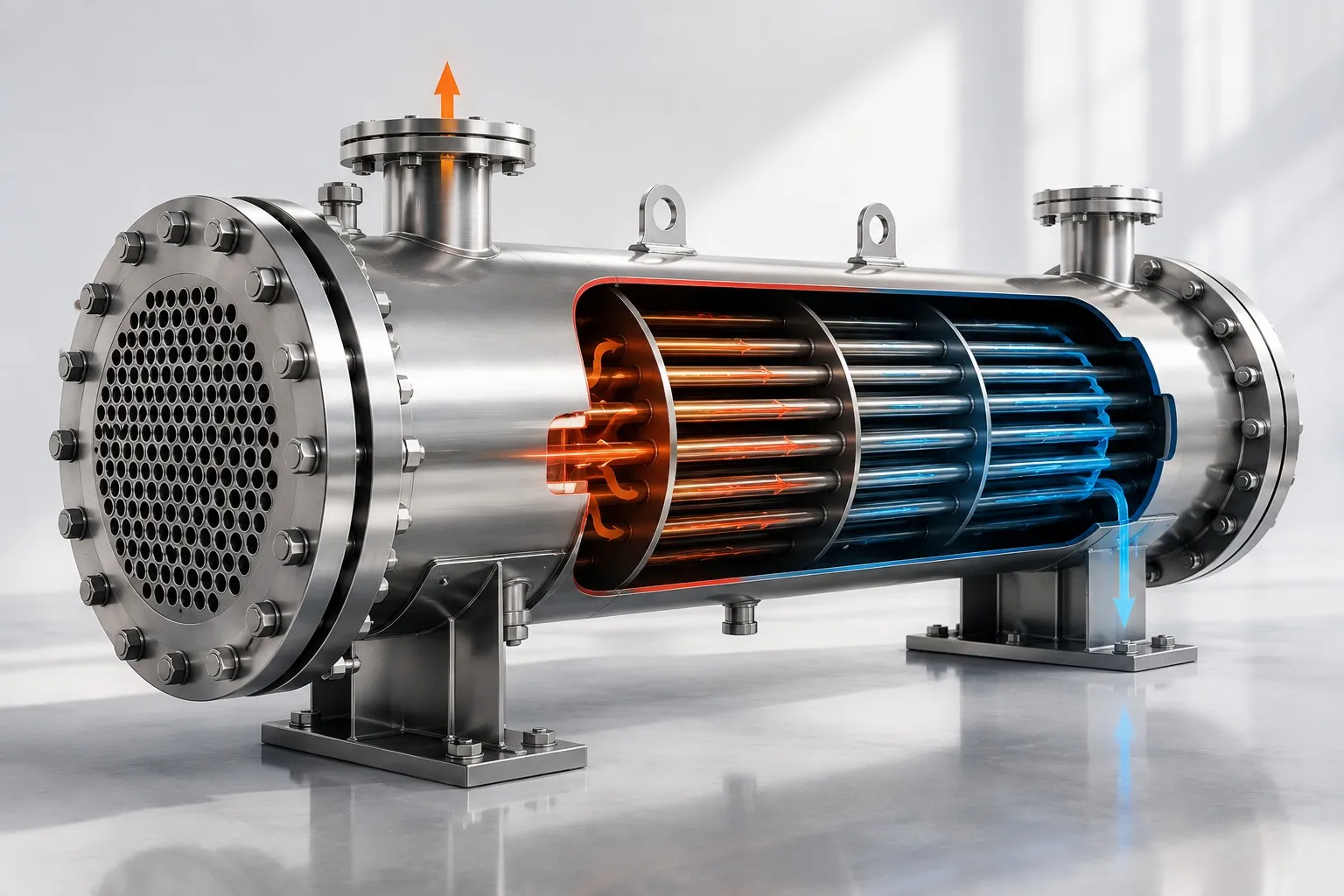
- Internal mechanisms
- Component movement
- Installation procedure
- Maintenance workflow
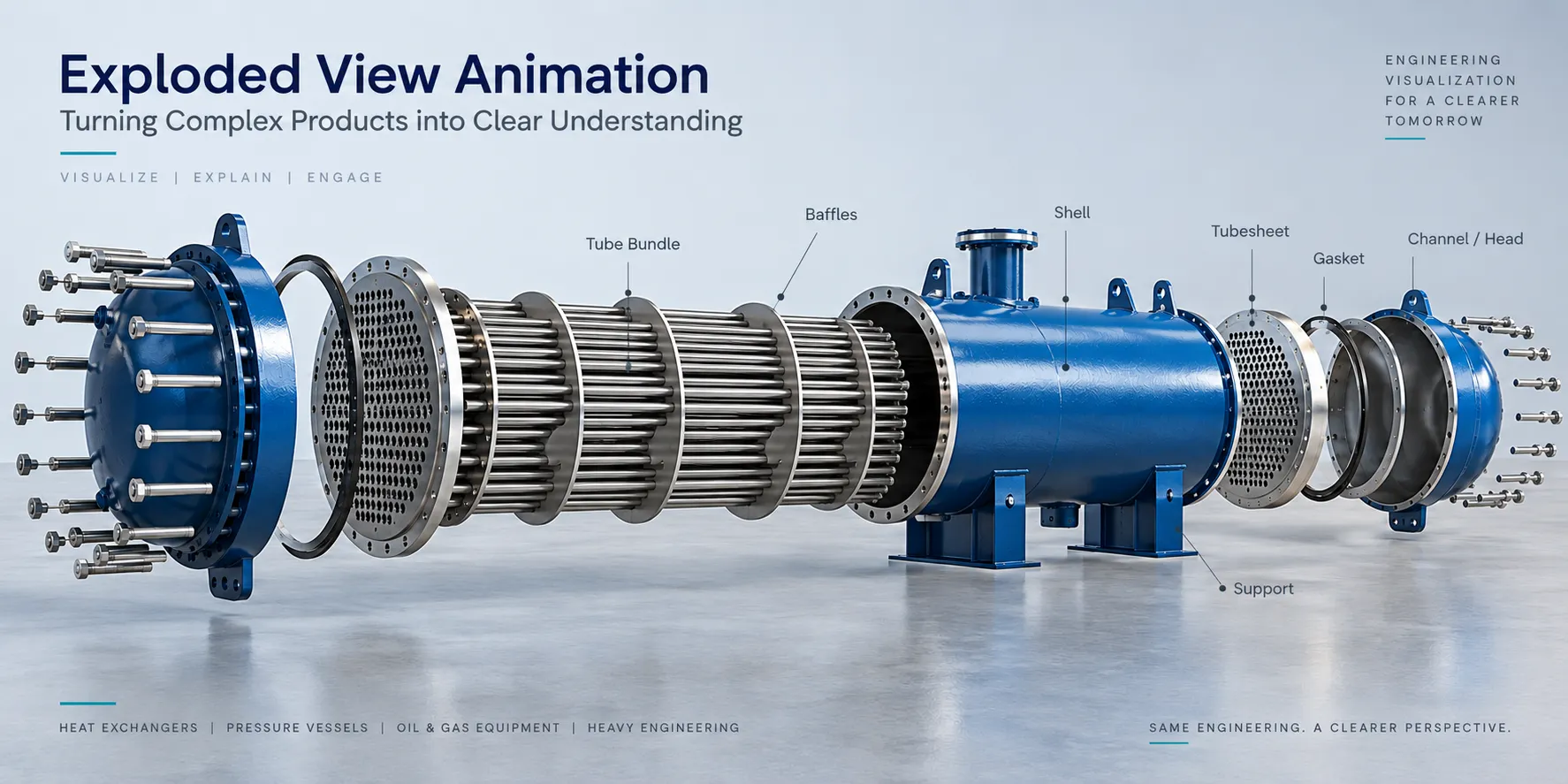
- Exploded views
- Functional advantages
A well-designed Product Animation explains complex engineering concepts that are difficult to communicate using still images.
For industrial manufacturers, Product Animation can be a valuable communication tool because it demonstrates how complex products work rather than simply showing what they look like. For equipment with intricate mechanisms, assembly steps, or operating sequences, 3D product animation and video can simplify technical information for sales presentations, customer demonstrations, training, and maintenance communication.
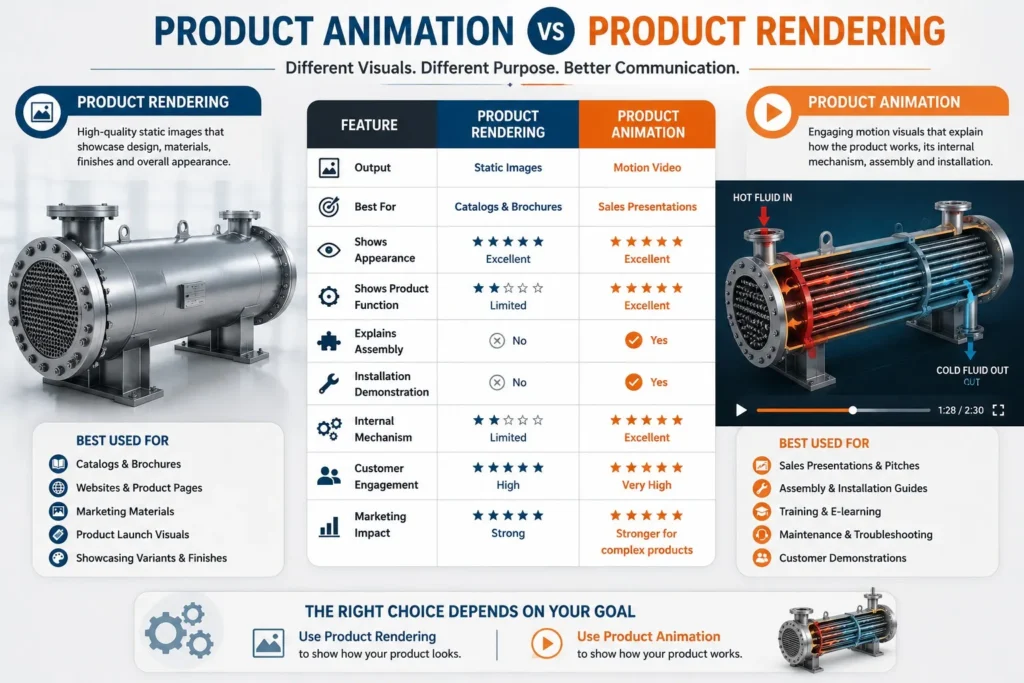
Product Animation vs Product Rendering
When Should Manufacturers Use Product Rendering?
1. Product Launches
Before manufacturing begins, companies can create premium-quality Product Renders for marketing campaigns.
This allows marketing teams to begin promotions even before production starts.
2. Product Catalogs
Manufacturers offering multiple product sizes or configurations can create consistent visuals without photographing every variant.
This is especially useful for:
- Industrial equipment
- Sheet metal products
- Laboratory furniture
- Electrical enclosures
- Storage systems
3. Websites
Modern websites rely heavily on visual content.
Professional Product Rendering helps visitors understand product quality immediately while improving overall website appearance.
4. Trade Show Displays
Large-format banners require extremely high-resolution visuals.
Photorealistic product renders provide crisp graphics suitable for exhibition displays.
5. Online Marketplaces
For manufacturers selling through distributors or digital platforms, realistic product renders improve click-through rates and customer trust.
When Should Manufacturers Use Product Animation?
1. Demonstrating Product Functionality
Many industrial products contain moving assemblies.
Instead of explaining functionality verbally, Product Animation visually demonstrates exactly how the product works.
Examples include:
- Automated machines
- Material handling systems
- Packaging equipment
- Conveyor systems
- Process equipment
- Industrial valves
- Fitness equipment
2. Explaining Complex Engineering
Products often include internal mechanisms that customers never see.
Animations can reveal:
- Fluid flow
- Internal assemblies
- Gear movement
- Valve operation
- Motion sequences
These visuals simplify technical discussions.
3. Sales Presentations
Sales teams frequently spend valuable meeting time explaining product operation.
A two-minute animation often communicates the same information more effectively than multiple presentation slides.
4. Investor Demonstrations
When products are still under development, animation helps stakeholders understand the concept without waiting for a physical prototype.
5. Customer Training
Animations are widely used for:
- Installation guides
- Operating instructions
- Maintenance procedures
- Safety demonstrations
- Technical onboarding
Product Rendering Helps Customers See
Customers evaluate:
- Product appearance
- Build quality
- Material finish
- Design aesthetics
- Available colors
- Configuration options
This makes Product Rendering ideal for visual decision-making.
Product Animation Helps Customers Understand
Customers also want to understand:
- How the product works
- How components interact
- Installation sequence
- Product advantages
- Maintenance process
- Operational workflow
This is where Product Animation becomes far more effective.
Which Generates Better Sales?
The answer depends on the product.
1. If Your Product Is Simple
Examples include:
- Cabinets
- Furniture
- Storage racks
- Tables
- Consumer accessories
High-quality Product Renders may be sufficient because customers mainly evaluate appearance.
2. If Your Product Is Technical
Examples include:
- Industrial machinery
- Automation equipment
- Process skids
- Heat exchangers
- Pressure vessels
- Material handling systems
Product Animation often delivers significantly better results because buyers need to understand functionality before purchasing.
Why Manufacturers Use Both
The most successful manufacturers don’t choose between Product Rendering and Product Animation, they use both strategically.
A typical workflow includes:
- Create accurate CAD model
- Produce high-quality Product Renders
- Develop Product Animation
- Publish renders on website
- Use animation for sales presentations
- Share videos on social media
- Include visuals in technical documentation
This approach creates a consistent visual identity while supporting different stages of the buyer journey.
Product Rendering vs Traditional Photography
| Product Rendering | Product Photography |
|---|---|
| No physical product required | Requires manufactured product |
| Unlimited camera angles | Limited by photography setup |
| Easy design changes | Requires new photo shoot |
| Multiple color options | Multiple physical samples needed |
| Consistent lighting | Lighting variations possible |
| Faster updates | More expensive revisions |
CAD-based rendering can create photorealistic product visuals directly from 3D design data, allowing manufacturers to explore presentation options before a physical product is available.
For example, Solidworks Visualize supports photo-quality images from CAD data and also provides animation and interactive visualization capabilities.
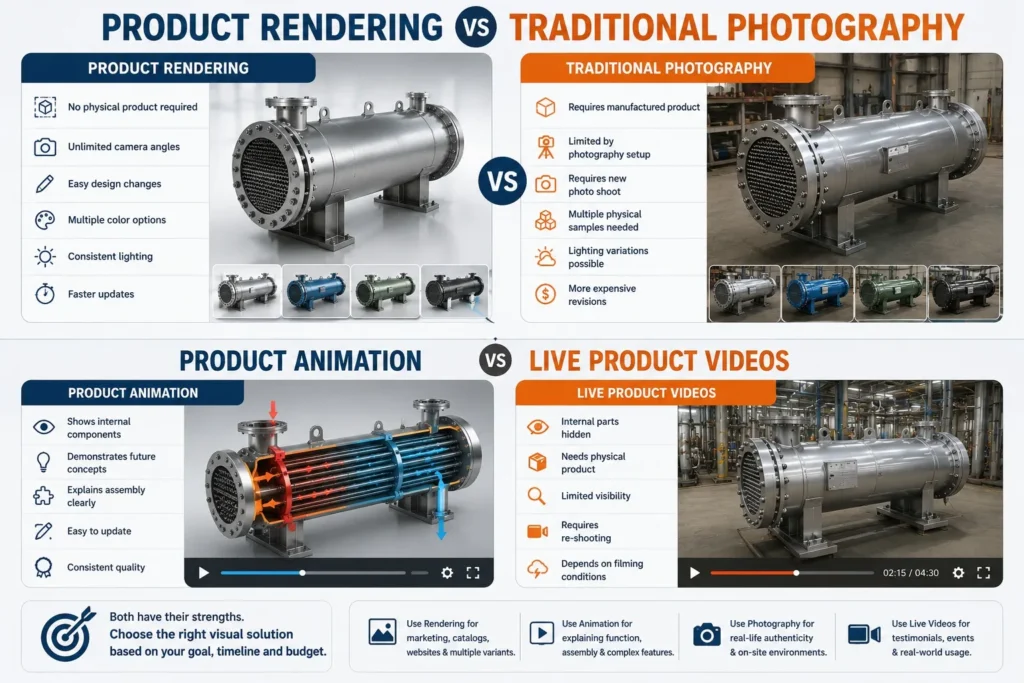
Product Animation vs Live Product Videos
| Product Animation | Live Video |
|---|---|
| Shows internal components | Internal parts hidden |
| Demonstrates future concepts | Needs physical product |
| Explains assembly clearly | Limited visibility |
| Easy to update | Requires re-shooting |
| Consistent quality | Depends on filming conditions |
Industries That Benefit Most
Several industries rely heavily on Product Animation and Product Rendering, including:
- Industrial machinery
- Manufacturing equipment
- Laboratory furniture
- Sheet metal products
- Process equipment
- Oil & Gas
- Automation systems
- Material handling equipment
- Medical devices
- Consumer products
- Fitness equipment
- Packaging machinery
How Product Animation Improves AI Visibility and Digital Marketing
Search engines and AI-powered search experiences increasingly prioritize content that provides comprehensive answers and engaging media.
Adding Product Animation and optimized Product Rendering assets to your website can contribute to:
- Higher user engagement and longer session duration
- Improved understanding of complex products
- Richer product pages with visual context
- Better shareability across social media and email campaigns
- More opportunities to appear in AI-generated recommendations when paired with descriptive metadata, structured content, and optimized image alt text
How Engineering Expertise Improves Product Visualization
Creating impactful Product Animation and Product Rendering requires more than advanced visualization software, it requires a solid understanding of engineering principles, manufacturing processes, and product functionality. When visualization is developed with engineering expertise, the final output is not only visually impressive but also technically accurate and meaningful.
At Immersiv Techsphere, our product visualization process is led by engineers who understand CAD models, assemblies, manufacturing workflows, and design intent. This engineering-first approach ensures that every Product Render and Product Animation accurately represents how a product is designed, assembled, and used.
Why Engineering Knowledge Makes a Difference
An engineering-driven approach helps deliver visual content that:
- Accurately represents product geometry, dimensions, and assemblies
- Demonstrates realistic product movement and mechanical functionality
- Correctly illustrates assembly, installation, and maintenance procedures
- Highlights key engineering features and design advantages
- Maintains consistency with manufacturing drawings and CAD data
- Reduces the risk of technical inaccuracies in marketing and training materials
From CAD Models to Effective Product Communication
Engineering models contain valuable technical information that can be transformed into engaging visual assets. By combining CAD expertise with professional visualization, manufacturers can create content that supports multiple business functions, including:
- Product launches and marketing campaigns
- Sales presentations and customer demonstrations
- Technical documentation and installation guides
- Training and maintenance materials
- Trade show displays and digital product catalogs
This engineering-led workflow ensures that Product Animation and Product Rendering not only enhance visual appeal but also communicate technical information clearly, helping customers, distributors, and stakeholders understand products with greater confidence.
Frequently Asked Questions
Neither is universally better. Product Rendering is ideal for showcasing appearance, while Product Animation is better for explaining functionality and product operation.
In many manufacturing applications, yes. High-quality Product Renders can be created before production and updated easily when designs change
For technically complex equipment, Product Animation usually provides greater value because it demonstrates workflows, movement, installation, and internal mechanisms that static images cannot show.
Yes. The same engineering model can typically be used to create both photorealistic Product Rendering images and engaging Product Animation videos, ensuring visual consistency across marketing and technical documentation.
For most manufacturers, combining Product Rendering with Product Animation creates the strongest marketing toolkit. Static visuals attract attention, while animations build understanding and confidence during the buying process.
Conclusion
Choosing between Product Animation and Product Rendering isn’t about selecting one over the other, it’s about matching the right visual format to your customer’s decision-making process.
Product Rendering excels at presenting design, materials, and aesthetics with photorealistic precision, making it ideal for catalogs, websites, brochures, and product launches. Product Animation, on the other hand, brings products to life by demonstrating operation, assembly, maintenance, and internal functionality, helping customers understand complex products more quickly and with greater confidence.
For manufacturers of industrial equipment, machinery, laboratory furniture, automation systems, and engineered products, combining both approaches creates a more compelling sales and marketing experience. High-quality Product Renders attract attention, while engaging Product Animation explains value, shortens sales conversations, and supports better purchasing decisions.
By integrating professional visualization into your digital strategy, manufacturers can strengthen brand credibility, improve customer engagement, and create content that performs well across search engines, AI-powered search experiences, websites, and sales presentations.
Have a Project in Mind?
Need help with 3D animation, industrial visualization, HSE training animation, or product visualization? Tell us about your project and our team will get back to you.