

Table of Contents
Introduction
Industrial equipment maintenance involves more than knowing which component needs replacement or lubrication. Maintenance teams must understand equipment construction, identify potential hazards, follow the correct servicing sequence, and know how to access components safely.
However, explaining these activities through traditional manuals, technical drawings, and written Standard Operating Procedures (SOPs) can be challenging, particularly when equipment has complex assemblies or multiple energy sources.
This is where maintenance training animation can make a difference.
Using 3D animation, manufacturers can demonstrate how equipment should be inspected, dismantled, serviced, and reassembled before maintenance work actually begins. Employees can visually understand component locations, servicing sequences, isolation points, and potential hazards without interacting with operating machinery.
For manufacturing plants, oil and gas facilities, process industries, and heavy engineering companies, 3D maintenance animations provide a practical way to communicate equipment servicing procedures and support workforce training.
What Is Maintenance Training Animation?
Maintenance training animation is a visual training method that uses 3D models, technical illustrations, and animated sequences to demonstrate equipment inspection, servicing, repair, and maintenance procedures.
Unlike conventional training videos that depend mainly on real-world footage, 3D maintenance animations can show internal equipment components, hidden mechanisms, and specific maintenance activities that may be difficult to capture using a camera.
For example, consider a centrifugal pump that requires periodic maintenance.
A 3D animation can demonstrate:
- The external components and internal assembly of the pump.
- The location of bearings, seals, impellers, and coupling arrangements.
- The correct sequence for removing protective guards and accessing components.
- Equipment isolation and preparation before maintenance.
- Inspection of worn or damaged components.
- Replacement of parts and reassembly procedures.
- Post-maintenance checks based on approved procedures.
This allows technicians to understand the complete servicing process before performing the actual task.
Why Is Visual Maintenance Training Important in Industrial Facilities?
Industrial equipment often contains interconnected mechanical, electrical, hydraulic, and pneumatic systems. Even routine maintenance activities can become complicated when technicians are unfamiliar with equipment construction or servicing requirements.
Traditional training methods remain important, but they may not always explain the complete working sequence effectively.
Here are some common challenges that visual maintenance training can help address.
1. Understanding Complex Equipment Assemblies
Equipment such as compressors, pumps, heat exchangers, gearboxes, and hydraulic systems contain multiple interconnected components.
Maintenance technicians may need to understand how these components are arranged before beginning inspection or replacement work.
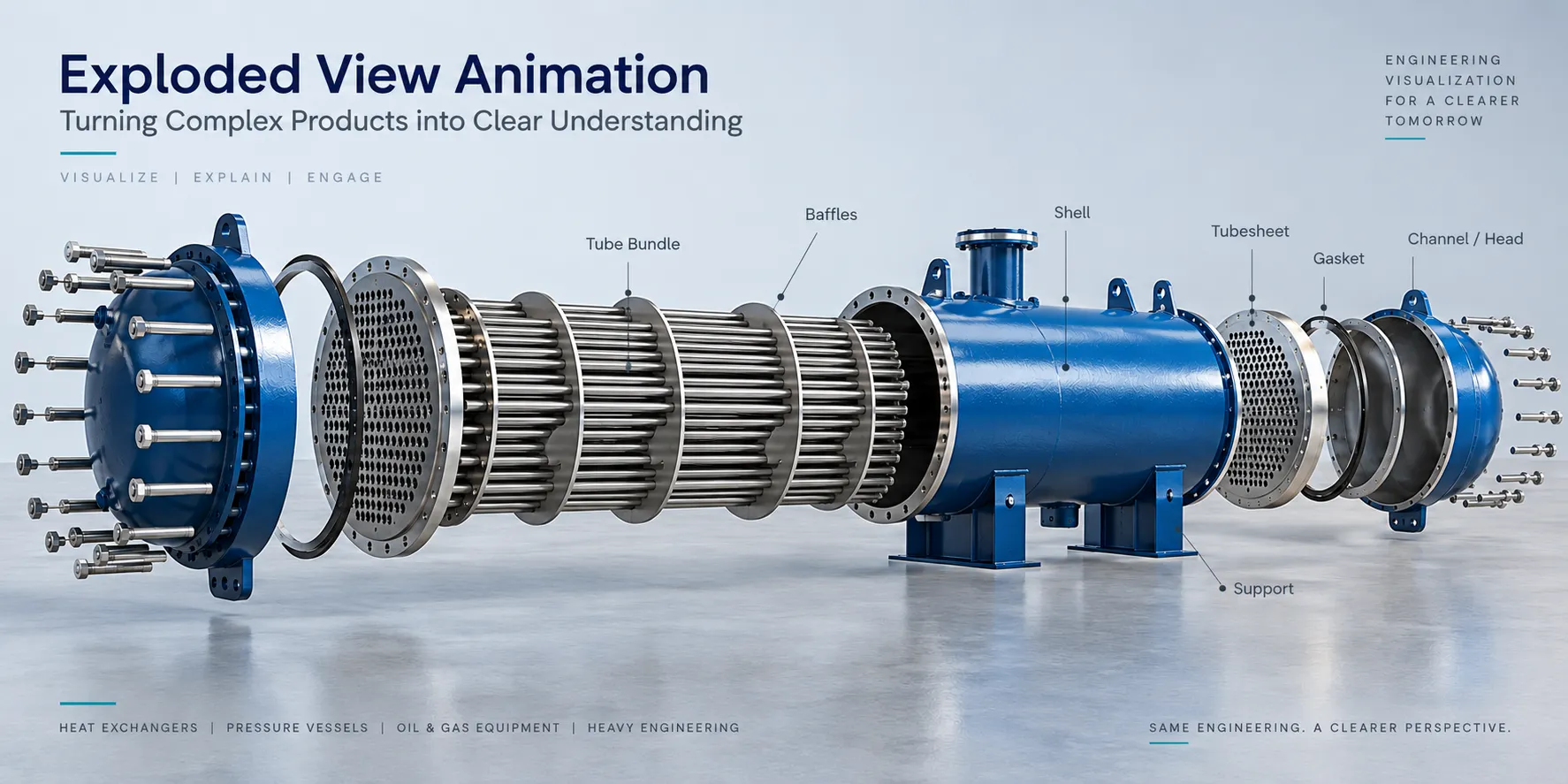
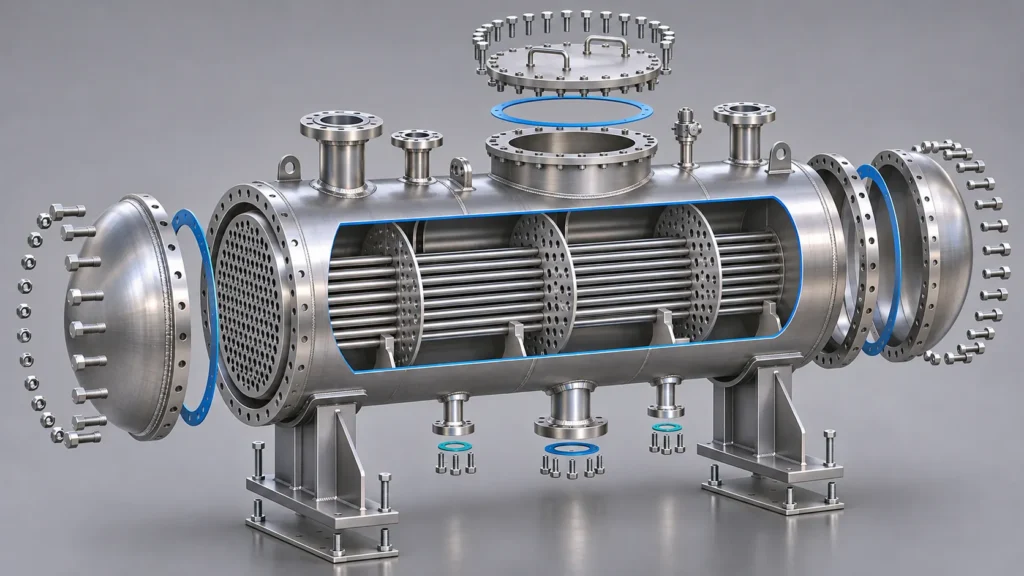
3D animation can use exploded views, sectional views, and transparent assemblies to demonstrate internal component arrangements.
For example, an exploded view of a gearbox can show the positioning of gears, shafts, bearings, seals, and housing components. The animation can then demonstrate the approved disassembly and reassembly sequence.
2. Explaining Maintenance Procedures Step by Step
Maintenance procedures often involve several sequential activities. Missing a step or performing an activity in the wrong order can create equipment damage or safety risks.
A 3D maintenance training video can break down the complete procedure into smaller visual stages.
These may include:
- Pre-maintenance inspection.
- Equipment shutdown and isolation.
- Accessing the maintenance area.
- Component removal.
- Cleaning and inspection.
- Replacement or repair.
- Reassembly and verification.
- Equipment handover.
When technicians can see each stage, they can better understand the relationship between individual tasks and the overall maintenance procedure.
3. Identifying Maintenance-Related Hazards
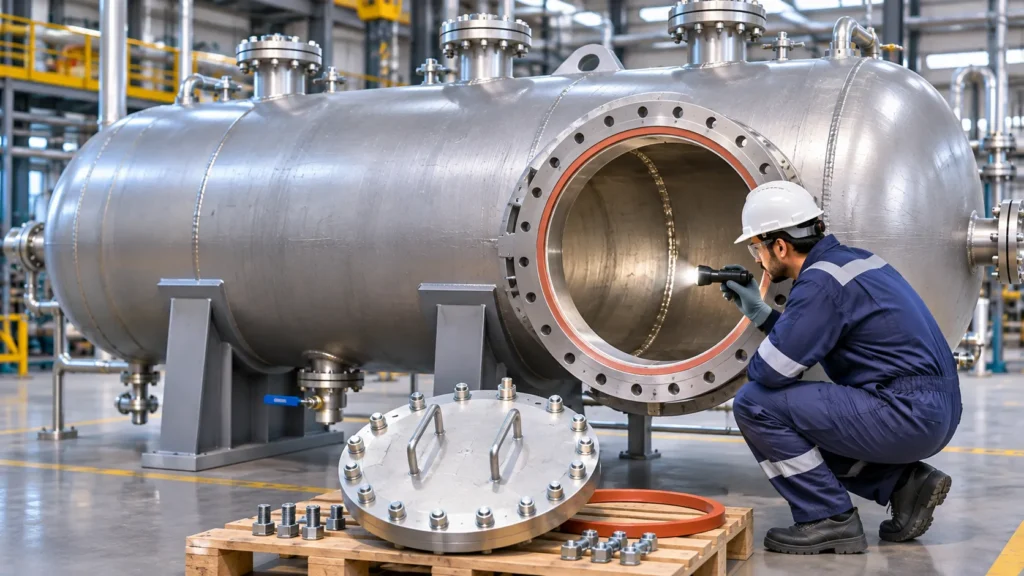
Maintenance activities can expose workers to unexpected machine startup, electrical hazards, stored pressure, rotating components, hot surfaces, and hazardous substances.
A visual safety animation can demonstrate these hazards through realistic industrial scenarios.
For instance, an animation involving conveyor maintenance can show how unexpected belt movement may create a crushing hazard if the equipment has not been properly isolated.
Such scenarios help workers understand why safety procedures must be followed before maintenance begins.
4. Supporting Consistent Training Across Multiple Shifts
Manufacturing facilities often operate across multiple shifts, with different technicians, contractors, and supervisors handling maintenance activities.
Relying entirely on individual trainers can result in variations in how procedures are explained.
A standardized maintenance training animation provides a consistent visual reference that can be reused during employee induction, refresher training, and equipment-specific maintenance sessions.
Key Maintenance Procedures That Can Be Explained Through 3D Animation
Not every maintenance procedure requires a separate animation. Companies can prioritize equipment and activities where visual explanation provides the greatest training value.
Some practical applications include:
1. Preventive Maintenance Training
Preventive maintenance involves scheduled inspection and servicing to identify potential problems before equipment failure occurs.
A 3D animation can demonstrate routine activities such as:
- Lubrication of bearings and moving components.
- Inspection of belts, pulleys, and couplings.
- Checking fasteners and mechanical connections.
- Filter cleaning and replacement.
- Visual inspection for leakage, corrosion, and wear.
- Checking equipment guards and safety devices.
For example, a preventive maintenance animation for an industrial pump can show the locations of lubrication points, inspection areas, and components that require periodic attention.
2. Equipment Disassembly and Reassembly
Some maintenance activities require technicians to dismantle equipment to access internal components.
A 3D exploded view animation can demonstrate the correct component removal sequence, identify individual parts, and explain how the assembly should be restored.
This is particularly useful for:
- Gearboxes and transmission systems.
- Industrial pumps and compressors.
- Hydraulic power packs.
- Heat exchangers.
- Industrial machinery and production equipment.
The animation can also highlight component orientation, fastening locations, and critical assembly interfaces based on approved engineering information.
3. Lockout/Tagout (LOTO) Training
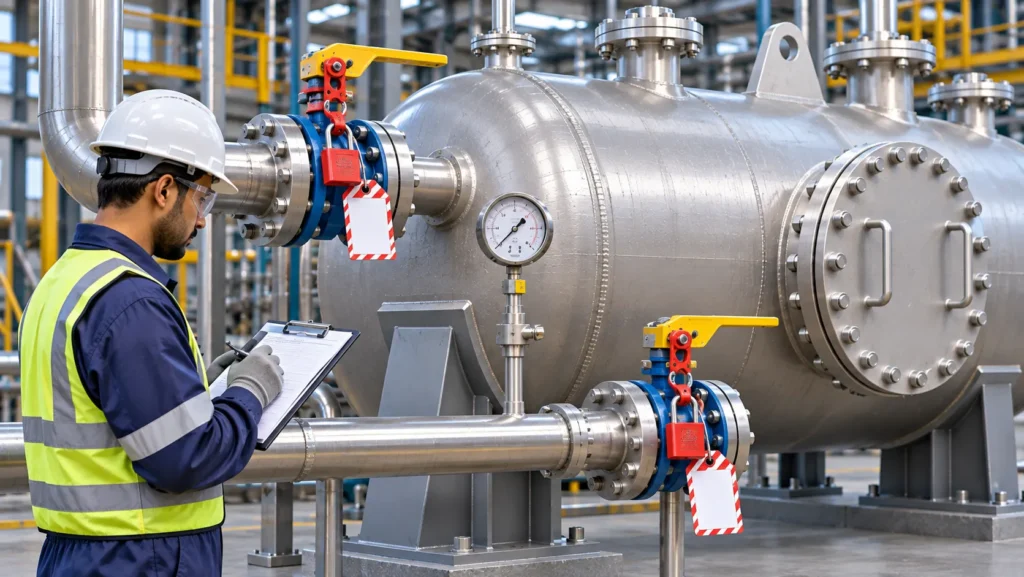
Lockout/Tagout is an important part of controlling hazardous energy during equipment servicing and maintenance.
Workers may be exposed to electrical, mechanical, hydraulic, pneumatic, thermal, or other stored energy sources if appropriate isolation procedures are not followed.
A dedicated LOTO training animation can visually demonstrate:
- Identifying the equipment and applicable energy sources.
- Notifying affected employees.
- Following the approved shutdown procedure.
- Isolating the relevant energy sources.
- Applying authorized lockout and tagout devices.
- Releasing or securing stored energy as required.
- Verifying isolation before maintenance begins.
- Following the approved procedure for restoring equipment to service.
These sequences must be developed in accordance with the organization’s approved energy-control procedures and applicable regulations.
For further guidance, refer to the OSHA Control of Hazardous Energy (Lockout/Tagout) standard.
4. Inspection and Troubleshooting Training
Maintenance technicians often need to identify abnormal equipment conditions before deciding on corrective action.
3D animation can illustrate common equipment problems, such as:
- Bearing overheating.
- Excessive vibration.
- Seal leakage.
- Misalignment.
- Corrosion and component deterioration.
- Unusual noise and mechanical wear.
Animations can show where technicians should inspect and explain the possible causes of equipment abnormalities. However, visual training should complement approved inspection checklists, diagnostic methods, and manufacturer recommendations rather than replace them.
5. Shutdown and Overhaul Procedures
Large industrial equipment may require planned shutdowns for detailed inspection, repair, and component replacement.
A 3D maintenance animation can help explain the overall overhaul sequence, including equipment preparation, access requirements, component removal, inspection, and reassembly.
This is particularly relevant to process plants, power generation facilities, oil and gas installations, and heavy engineering industries.
How 3D Maintenance Training Animation Is Developed
Creating an effective maintenance training animation requires more than producing realistic 3D visuals.
The animation must accurately represent the equipment, maintenance sequence, and relevant safety requirements.
At Immersiv Techsphere, the development process can be structured around the following stages.
Step 1: Understanding Equipment and Maintenance Requirements
The first step is understanding the equipment and the purpose of the training.
The project team reviews available technical information, including:
- Equipment photographs and videos.
- 2D engineering drawings.
- 3D CAD models.
- Assembly drawings.
- Maintenance manuals.
- Standard Operating Procedures (SOPs).
- Risk assessments and relevant safety instructions.
This information helps establish the animation scope and identify which components and maintenance activities need to be demonstrated.
Step 2: Script and Storyboard Development
Once the technical requirements are understood, the maintenance procedure is converted into a structured script and storyboard.
The storyboard defines the sequence of activities, camera angles, equipment views, and important instructions that need to appear on screen.
For example, a pump maintenance animation may be divided into the following scenes:
- Introduction to the pump assembly.
- Equipment shutdown and isolation.
- Removal of protective components.
- Accessing internal assemblies.
- Inspection and replacement of components.
- Reassembly and final verification.
The sequence should be reviewed by the client’s engineering, maintenance, and EHS teams before animation production begins.
Step 3: 3D Equipment Modelling
The equipment is recreated using 3D modelling software based on the available engineering references.
Existing CAD models can be used where available. Otherwise, components can be modelled using engineering drawings, photographs, and other approved technical information.
Accurate 3D modelling is particularly important when demonstrating:
- Internal equipment assemblies.
- Component positioning.
- Mechanical connections.
- Fastening arrangements.
- Moving mechanisms.
- Maintenance access points.
The objective is to create a technically meaningful representation rather than just a visually attractive model.
Step 4: Animation and Technical Visualization
Once the 3D equipment model is ready, the animation process begins.
Individual maintenance activities are demonstrated through camera movements, component movements, exploded views, sectional views, and visual annotations.
For example, a bearing replacement animation may show the approved access procedure, removal sequence, inspection points, and installation of the replacement component.
Labels, arrows, highlights, and close-up views can be added to make important information easier to understand.
Step 5: Technical Review and Validation
Technical accuracy is one of the most important aspects of maintenance training animation.
The animation should be reviewed by relevant subject matter experts to verify:
- Equipment configuration.
- Component identification.
- Maintenance sequence.
- Tools and access requirements.
- Safety precautions.
- Energy isolation requirements.
- Technical terminology.
Any corrections should be incorporated before final delivery.
Step 6: Final Video and Training Integration
After approval, the animation can be delivered in suitable video formats for different training environments.
Depending on project requirements, deliverables may include:
- Full-length maintenance training videos.
- Short equipment-specific training modules.
- Voice-over and subtitle versions.
- Multilingual training content.
- LMS-compatible training assets.
- Individual clips for refresher training and presentations.
Real-World Applications Across Industrial Sectors
Maintenance training animation is useful wherever equipment servicing requires a clear understanding of mechanical assemblies, operating conditions, and maintenance procedures.
| Industry | Potential animation applications |
|---|---|
| Oil & Gas | Pump, compressor, valve and pipeline maintenance |
| Manufacturing | Production machinery servicing and preventive maintenance |
| Power Generation | Turbine, generator and auxiliary equipment maintenance |
| Chemical Processing | Process equipment inspection and maintenance |
| Water Treatment | Pumping systems, filtration units and treatment equipment |
| Heavy Engineering | Hydraulic systems, gearboxes and industrial machinery |
| Pharmaceutical | Utility equipment and production machinery servicing |
For companies managing different equipment types and multiple operating locations, customized 3D maintenance videos can also help standardize technical training materials.
Maintenance Training Animation vs. Traditional Training Methods
Both traditional and animation-based training methods have a role in industrial maintenance education. The choice depends on the equipment, training objective, and complexity of the procedure.
| Training Method | Key Characteristics |
|---|---|
| Written Maintenance Manuals | Provide detailed instructions, specifications, and reference information |
| Classroom Training | Allows trainers to explain procedures and answer questions |
| Live Demonstrations | Show actual tools, equipment, and maintenance activities |
| 2D Illustrations | Explain component layouts and simplified procedures |
| 3D Maintenance Animation | Visualizes internal assemblies, component movements, and sequential maintenance activities |
3D animation is particularly useful when the procedure involves internal components, complex assemblies, or scenarios that are difficult to demonstrate repeatedly using actual equipment.
It should be used alongside maintenance manuals, practical demonstrations, supervised training, and site-specific safety procedures.
How Maintenance Training Animation Supports EHS and Operational Safety
Maintenance and workplace safety are closely connected.
A maintenance technician must understand not only how to service equipment but also how to identify hazards and follow the correct safety procedures.
For example, maintenance work may involve working at height, confined spaces, electrical isolation, hot surfaces, pressure systems, and moving machinery.
A dedicated 3D EHS animation can demonstrate these situations through realistic industrial environments.
Organizations can develop separate training modules for:
- Electrical safety during maintenance.
- Working at height for equipment inspection.
- Confined space entry procedures.
- LOTO and hazardous energy control.
- Safe handling of tools and maintenance equipment.
- Fire prevention during maintenance activities.
- PPE requirements for specific maintenance tasks.
These animations can be incorporated into broader employee induction and refresher training programs.
To understand how visual safety training can support industrial workplaces, explore Immersiv Techsphere’s 3D HSE Animation Services.
What Makes an Effective Maintenance Training Animation?
A maintenance animation should be developed around the actual training objective, not just visual presentation.
Some important considerations include:
- Engineering Accuracy: Equipment geometry, component arrangement, and maintenance activities should be based on reliable technical references.
- Procedure-Based Storytelling: The animation should follow the approved maintenance sequence without introducing unsupported steps.
- Clear Visual Communication: Camera angles, sectional views, labels, and close-ups should help viewers understand important details.
- Safety Integration: Relevant hazards, isolation requirements, PPE, and precautions should be included where applicable.
- Industry-Specific Customization: The animation should reflect the actual equipment, workplace conditions, and training requirements.
- Reusable Training Content: Videos should be structured so that organizations can reuse them during induction, refresher sessions, and equipment-specific training.
How Immersiv Techsphere Helps Develop Industrial Maintenance Animations
At Immersiv Techsphere, we combine mechanical engineering understanding with 3D visualization to develop technical and industrial animation solutions.
Our team works with engineering drawings, CAD models, equipment references, and technical documentation to create animations that explain industrial equipment, mechanical assemblies, and operational procedures.
Our capabilities include:
- 3D equipment modelling and visualization.
- Industrial equipment and process animations.
- Exploded view and assembly animations.
- Maintenance and servicing procedure animations.
- 3D EHS and HSE safety training videos.
- Equipment inspection and operational training content.
- Factory walkthrough and process visualization.
We can develop customized animations for manufacturing companies, oil and gas facilities, process industries, equipment manufacturers, and engineering organizations.
Explore our HSE Animation Services and Exploded View Animation for Industrial Equipment to understand how 3D visualization can support technical communication and workforce training.
Conclusion
Maintenance training should prepare technicians to understand the equipment, recognize potential hazards, and follow the correct servicing procedure before they begin working on actual machinery.
Maintenance training animation provides a practical way to explain complex equipment assemblies, demonstrate maintenance sequences, and communicate safety requirements through realistic 3D visualization.
By combining engineering accuracy with visual storytelling, industrial organizations can create more structured and reusable training resources for their maintenance teams.
At Immersiv Techsphere, we help transform technical information and engineering references into 3D industrial and safety animations that make complex procedures easier to understand.
If your organization is planning equipment-specific maintenance training, a customized 3D animation can be a useful addition to your existing technical documentation and training program.
Frequently Asked Questions (FAQs)
Maintenance training animation is a 3D visual training method used to demonstrate equipment inspection, servicing, repair, disassembly, and reassembly procedures. It helps technicians understand complex maintenance activities before performing them on actual equipment.
3D animation makes it easier to visualize internal components, mechanical assemblies, servicing sequences, and maintenance-related hazards. It provides a consistent visual reference that can complement written manuals and practical demonstrations.
Yes. Existing SolidWorks, STEP, IGES, and other compatible 3D CAD models can be used as references for developing maintenance animations. Additional modelling may be required to separate components, create internal views, or demonstrate specific servicing activities.
Yes. A 3D animation can visually demonstrate equipment shutdown, energy isolation, application of lockout/tagout devices, stored energy control, and verification steps based on approved site-specific procedures.
Manufacturing, oil and gas, power generation, chemical processing, water treatment, pharmaceuticals, heavy engineering, and industrial equipment manufacturing can benefit from equipment-specific maintenance training videos.
Yes. Customized animations can be developed using equipment CAD models, engineering drawings, maintenance manuals, photographs, and approved SOPs to represent the actual equipment and servicing requirements.
Equipment operation animation explains how machinery functions during normal operation, while maintenance animation focuses on inspection, servicing, component replacement, repair, and reassembly procedures.
Yes. Maintenance training videos can be prepared for integration into corporate learning management systems. Depending on the platform and project requirements, additional LMS-compatible packaging or SCORM development may be required.
Have a Project in Mind?
Need help with 3D animation, industrial visualization, HSE training animation, or product visualization? Tell us about your project and our team will get back to you.