

Table of Contents
Introduction
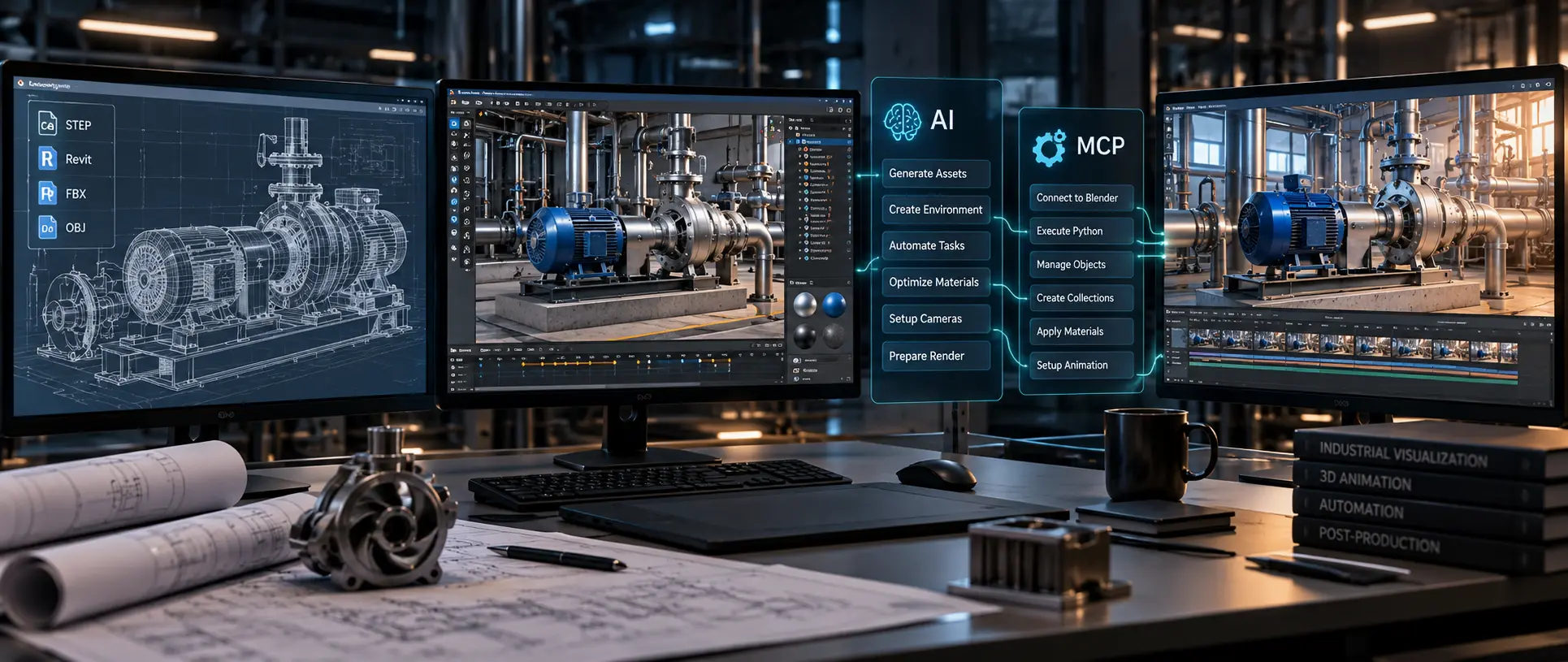
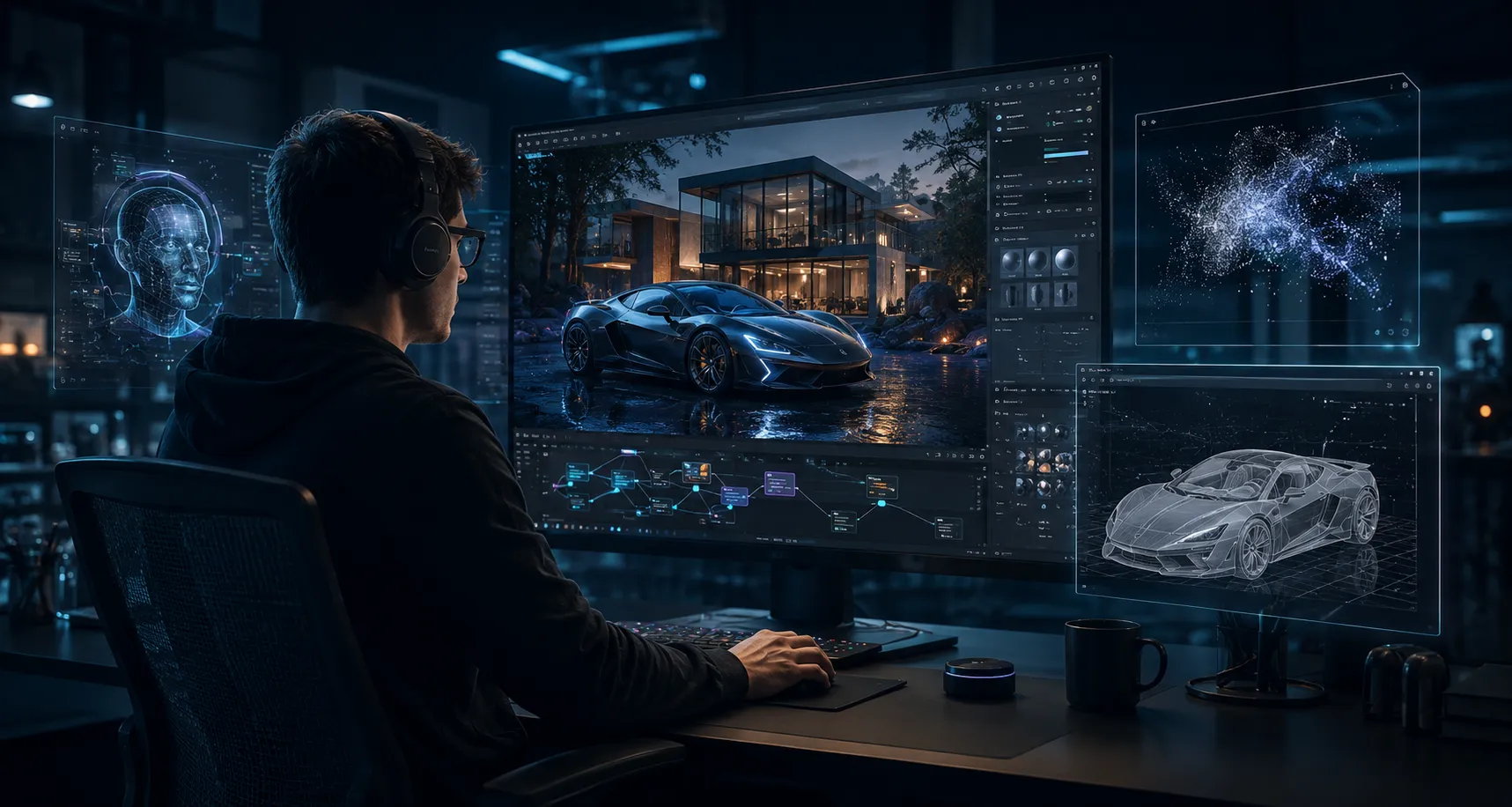
The world of 3D animation is evolving rapidly, with AI-powered rendering leading the transformation in 2026. Tasks that once required extensive computing power, long render times, and manual optimization can now be completed faster and more efficiently with AI.
Technologies such as neural rendering, AI denoising, intelligent upscaling, scene optimization, and text-to-3D generation are helping artists create high-quality, realistic animations in less time and at lower cost. By streamlining workflows and enhancing visual quality, AI allows creators to focus more on creativity, storytelling, and design.
What is 3D Rendering?
3D rendering is the process of converting three-dimensional digital models into realistic two-dimensional images or animations. It involves calculating lighting, shadows, materials, textures, reflections, and camera perspectives to create visually accurate representations of objects and environments.
The rendering process transforms CAD models, 3D assets, and virtual scenes into visuals that can be used for product design, architectural visualization, marketing, engineering reviews, gaming, and animation.
Modern rendering technologies combine advanced graphics engines with AI-powered tools to improve image quality, reduce rendering times, and automate complex tasks. As a result, artists and designers can create highly realistic visuals more efficiently while maintaining greater creative control over the final output.
How AI is Changing Modern 3D Rendering Workflows
- Enhanced Realism
AI enables the creation of highly realistic visuals by improving textures, materials, lighting, reflections and environmental effects. By learning from large datasets of real-world imagery, AI helps generate more natural and visually accurate render outputs. - Faster Rendering & Optimization
AI accelerates rendering workflows through intelligent denoising, upscaling and resource optimization techniques. This reduces rendering times while maintaining high image quality, helping creators deliver projects more efficiently. - Adaptive Learning
Modern AI systems can learn from user preferences, project requirements, and previous workflows to recommend settings and optimize rendering processes. This helps improve consistency while reducing repetitive manual adjustments. - Automated Quality Control
AI-powered tools can detect visual artifacts, lighting inconsistencies, texture issues and rendering errors automatically. This improves overall output quality and reduces the time spent on manual reviews and corrections. - Real-Time Visualization & Interactive Experiences
AI-powered rendering enables real-time visualization and instant design adjustments, allowing creators to evaluate changes quickly and improve decision-making throughout the creative process.
- AI-Assisted Asset Creation
Generative AI can create textures, materials, backgrounds, environmental elements and supporting assets from prompts or reference images. This helps accelerate content creation while maintaining visual consistency across projects. - Intelligent Scene Optimization
AI helps optimize lighting, geometry, camera settings and rendering parameters automatically, improving performance and visual quality while reducing computational requirements.
Key AI Technologies Powering 3D Rendering in 2026
- AI Denoising
AI-driven denoising techniques use machine learning to remove noise and artifacts from rendered images. This results in cleaner visuals, faster rendering times, and reduced reliance on computationally intensive rendering processes. - Neural Rendering
Neural rendering leverages AI models to simulate complex lighting, reflections, shadows, and visual effects. It enables highly realistic outputs while improving rendering efficiency and visual quality. - Generative AI for Materials and Textures
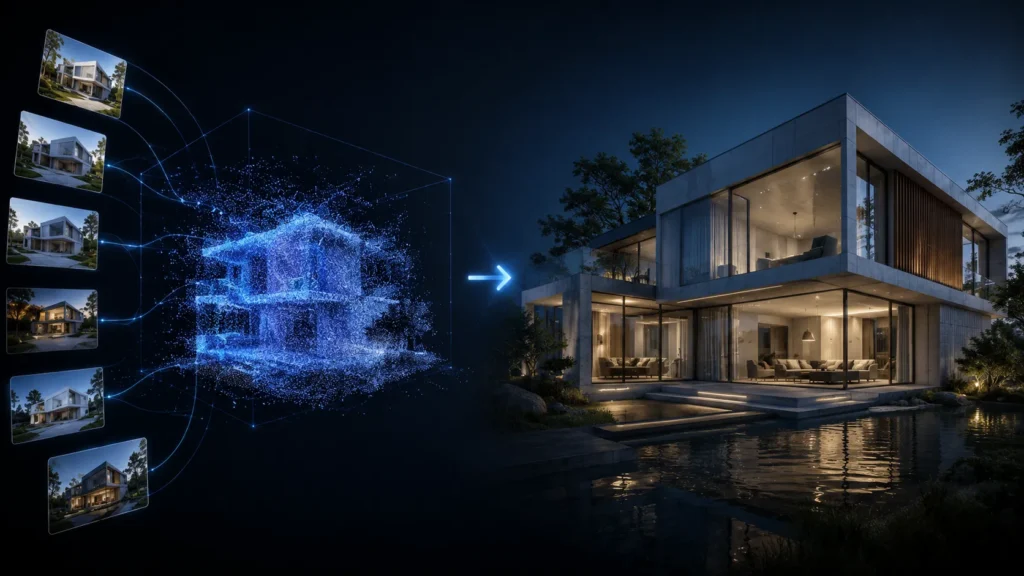
Generative AI can create realistic textures, materials, backgrounds, and environmental elements from prompts or reference images. This reduces manual content creation and accelerates the visualization process. - Neural Radiance Fields (NeRF)
NeRF technology reconstructs detailed 3D scenes from multiple photographs, enabling photorealistic visualizations and immersive digital environments. It is increasingly used in virtual tours, digital twins, and product visualization. - Gaussian Splatting
Gaussian Splatting is an emerging rendering technique that enables real-time visualization of highly detailed scenes. Its speed and realism make it valuable for interactive applications, digital twins, and advanced visualization workflows. - Text-to-3D Generation
Text-to-3D technologies use AI to generate 3D concepts, assets, and environments directly from text prompts. This helps accelerate concept development and early-stage visualization while reducing modeling effort.
Industry Applications of AI-Driven 3D Rendering
- Architectural Visualization
- AI-powered rendering helps architects create highly realistic visualizations, enabling better communication of design concepts and project intent.
- Advanced rendering technologies can simulate lighting conditions, materials, and environmental factors, helping stakeholders evaluate designs before construction begins.
- Product Design and Marketing
- AI-generated visuals enable businesses to create photorealistic product representations for marketing, e-commerce, and product launches.
- Virtual prototypes and AI-enhanced visualizations help showcase products in different environments while reducing the need for extensive product photography.
- Medical Imaging
- AI-powered rendering enhances medical imaging by providing clearer and more detailed visualizations for diagnosis, treatment planning, and medical training.
- Improved image quality helps healthcare professionals interpret complex anatomical structures more effectively.
- Virtual Reality (VR) and Augmented Reality (AR)
- AI dynamically adjusts rendering parameters based on user interactions and environmental conditions, creating more immersive VR and AR experiences.
- Real-time rendering improvements contribute to smoother and more realistic simulations.
- Manufacturing & Industrial Visualization
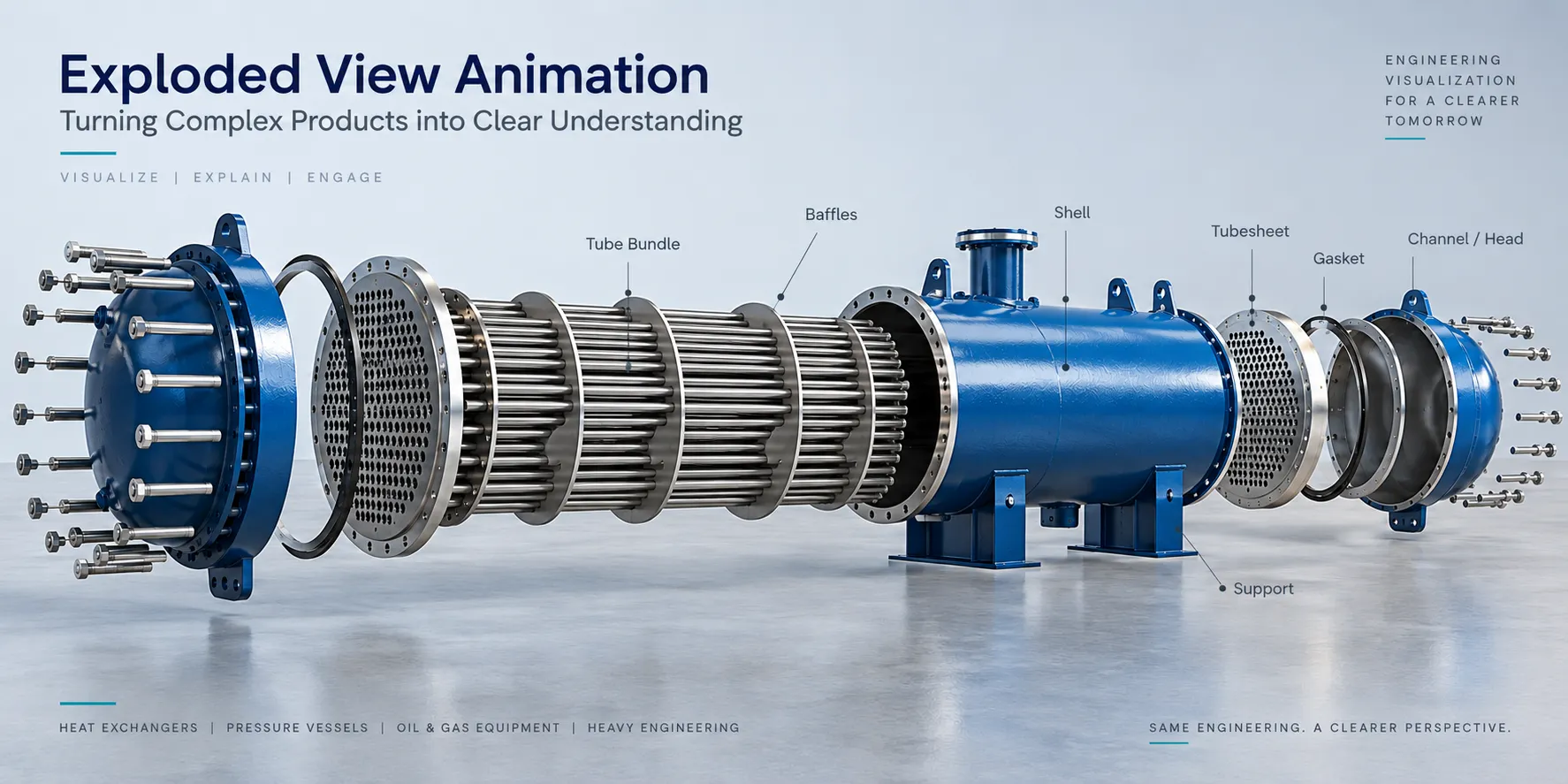
- AI-powered rendering helps manufacturers create realistic product renders, assembly animations, digital twins, and marketing visuals without extensive physical photography.
- These visual assets help communicate complex products and processes more effectively while supporting training, sales, and engineering workflows.
- Engineering & Product Development
- AI-assisted rendering enables faster design reviews, concept validation, and stakeholder communication throughout the product development lifecycle.
- High-quality visualizations help teams evaluate product aesthetics, functionality, and manufacturability before production begins.
Emerging Trends in AI and 3D Visualization
- Real-Time Rendering
AI-powered rendering technologies continue to reduce rendering times, enabling real-time visualization for interactive applications, gaming, product design and immersive experiences. - Intelligent Scene Creation
AI can assist in generating environments, backgrounds, lighting setup, and scene elements, helping artists and designers accelerate content creation while maintaining visual consistency. - Customizable Aesthetics
Modern AI tools allow creators to adjust styles, materials, lighting and visual effects more efficiently, providing greater creative flexibility and control over the final output. - Digital Twins
AI-driven rendering technologies are increasingly used to create realistic digital twins of products, equipment, facilities, and manufacturing systems, enabling better visualization, monitoring and decision-making. - AI-Powered Content Generation
Generative AI is transforming the creation of textures, materials, assets, environments and visual effects, helping reduce production time while enhancing realism and creative possibilities.
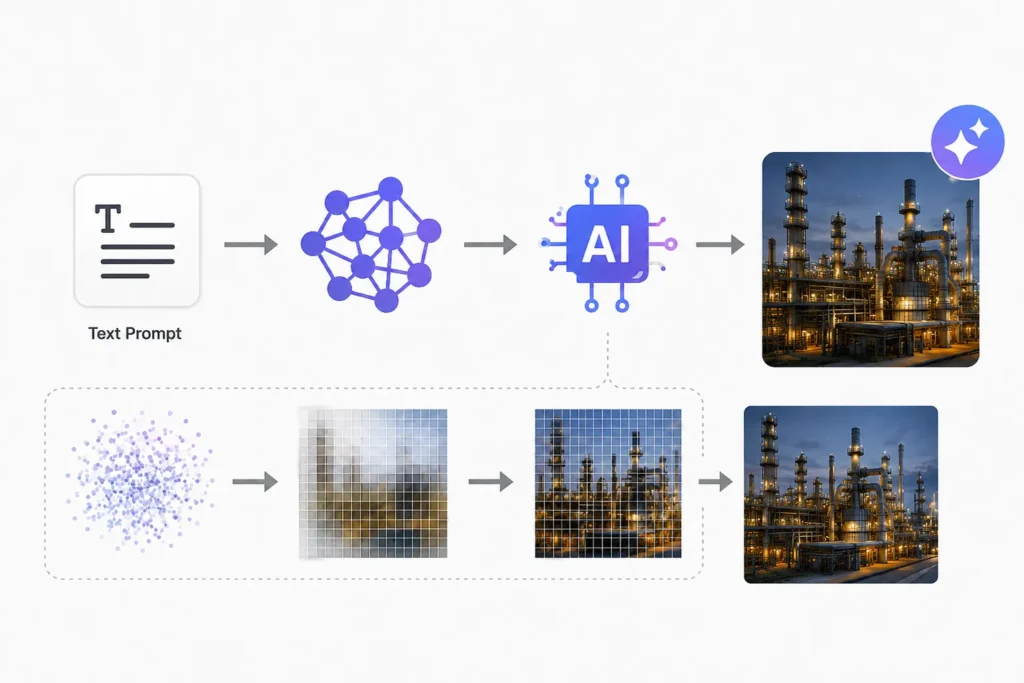
How Immersiv Techsphere Supports 3D Visualization Projects
AI-powered visualization is increasingly used to improve communication, training and design reviews across industries. At Immersiv Techsphere, we apply AI-enhanced rendering and animation techniques to create realistic EHS training animations, industrial visualizations and product presentations that simplify complex concepts and improve audience engagement.
Frequently Asked Questions About AI-Powered Rendering
AI helps automate rendering tasks, improve realism, reduce noise, and accelerate production workflows while maintaining high visual quality.
Neural rendering uses AI models to generate realistic lighting, reflections, and visual effects, enabling more photorealistic results.
AI-powered rendering is widely used in architecture, product design, manufacturing, healthcare, gaming, virtual reality, and engineering visualization.
The Future of AI in 3D Animation and Visualization
AI is transforming the way 3D visuals are created by improving realism, accelerating production workflows, and enabling new forms of creativity. From intelligent rendering and asset generation to real-time visualization and digital twins, AI continues to expand the possibilities of 3D animation and visualization.
As these technologies evolve, the combination of human creativity and AI-powered tools will play a key role in shaping the future of digital content creation across industries.
Have a Project in Mind?
Need help with 3D animation, industrial visualization, HSE training animation, or product visualization? Tell us about your project and our team will get back to you.