

Table of Contents
Introduction
Imagine reading a ten-page incident investigation report describing a forklift collision, a chemical spill, or a machine malfunction. While the report contains every technical detail, many employees still struggle to visualize what actually happened. This often results in missed learning opportunities and repeated mistakes.
Workplace Incident Animation solves this challenge by transforming incident data into realistic 3D visualizations that clearly show how an event unfolded, what caused it, and how similar incidents can be prevented in the future. Instead of relying solely on written reports, organizations can use animation to make complex workplace incidents easier to understand, remember, and discuss.
As industries place greater emphasis on operational excellence and proactive safety management, Workplace Incident Animation is becoming an essential tool for EHS teams, manufacturing facilities, engineering companies, and industrial organizations seeking to improve workplace safety while creating a stronger learning culture.
What is Workplace Incident Animation?
Workplace Incident Animation is the process of digitally reconstructing workplace accidents, near misses, and hazardous events using realistic 3D models, engineering data, investigation reports, and environmental information. The objective is not to dramatize an incident but to accurately recreate the sequence of events so employees, investigators, and management teams can clearly understand what happened.
Unlike traditional incident documentation, Workplace Incident Animation combines engineering accuracy with visual storytelling. It can recreate:
- Equipment movements
- Worker interactions
- Environmental conditions
- Process failures
- Mechanical malfunctions
- Safety procedure deviations
- Emergency responses
- Incident timelines
By presenting these events visually, organizations improve understanding across technical and non-technical teams alike.
Why Organizations Are Adopting Workplace Incident Animation
Workplace safety is evolving beyond compliance. Modern organizations are investing in technologies that help prevent incidents rather than simply documenting them after they occur. Many organizations are also aligning their safety management systems with ISO 45001 Occupational Health and Safety Management standards to strengthen risk management, employee safety, and continuous improvement.
Here are some of the key reasons Workplace Incident Animation is gaining widespread adoption.
1. Better Safety Training
Visual learning is far more engaging than reading lengthy reports or static presentations. Employees can observe how an unsafe act develops into an incident, making safety procedures easier to understand and remember.
Organizations often combine Workplace Incident Animation with EHS training animations to create engaging safety programs that improve hazard awareness, procedural compliance and knowledge retention.
2. Improved Incident Investigations
Animations recreate every stage of an incident, allowing investigators to identify contributing factors that may be difficult to recognize through photographs or written documentation alone.
3. Stronger Knowledge Retention
When employees see realistic workplace scenarios, they are more likely to remember the sequence of events and apply those lessons during daily operations.
4. Enhanced Cross-Department Communication
Incident investigations often involve operations, maintenance, engineering, EHS teams, contractors, insurance representatives, and management. A visual reconstruction creates a shared understanding for everyone involved.
5. Supporting Digital Transformation
Manufacturing and industrial organizations are increasingly adopting digital technologies to improve productivity, safety, and decision-making. Workplace Incident Animation fits naturally into this transformation by making investigation data more accessible and actionable.
6. Reducing Repeat Incidents
By clearly demonstrating root causes and preventive measures, organizations can address recurring risks before they lead to future accidents.
Why Traditional Incident Reports Are No Longer Enough
Incident reports remain an essential part of workplace investigations, but they often fail to communicate the complete picture. While organizations follow established OSHA incident investigation guidelines to document workplace events, written reports alone often struggle to communicate complex incident sequences effectively during employee training.
A typical report may include witness statements, photographs, equipment details, and recommendations. While these documents are valuable for compliance and record-keeping, they depend heavily on the reader’s ability to visualize the event.
This creates several challenges:
- Complex sequences are difficult to interpret.
- New employees may struggle to understand technical descriptions.
- Different stakeholders can interpret the same report differently.
- Critical contributing factors may be overlooked.
- Safety training becomes less engaging.
As workplaces become more complex, organizations need communication tools that are easier to understand and more effective at driving behavioral change.
That is where Workplace Incident Animation provides a significant advantage.
Traditional Incident Reports | Workplace Incident Animation |
| Text-heavy documentation | Realistic 3D visualization |
| Requires interpretation | Easy to understand visually |
| Limited employee engagement | Highly engaging learning experience |
| Static photographs | Dynamic event reconstruction |
| Difficult to explain complex sequences | Clearly shows the chain of events |
| Lower knowledge retention | Better long-term learning |
| Primarily used for compliance | Used for compliance, training, and prevention |
Traditional Incident Reports vs. Workplace Incident Animation
Rather than replacing investigation reports, Workplace Incident Animation complements them by transforming technical findings into practical learning experiences.
How Workplace Incident Animation Improves Root Cause Analysis
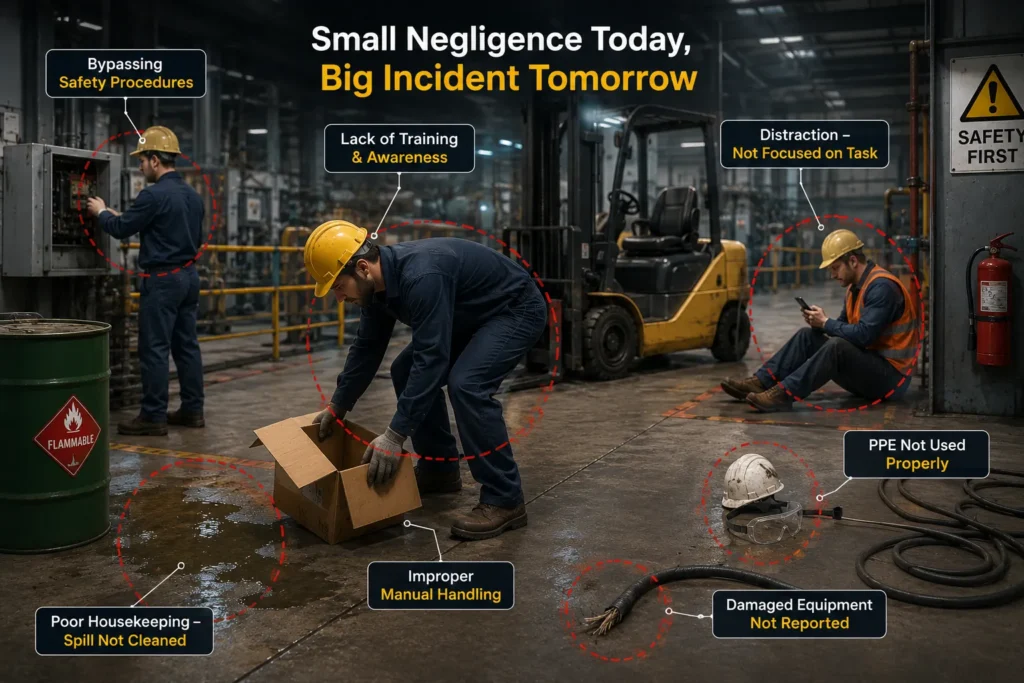
Most workplace incidents are rarely caused by a single mistake. Instead, they result from a combination of technical, environmental, procedural, and human factors.
A well-developed Workplace Incident Animation helps investigators visualize these interconnected events, making it easier to identify the true root causes instead of focusing only on the final outcome.
Common contributing factors include:
- Human Factors:
- Inadequate training
- Fatigue
- Poor decision-making
- Unsafe behaviors
- Communication breakdowns
- Mechanical Failures
- Equipment malfunction
- Component failure
- Maintenance issues
- Unexpected machine movement
- Environmental Conditions
- Poor visibility
- Slippery surfaces
- Restricted access
- Weather conditions
- Inadequate lighting
- Procedural Gaps
- Incorrect operating procedures
- Lockout/Tagout violations
- Missed inspections
- Incomplete risk assessments
- Organizational Factors
- Ineffective supervision
- Insufficient safety culture
- Production pressure
- Lack of continuous improvement
By recreating these factors in chronological order, organizations gain a much clearer understanding of how an incident developed and where corrective actions should be implemented. This approach complements HSE guidance on learning from workplace incidents, which emphasizes identifying root causes and sharing lessons learned to prevent similar incidents in the future.
How Workplace Incident Animation Is Created
Creating an effective Workplace Incident Animation requires far more than simply animating an accident. It is a structured engineering process that combines technical data, investigation findings, and realistic visualization.
A typical workflow includes:
Step 1: Collect Investigation Data
Gather information from incident reports, photographs, CCTV footage, witness statements, equipment drawings, and site measurements.
Step 2: Analyze the Sequence of Events
Review the timeline to identify how the incident progressed and which factors contributed to the final outcome.
Step 3: Develop Accurate 3D Models
Recreate the workplace, machinery, equipment, and surrounding environment using engineering-grade 3D models.
Step 4: Simulate the Incident
Animate worker movements, machine operations, environmental conditions, and equipment interactions based on verified investigation data.
Step 5: Validate with Subject Matter Experts
Collaborate with EHS professionals, engineers, and investigators to ensure technical accuracy before finalizing the animation.
By following this structured process, organizations create a reliable visual resource that supports investigations, safety meetings, and long-term employee training.
Common Workplace Incidents That Can Be Recreated
One of the greatest strengths of Workplace Incident Animation is its versatility. Almost any workplace incident can be recreated using accurate engineering data and investigation findings, making it a valuable learning tool across industries.
Some of the most common scenarios include:
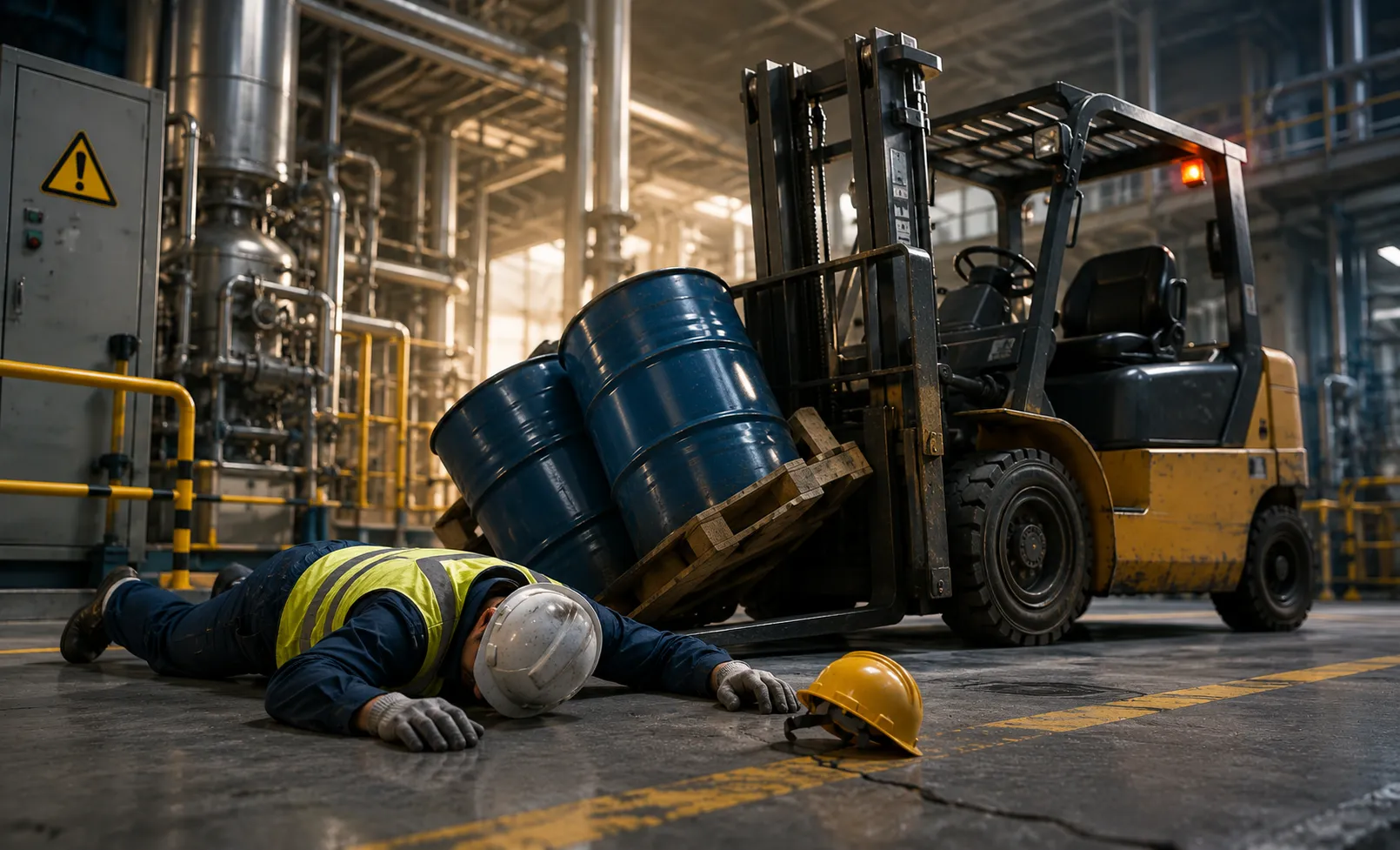
- Forklift Accidents
Forklift incidents often involve collisions with pedestrians, improper loading, restricted visibility, or unsafe driving practices. A 3D animation helps employees understand how these incidents develop and highlights the importance of following material handling procedures. - Machine Entanglement
Rotating equipment, conveyors, presses, and automated machinery can present serious hazards. Workplace Incident Animation demonstrates how missing machine guards, improper operation, or bypassing safety devices can lead to injuries. - Lockout/Tagout (LOTO) Failures
Failure to properly isolate hazardous energy remains one of the leading causes of industrial accidents. Animated recreations clearly illustrate the correct Lockout/Tagout sequence and the consequences of skipping critical steps. - Chemical Spills and Hazardous Material Exposure
Animations help visualize the spread of hazardous substances, emergency response procedures, evacuation routes, and the correct use of personal protective equipment (PPE). - Working at Height Incidents
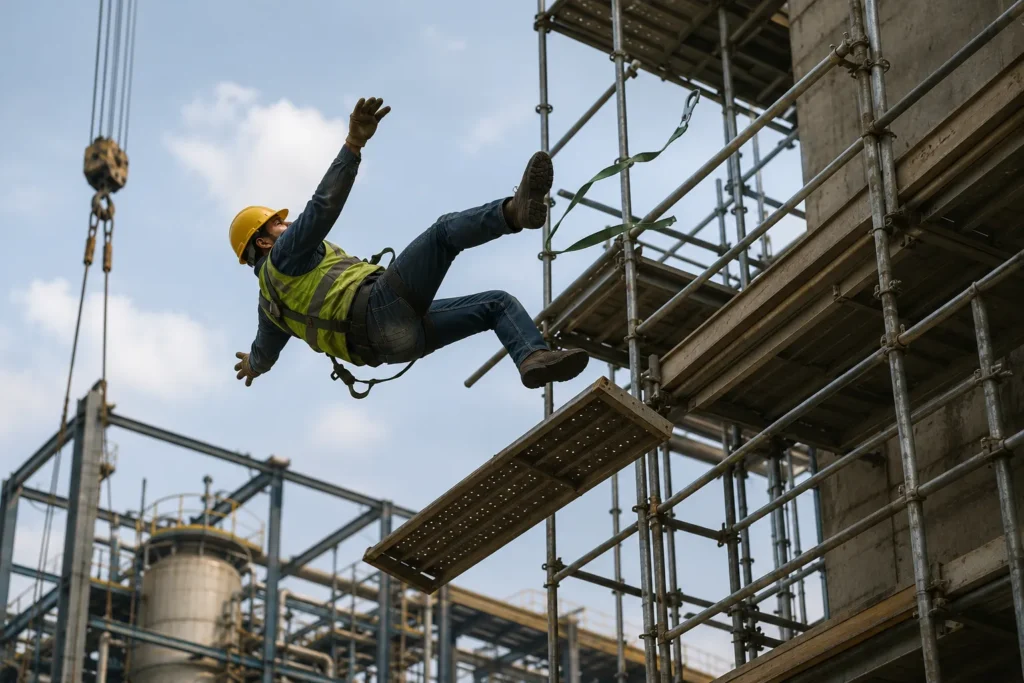
Falls from ladders, scaffolding, rooftops, or elevated platforms can be recreated to demonstrate proper fall protection systems, anchor points, and safe work practices. - Crane and Lifting Operations
Incorrect rigging, overloading, equipment failure, or communication errors during lifting operations can be recreated to improve lifting safety and planning. - Electrical Incidents
Arc flashes, electrical shocks, improper isolation, and maintenance errors are easier to understand when employees can visualize the entire sequence of events. - Fire and Explosion Scenarios
Industrial fires and explosions often involve multiple contributing factors. Animation allows organizations to demonstrate ignition sources, fire progression, emergency response, and evacuation procedures in a safe learning environment. - Near Miss Incidents
Near misses provide valuable opportunities for proactive learning. Recreating these events helps organizations address risks before they result in injuries or equipment damage.
Industries That Benefit from Workplace Incident Animation
Every industry that prioritizes workplace safety can benefit from realistic incident recreation. Some of the sectors where Workplace Incident Animation delivers the greatest value include:
- Manufacturing
Demonstrate machine safety, production line hazards, maintenance procedures, and material handling operations to reduce workplace risks. - Oil & Gas
Recreate process upsets, confined space incidents, equipment failures, pressure-related events, and emergency shutdown procedures. - Chemical & Process Industries
Visualize hazardous material handling, chemical leaks, process deviations, and emergency response scenarios. - Construction
Improve awareness around lifting operations, excavation hazards, working at height, equipment movement, and site safety. - Mining
Train employees on heavy equipment interactions, underground operations, and hazard identification using realistic visual simulations. - Logistics & Warehousing
Enhance forklift safety, warehouse traffic management, loading dock operations, and pedestrian awareness. - Utilities & Power Plants
Support training for electrical safety, maintenance procedures, turbine operations, and emergency response planning.
Regardless of the industry, Workplace Incident Animation transforms complex investigations into engaging learning experiences that improve both safety awareness and operational performance. Many organizations also complement these training initiatives with factory walkthrough animations to familiarize employees with facility layouts, safety zones, emergency exits, and operational workflows before they begin working on-site.
Benefits Beyond Compliance
Many organizations initially adopt Workplace Incident Animation to support investigations or meet training requirements. However, its long-term value extends far beyond regulatory compliance.
Key benefits include:
- Improved employee engagement during safety training
- Better understanding of complex workplace hazards
- Stronger knowledge retention through visual learning
- More effective communication between departments
- Faster onboarding of new employees
- Consistent safety messaging across multiple facilities
- Improved incident investigation reviews
- Better support for continuous improvement initiatives
- Reduced likelihood of repeat incidents
- Enhanced organizational safety culture
Instead of filing an investigation report away after completion, organizations can transform it into an educational resource that continues to deliver value for years. Organizations can also strengthen their workplace safety initiatives by following NIOSH workplace safety resources, which provide practical recommendations for hazard prevention, employee training, and continuous safety improvement.
Why Choose Immersiv Techsphere for Workplace Incident Animation?
At Immersiv Techsphere, we combine engineering expertise with advanced 3D visualization to create technically accurate Workplace Incident Animations tailored to industrial environments.
Unlike generic animation studios, our team understands manufacturing processes, industrial equipment, engineering drawings, and workplace safety requirements. This enables us to recreate incidents with exceptional technical accuracy while ensuring the final animation remains clear, engaging, and easy to understand.
Our Workplace Incident Animation services can include:
- Accurate industrial 3D modeling
- Facility and equipment visualization
- Incident sequence reconstruction
- Root cause visualization
- Near miss recreation
- EHS training animations
- Safety procedure demonstrations
- Customized animations for manufacturing, oil & gas, construction, utilities, pharmaceuticals, and process industries
By combining technical knowledge with visual storytelling, we help organizations turn workplace incidents into valuable learning opportunities that strengthen safety culture and improve long-term operational performance.
Key Takeaways
- Workplace Incident Animation transforms investigation reports into engaging visual learning experiences.
- It helps organizations identify root causes more effectively by reconstructing the complete sequence of events.
- Realistic 3D visualizations improve employee engagement, knowledge retention, and safety awareness.
- Incident animations can recreate accidents, near misses, equipment failures, and emergency scenarios across a wide range of industries.
- Organizations can use Workplace Incident Animation to strengthen EHS training, improve communication, and reduce repeat incidents.
Conclusion
Every workplace incident contains valuable lessons, but those lessons only create lasting impact when they are clearly understood and effectively communicated.
Workplace Incident Animation bridges the gap between technical investigation reports and practical learning by transforming complex workplace events into realistic, easy-to-understand visual experiences. Employees can see not only what happened, but also why it happened, how it could have been prevented, and what actions should be taken to avoid similar incidents in the future.
As organizations continue to invest in safer workplaces and proactive risk management, Workplace Incident Animation is becoming an essential component of modern EHS training, incident investigation, and continuous improvement programs.
If you’re looking to create accurate, engineering-driven Workplace Incident Animations that enhance safety training and improve workplace learning, Immersiv Techsphere can help bring your investigations to life through realistic 3D visualization.
FAQs
Workplace Incident Animation is a realistic 3D reconstruction of workplace accidents or near misses that helps organizations improve safety training, root cause analysis, and incident investigations.
The accuracy depends on the quality of investigation data. Professional animations are developed using engineering drawings, photographs, CCTV footage, witness statements, and incident reports to ensure realistic event reconstruction.
Yes. Near misses are often recreated to identify hazards, improve procedures, and prevent future accidents before injuries occur.
Typical inputs include incident reports, photographs, videos, engineering drawings, equipment layouts, witness statements, and process documentation.
Project timelines vary depending on the complexity of the incident, level of detail required, and availability of investigation data. Simple recreations may take a few weeks, while complex industrial projects require additional development time.
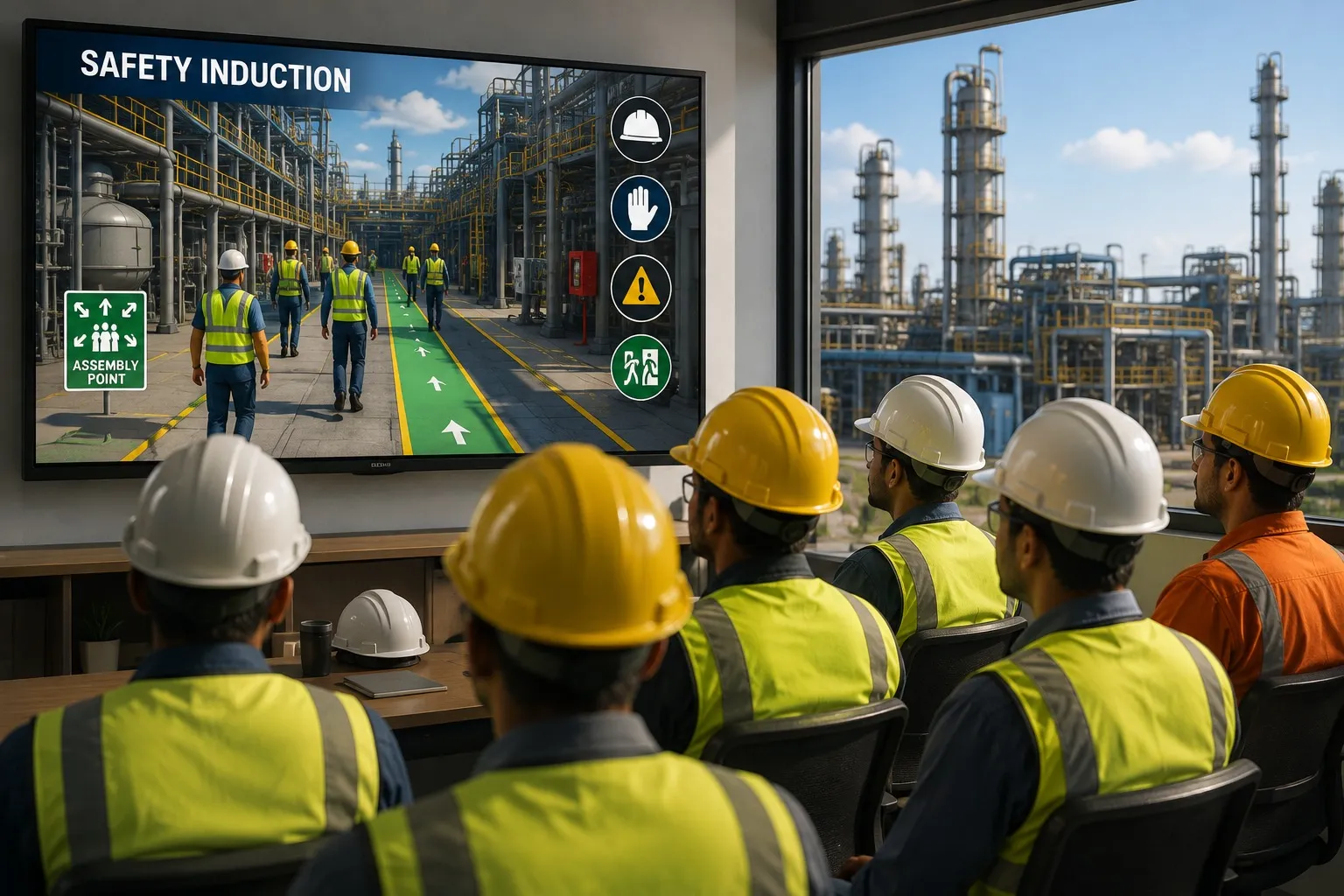
Absolutely. Organizations frequently use incident animations during induction programs, toolbox talks, annual safety training, contractor orientation, and compliance awareness sessions.
Manufacturing, oil & gas, construction, mining, chemical processing, logistics, utilities, pharmaceuticals, and heavy engineering industries all benefit from incident recreation and safety training animations.
Visual learning makes complex sequences easier to understand, improves employee engagement, increases knowledge retention, and encourages meaningful discussions during safety training.
Have a Project in Mind?
Need help with 3D animation, industrial visualization, HSE training animation, or product visualization? Tell us about your project and our team will get back to you.