

Table of Contents
Introduction
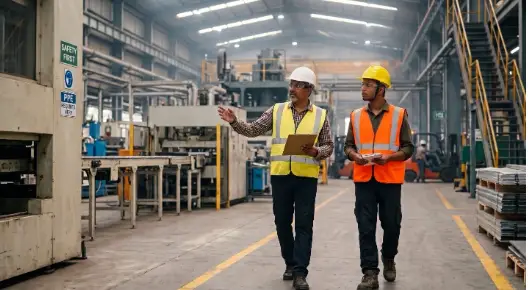
Personal Protective Equipment (PPE) is one of the most fundamental layers of workplace safety. Organizations across industries follow established Personal Protective Equipment (PPE) guidelines to help protect workers from occupational hazards. Whether employees are working in manufacturing plants, construction sites, warehouses, chemical processing facilities or energy projects, wearing the right protective equipment helps reduce the risk of injuries and supports safer day-to-day operations.
However, simply providing PPE or conducting a classroom presentation does not always ensure that employees understand when, why, and how to use it correctly.
This is where 3D Animation for PPE Training offers a significant advantage. By visually demonstrating real workplace situations, proper equipment usage, and the consequences of incorrect practices, organizations can make safety training more engaging, practical, and memorable.
In this article, we explore how 3D animation strengthens PPE training programs and contributes to better safety awareness across industrial workplaces.
Why PPE Training Requires More Than Classroom Sessions
Many organizations conduct PPE training during employee induction or as part of periodic safety programs. While these sessions communicate important information, they often rely heavily on presentations, printed manuals, or verbal instructions.
Employees may remember the rules immediately after training but struggle to apply them consistently on the shop floor, especially when exposed to changing work environments or unfamiliar tasks. Effective PPE training also supports broader occupational health and safety objectives, which are emphasized in ISO 45001, the international standard for occupational health and safety management systems.
Common challenges include:
- Difficulty identifying the correct PPE for different work activities
- Improper wearing or adjustment of safety equipment
- Limited understanding of the hazards PPE is designed to reduce
- Lower engagement during traditional training sessions
- Knowledge gaps among multilingual or contract workforces
Visual learning can bridge many of these gaps by demonstrating correct practices in realistic industrial environments.
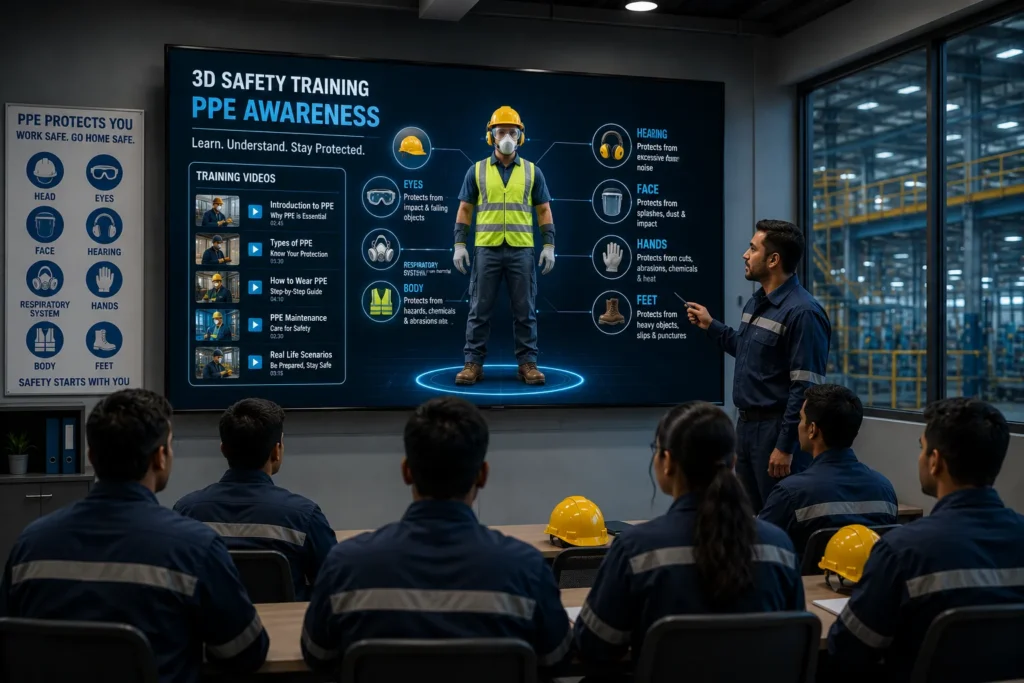
How 3D Animation Makes PPE Training More Effective
1. Demonstrates Correct PPE Usage Step by Step
One of the biggest strengths of animation is its ability to show procedures clearly.
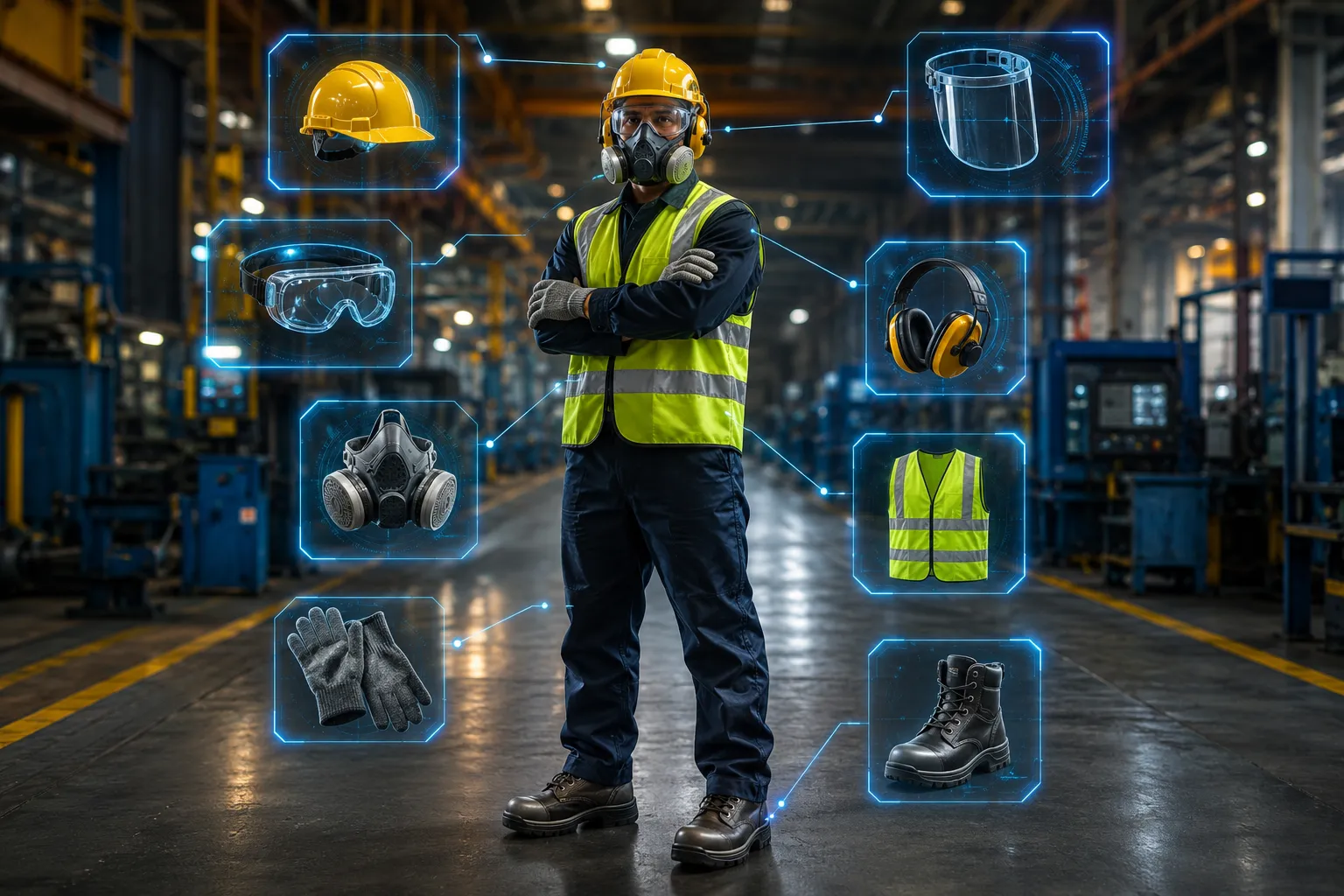
Instead of relying only on written instructions, a 3D animation can illustrate:
- How to wear safety helmets correctly
- Proper fitting of respirators
- Correct use of safety harnesses
- Inspection of gloves before use
- Wearing face shields and eye protection
- Proper use of hearing protection
Every step becomes easy to understand because learners can see the complete process rather than imagining it.
2. Shows PPE Selection for Different Workplace Hazards
Different work environments require different protective equipment.
For example:
| Workplace Activity | Recommended PPE |
| Welding | Welding helmet, gloves, flame-resistant clothing |
| Chemical Handling | Chemical-resistant gloves, goggles, respirator |
| Working at Height | Full body harness, helmet, safety shoes |
| Grinding Operations | Face shield, goggles, hearing protection |
| Material Handling | Safety shoes, gloves, helmet |
Selecting the correct PPE should always be based on a workplace hazard assessment and applicable OSHA PPE standards, ensuring employees receive appropriate protection for the tasks they perform.
Animation helps employees understand why certain PPE is required for specific tasks instead of memorizing generic rules.
3. Visualizes Hazards That Cannot Be Seen
Many workplace hazards are invisible.
Examples include:
- Harmful dust particles
- Toxic gases
- Chemical vapors
- Flying microscopic debris
- Noise exposure
- Heat radiation
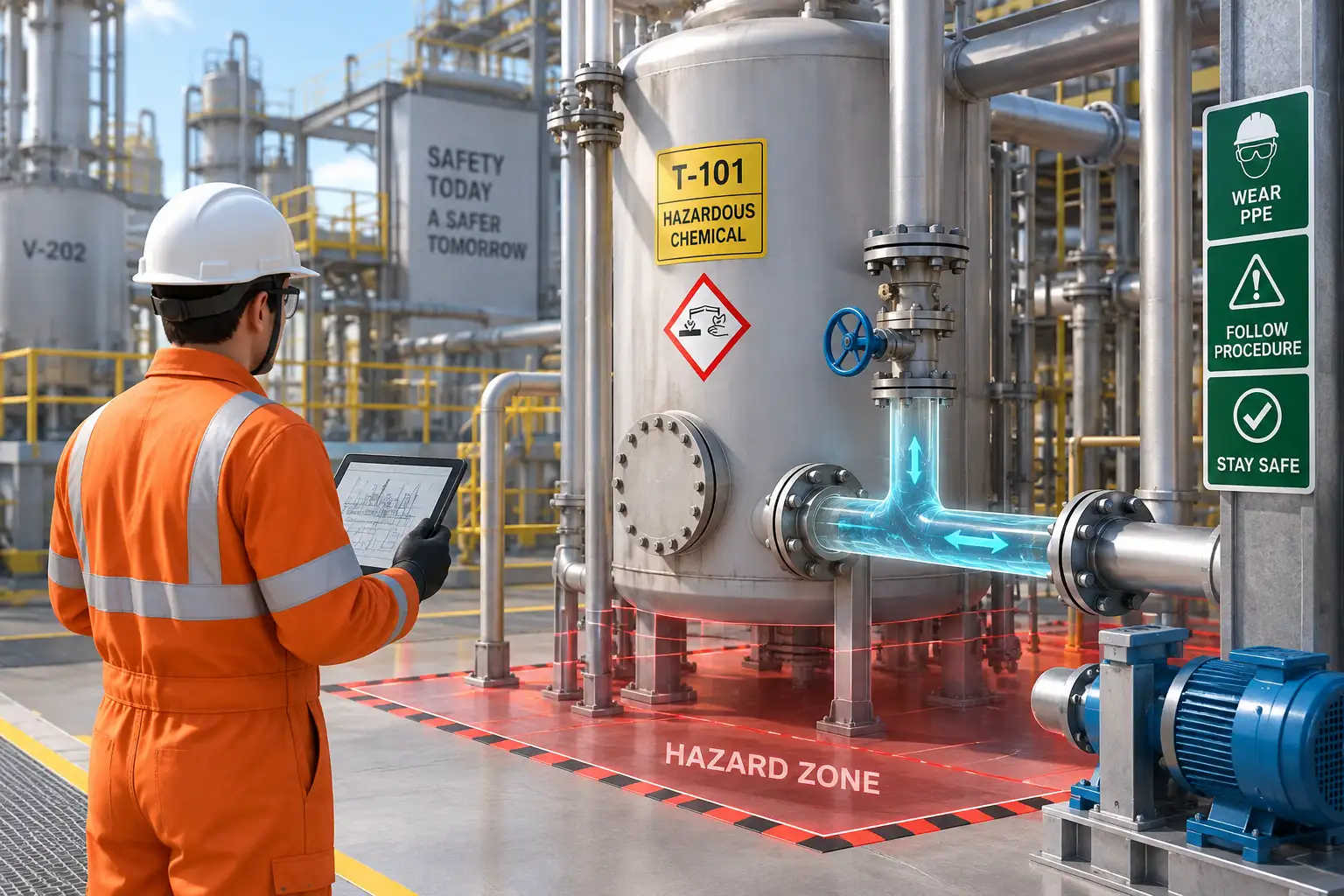
3D animation can visually represent these invisible hazards, making it easier for employees to understand the purpose of each protective device.
This improves both awareness and acceptance of PPE requirements.
4. Demonstrates Consequences Without Real-World Risk
Safety training should educate, not expose employees to danger.
Animation allows organizations to recreate scenarios such as:
- Falling objects
- Chemical splashes
- Arc flash incidents
- Flying metal particles
- Equipment malfunctions
Learners can observe how PPE reduces injury risk without recreating hazardous situations in real life.
This approach supports safer learning while reinforcing correct safety behaviors.
5. Standardizes Training Across Multiple Locations
Large organizations often operate across several facilities, regions, or project sites.
When different trainers deliver the same topic, training quality may vary.
A professionally developed PPE training animation ensures that every employee receives the same visual explanation, regardless of:
- Location
- Trainer
- Shift timing
- Language support
- Experience level
This consistency is particularly valuable for organizations with distributed teams and contractors.
Improving Safety Awareness Beyond PPE
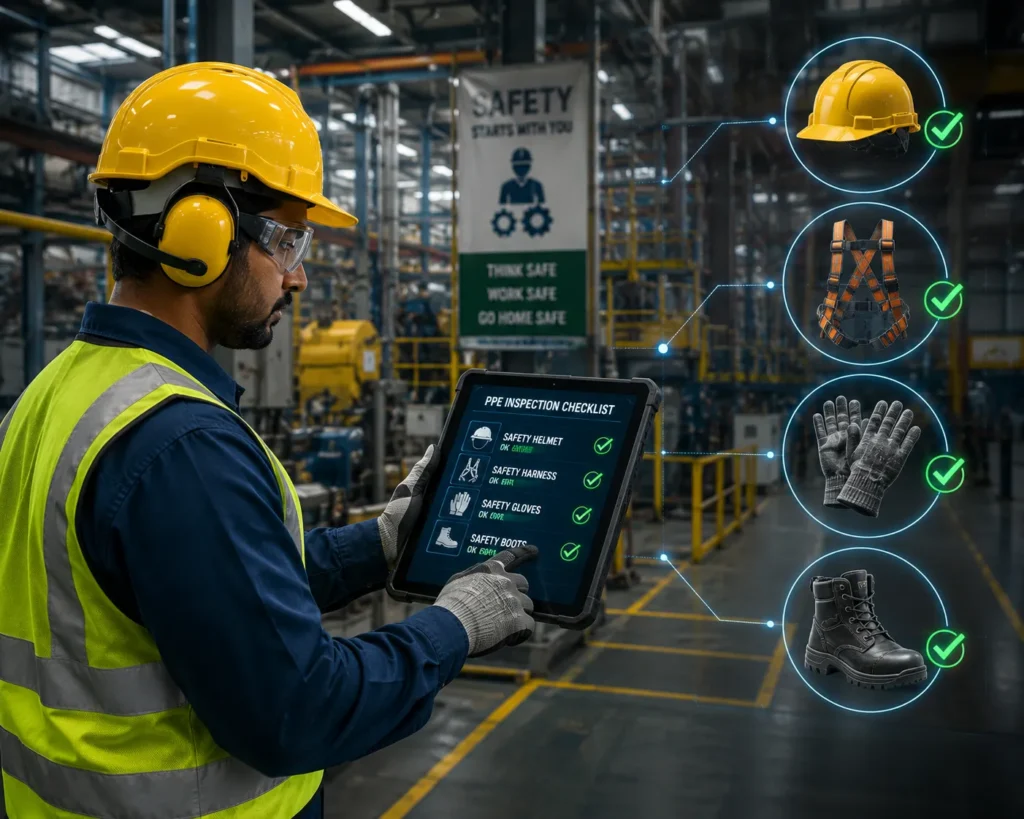
While 3D Animation for PPE Training is highly effective in teaching the correct selection, use, and maintenance of personal protective equipment, its applications extend far beyond PPE alone. Organizations can use the same visual training approach to educate employees on a wide range of workplace hazards, safe work practices and emergency procedures. By combining PPE instruction with broader safety topics, companies can build a stronger safety culture and improve overall safety awareness across their workforce.
3D animation can also reinforce broader workplace safety concepts, including:
- Hazard identification
- Safe equipment operation
- Emergency response
- Lockout/Tagout (LOTO) awareness
- Safe lifting techniques
- Fire safety
- Good housekeeping practices
- Incident reporting procedures
When employees understand both the hazards they may encounter and the preventive measures available to them, they are better equipped to make informed decisions and follow safe work practices in their daily operations.
Better Knowledge Retention Through Visual Learning
People generally remember visual demonstrations more effectively than text-heavy presentations.
3D animation combines:
- Motion
- Color
- Realistic environments
- Sequential learning
- Practical demonstrations
These elements help learners connect safety procedures with real workplace activities.
Animations can also be replayed during refresher training, toolbox talks, or onboarding sessions, ensuring consistent reinforcement of key safety messages.
Supporting a Multilingual Workforce
Industrial organizations often employ people from diverse linguistic and cultural backgrounds.
Traditional training materials may require multiple translations, while lengthy presentations can create communication challenges.
3D animation reduces language barriers by emphasizing visual demonstrations over text. Narration, subtitles, or voiceovers can be adapted for different languages while retaining the same visual content.
This makes PPE training more accessible and inclusive for a broader workforce.
Where PPE Training Animation Can Be Used
Organizations integrate animated PPE training into various stages of employee development. Many companies also incorporate EHS training animation services into broader safety programs to deliver consistent, engaging, and standardized learning experiences across multiple locations.
These animations can be used for:
- New employee induction
- Contractor onboarding
- Site-specific safety orientation
- Toolbox talks
- Annual refresher training
- Process-specific safety training
- Digital learning platforms
- Safety campaigns and awareness weeks
Because animations are reusable, they help maintain consistency while supporting ongoing learning initiatives.
Industries That Benefit from PPE Training Animation
Nearly every industrial sector can benefit from visual PPE education, including:
- Manufacturing
- Construction
- Oil & Gas
- Chemical Processing
- Pharmaceuticals
- Warehousing & Logistics
- Mining
- Utilities
- Renewable Energy
- Heavy Engineering
- Steel Fabrication
- Infrastructure Projects
Each industry faces unique hazards, making task-specific animated training particularly valuable.
Integrating PPE Training with a Broader Safety Program
PPE training is most effective when it forms part of a comprehensive safety strategy. Organizations often combine PPE-focused animations with modules covering:
- Hazard communication
- Safe work procedures
- Equipment operation
- Emergency evacuation
- Confined space awareness
- Working at height
- Electrical safety
- Incident investigation
A structured library of animated safety content allows employees to build knowledge progressively while reinforcing a culture of continuous learning. Organizations can further strengthen employee engagement by incorporating safety training animation for HSE compliance, enabling workers to better understand safety procedures, regulatory requirements, and emergency response protocols through realistic visual scenarios.
FAQs
3D animation for PPE training uses realistic visual simulations to demonstrate the correct selection, use, inspection, and maintenance of personal protective equipment in workplace environments.
Animated training simplifies complex procedures through visual demonstrations, making it easier for employees to understand, remember, and apply safe work practices.
Manufacturing, construction, oil and gas, chemical processing, mining, warehousing, pharmaceuticals, utilities, heavy engineering, and many other industrial sectors can benefit from PPE training animation.
Yes. The same animation can be localized with different voiceovers or subtitles while maintaining consistent visual instructions for all employees.
Organizations typically provide PPE refresher training during periodic safety programs, annual compliance training, onboarding of new employees, and when introducing new equipment or work processes.
Conclusion
Effective PPE training goes beyond explaining regulations, it helps employees understand how protective equipment relates to the hazards they encounter every day. 3D Animation for PPE Training transforms safety education into a practical, visual experience by demonstrating correct usage, illustrating workplace risks, and delivering consistent training across teams.
As organizations continue to strengthen workplace safety programs, animated learning resources provide an engaging way to improve awareness, reinforce best practices, and support long-term knowledge retention. When integrated with broader HSE and EHS initiatives, 3D animation becomes a valuable tool for helping employees recognize risks and apply safe work practices with greater confidence.
Have a Project in Mind?
Need help with 3D animation, industrial visualization, HSE training animation, or product visualization? Tell us about your project and our team will get back to you.