

Table of Contents
Introduction
Every year, thousands of young people take their first steps into factories, warehouses, construction sites, and processing plants. They may be apprentices, trainees, interns, or first-time hires fresh out of school or technical college. They bring energy, curiosity, and a willingness to learn. They also bring something less visible: very little experience of what industrial environments can do when something goes wrong.
For employers, this is both an opportunity and a responsibility. Here is what makes young workers different from a safety standpoint, and how organisations can support them well from day one.
Why Young Workers Face Higher Risk
Worldwide, workers under 25 are injured at higher rates than their more experienced colleagues. Several factors contribute:
- Limited experience and hazard recognition: An experienced operator can often sense that a machine sounds wrong or that a floor is too slick. A new entrant hasn’t yet built that instinct. Many hazards simply aren’t recognised as hazards.
- Reluctance to speak up: Young workers often hesitate to ask questions, stop a task, or question an instruction. They don’t want to look incompetent or difficult, especially when starting a new job. Silence is one of the most underrated risk factors in any workplace.
- Eagerness to prove themselves: A willingness to take on extra work, move quickly, or skip a step to keep up with seniors can lead to shortcuts that more experienced workers know to avoid.
- Still developing: Research on adolescent and young adult development suggests that risk assessment and impulse control continue to mature into the mid-twenties. This isn’t a criticism. It’s a reason to design workplaces and training with it in mind.
- Inadequate or rushed induction: Often the biggest factor is the simplest: new workers are placed on the job before they’ve been properly prepared, or they receive a single day of induction and are expected to retain everything.
The International Labour Organization identifies factors such as limited work experience, inadequate training, and lower awareness of workplace hazards as contributors to young workers’ occupational safety risks.
Legal Considerations
Rules vary by country and sector, but most jurisdictions place extra obligations on employers of young people. These commonly include:
- Minimum age for industrial work, and for specific tasks or machinery
- Restrictions on hazardous processes, such as work at height, confined spaces, certain chemicals, or heavy machinery
- Limits on working hours, night shifts, and overtime
- Requirements for supervision, medical fitness checks, or documented risk assessments specific to young workers
In India, for example, the Factories Act and related regulations set conditions for adolescent workers, and the Child and Adolescent Labour (Prohibition and Regulation) Act restricts adolescents from hazardous occupations. If you operate across regions, check the local rules for each site. Compliance isn’t only about avoiding penalties. It reflects a basic recognition that young people need a different level of protection.

Practical Steps for Employers
The most effective programmes for young workers share a few habits.
- Assess the task, not just the person: Before assigning work, ask whether this task is appropriate for someone with limited experience. If it carries high risk, consider whether it should be done by a young worker at all, or only under direct supervision.
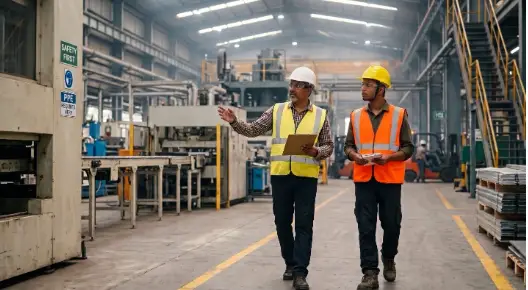
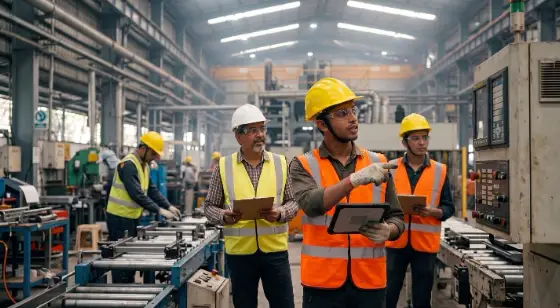
- Pair with a capable mentor: A buddy or mentor who is patient, safety-minded, and trained to coach (not just to work) makes a major difference. Choose mentors carefully. A new worker will copy what they see, including bad habits.
- Make it safe to ask questions: Tell new starters, and show them through your actions, that stopping to ask is expected. Supervisors who respond to questions with irritation teach workers to stay quiet.
- Introduce hazards gradually: Don’t hand someone a thick manual on day one. Layer information over weeks: basic site rules first, then area-specific hazards, then task-specific procedures, with check-ins to confirm understanding.
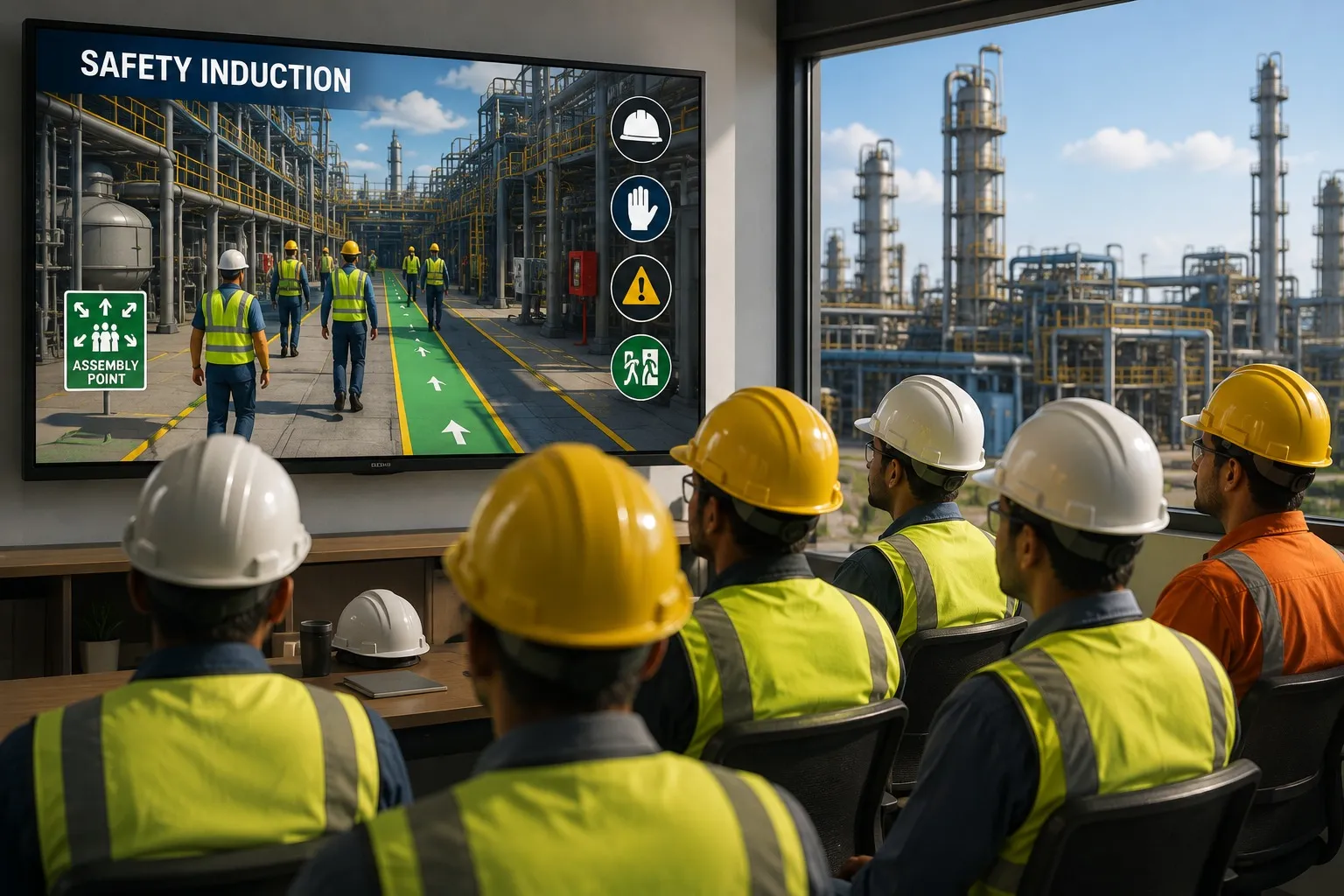
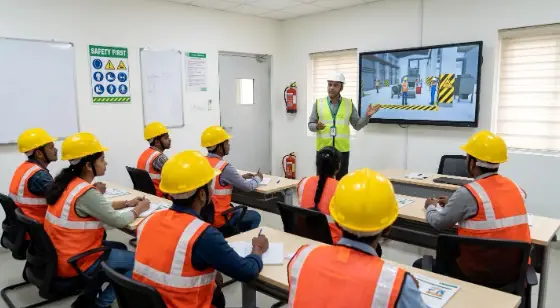
- Check understanding, not attendance: A signed attendance sheet proves someone was in the room. It doesn’t prove they know what to do in an emergency. Short quizzes, walk-throughs, and “show me” questions give a much truer picture. Young workers should also understand evacuation routes, alarm procedures, and incident reporting through practical exercises and emergency response training.
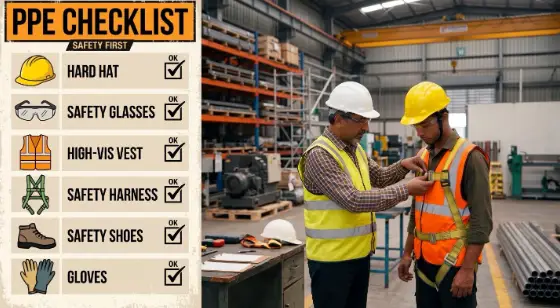
- Be clear on PPE: Young workers often haven’t used safety footwear, respirators, or hearing protection before. Make sure the equipment fits, explain why it matters, and show how to wear and check it correctly.
- Revisit regularly: Retention fades. Refresher sessions at 30, 60, and 90 days help new knowledge settle into habit.
Making Training Land with a Younger Audience
Telling a young worker what to do is not the same as helping them understand it. Many first-time workers join industry straight from school, college, or a technical course, where information is delivered very differently from a plant floor. Training that ignores this gap often ends up as a formality: delivered, signed off, and quickly forgotten.
A few principles tend to make the difference.
- Keep it short and focused: Attention drops quickly when a single session tries to cover site rules, PPE, emergency procedures, and machine hazards all at once. Breaking content into short modules of a few minutes each, one topic at a time, makes it easier to absorb and easier to repeat.
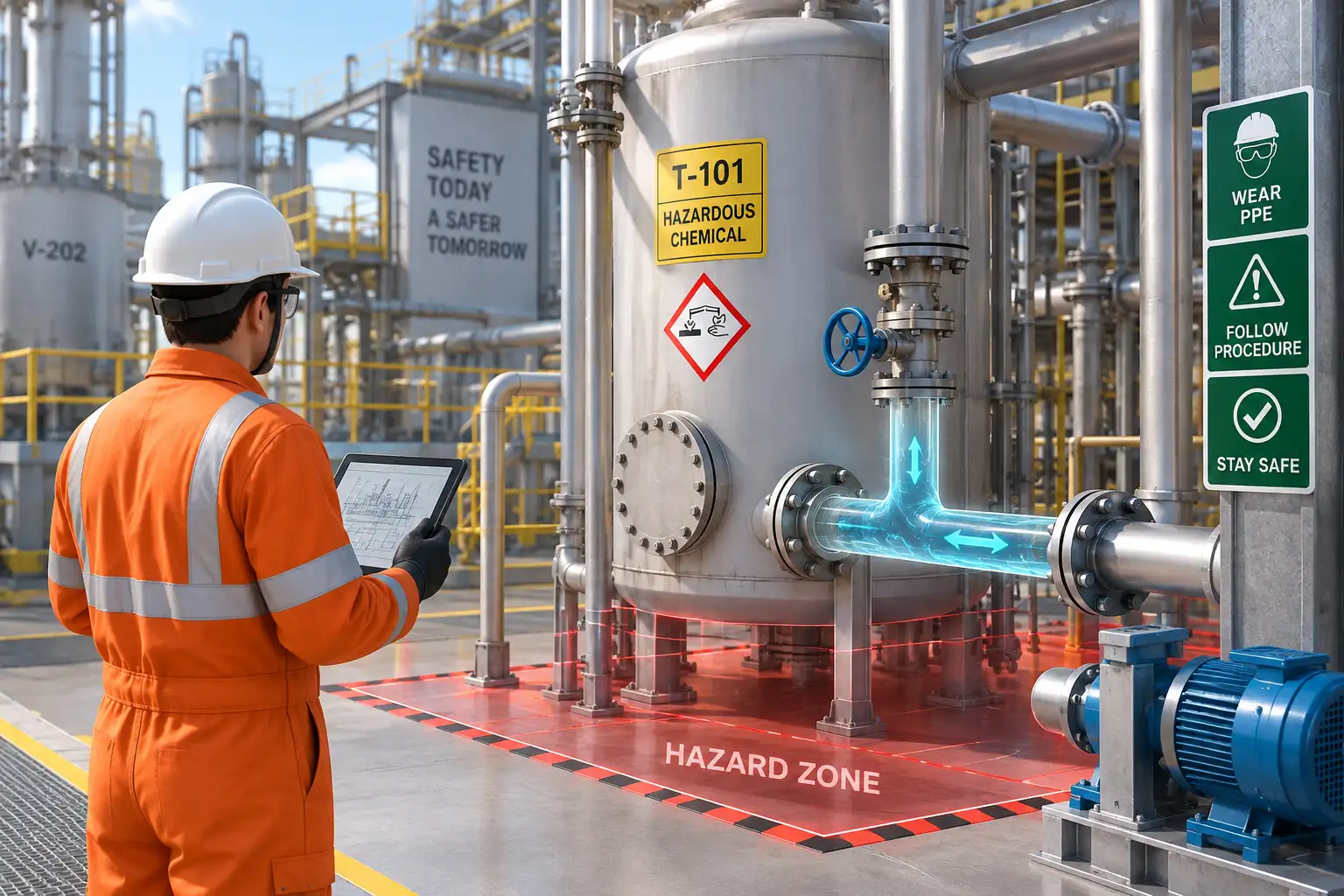
- Make it specific to the workplace: Generic content such as “wear your PPE” or “watch for moving parts” doesn’t connect with a worker standing in front of a particular press, conveyor, or chemical store. When training shows the equipment, layout, and tasks the worker will actually encounter, it becomes relevant much faster.
- Explain the “why”, not just the “what”: Young workers are more likely to follow a rule when they understand what it prevents. Showing what can happen when a lockout step is skipped, or why a guard must stay in place, builds judgment rather than just compliance.
- Use plain, conversational language: Dense procedural wording and heavy jargon create distance. Short sentences, simple terms, and a respectful tone make workers more comfortable asking questions later.
- Respect language and literacy differences: In many workplaces, new workers come from different regions and speak different languages. Safety information that is not understood is the same as safety information not given. Training that is available in the worker’s own language, with minimal reliance on dense written text, reaches far more people.
- Make it repeatable: Nobody retains everything from a single session. Training that workers can revisit, before starting a new task, after an incident or near miss, or during a refresher, supports memory far better than a one-time induction. A well-designed safety training animation can demonstrate how hazards develop, what can go wrong, and which safe practices workers should follow.
- Pair it with conversation and practice: No training format replaces a supervisor walking through the area, a mentor demonstrating a task, or a worker being asked to explain a procedure back. The best programmes treat formal training as a starting point, with conversation and hands-on practice following it.
A Simple Checklist for Your First 90 Days
If you’re bringing young workers into your facility, here’s a quick self-check:
- Have we completed a risk assessment that specifically considers young or inexperienced workers?
- Are restricted tasks and areas clearly identified?
- Does every new starter have a named mentor or supervisor?
- Is induction spread over time rather than packed into one day?
- Do we verify understanding with more than a signature?
- Do workers know exactly who to go to, and how, if something feels unsafe?
- Are refreshers scheduled?
If the answer to several of these is “not yet,” that’s a useful place to start.
How Immersiv Techsphere Addresses This Challenge
At Immersiv Techsphere, we create personalised animated safety training videos for industrial organisations. When the audience includes young or new workers, our approach is built around one principle: training should reflect the client’s actual site, not a generic industrial environment.
Through our EHS animation services, we help organisations communicate site-specific workplace hazards, safety procedures, and emergency response practices through realistic visual demonstrations.
- Understanding the site and the audience: We begin by learning how the client’s operations actually work. This usually means reviewing their processes, equipment, existing safety procedures, and past incidents or near misses, and understanding the roles that new or young workers will fill. We also ask about the workforce itself: languages spoken, typical education levels, and where induction has fallen short in the past.
- Defining what the worker should take away: Before anything is written or animated, we agree on specific learning goals. For example, a new operator should be able to identify the main hazards at a particular machine, know which PPE is required, and know when to stop and ask. Clear goals keep the video focused and make it easier to check afterwards whether the training worked.
- Scripting in plain language: We use AI tools to speed up drafting, adapt tone for a younger audience, and prepare versions in different languages. The scripts are then reviewed by our team and checked against the client’s procedures and relevant standards. The AI helps with speed and adaptation, while accuracy and judgment stay with people.
- Building the animation in 3D: We recreate the relevant work environment, equipment, and tasks in 3D so the scenes resemble the client’s real setting. Animation lets us show situations that would be difficult or unsafe to demonstrate live, such as what happens when a safeguard is bypassed, without exposing anyone to risk.
- Review with the client’s safety team:
-> Before release: The client’s safety and operations team review the videos to confirm they match how work is done on their site and their internal rules. Their feedback is built in before the content reaches any trainee.
-> After release: refine and update. Sites change, equipment is replaced, and procedures are updated. We treat videos as content that should evolve with the workplace, and feedback from supervisors and trainees often points to parts that could be clearer.
-> Where the videos fit: Our videos are meant to support a wider induction approach, not replace it. They give every new worker a consistent starting point, with the same message, in their language. Mentoring, floor walkthroughs, hands-on practice, and open conversation about safety still do the rest.
Frequently Asked Questions
Start with a risk assessment that specifically considers young or inexperienced workers, and confirm which tasks or areas are restricted under local regulations. Assign a trained mentor or supervisor, introduce hazards gradually rather than all in one day, and verify understanding through practical checks, not just a signed attendance sheet.
Strongly. New workers tend to copy what colleagues do, including shortcuts. If experienced co-workers skip a step or remove a guard “just this once”, a young worker may assume that’s normal practice. This is why the example set by the people around a new worker is as important as any formal instruction.
Start by understanding why. The cause may be a misunderstanding, unclear instructions, peer pressure, or a belief that the rule isn’t enforced. A private, respectful conversation usually works better than public criticism. Re-explain the reason behind the rule, check that the worker has what they need to follow it, and escalate through your disciplinary process only if the behaviour continues.
No. Video works best as one part of a wider approach. It can give every new worker a consistent starting point, in their own language, and can be revisited when needed. Mentoring, floor walkthroughs, hands-on practice, and open conversation about safety remain essential.
It depends on the number of videos, the complexity of the site, and how quickly review feedback comes back. A short, single-topic video can often be completed within a few weeks, while a full induction series covering several areas takes longer. We usually start with a scoping discussion with your safety team to give a realistic timeline.
Conclusion
Preparing young workers for industrial environments requires more than a one-time safety induction. Clear procedures, effective supervision, practical training, and regular reinforcement help new employees recognise hazards, make informed decisions, and develop safe working habits from the beginning.
By investing in structured safety training, organisations can help young workers build confidence in following procedures and contribute to a stronger workplace safety culture.
Need to strengthen safety training for young workers?
Immersiv Techsphere develops EHS animations and customised safety training videos to help organisations communicate workplace hazards, safe operating procedures, and emergency response practices through clear visual demonstrations. Explore how visual training content can support your workplace safety initiatives.
Have a Project in Mind?
Need help with 3D animation, industrial visualization, HSE training animation, or product visualization? Tell us about your project and our team will get back to you.