

Table of Contents
Introduction
3D printing has transformed the way products, prototypes, components, and customized parts are designed and manufactured. Also known as additive manufacturing, 3D printing creates physical objects by adding material layer by layer based on a digital 3D model.
Unlike conventional manufacturing processes that may involve cutting material away or using molds and dies, additive manufacturing builds a component progressively. This approach provides designers and manufacturers with greater flexibility when developing complex geometries, prototypes, customized products, and low-volume components.
Today, 3D printing is used across industries including automotive, aerospace, healthcare, consumer products, engineering, education, and industrial manufacturing.
Whether it is being used to create an early-stage prototype or a functional component, understanding the technology, materials, processes, and design considerations is essential for achieving successful results.
What Is 3D Printing?
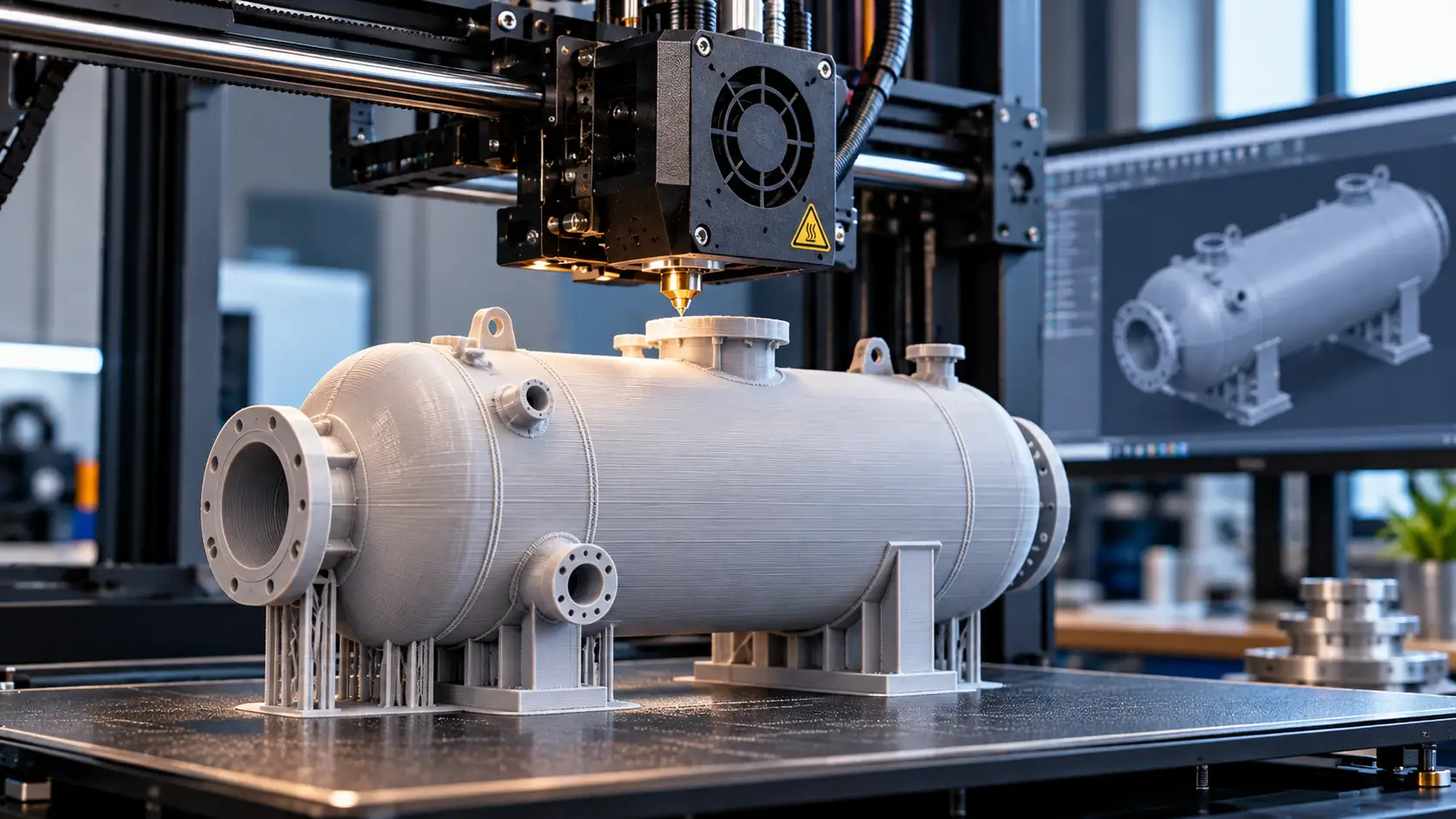
3D printing is a manufacturing technology that creates three-dimensional objects layer by layer from digital design data.
It can help businesses shorten prototyping cycles, produce customized components, manufacture complex geometries, and reduce the need for certain types of tooling. The appropriate 3D-printing technology depends on factors such as the required material, accuracy, strength, surface finish, production quantity, and application.
How Digital CAD Models Become Physical Components
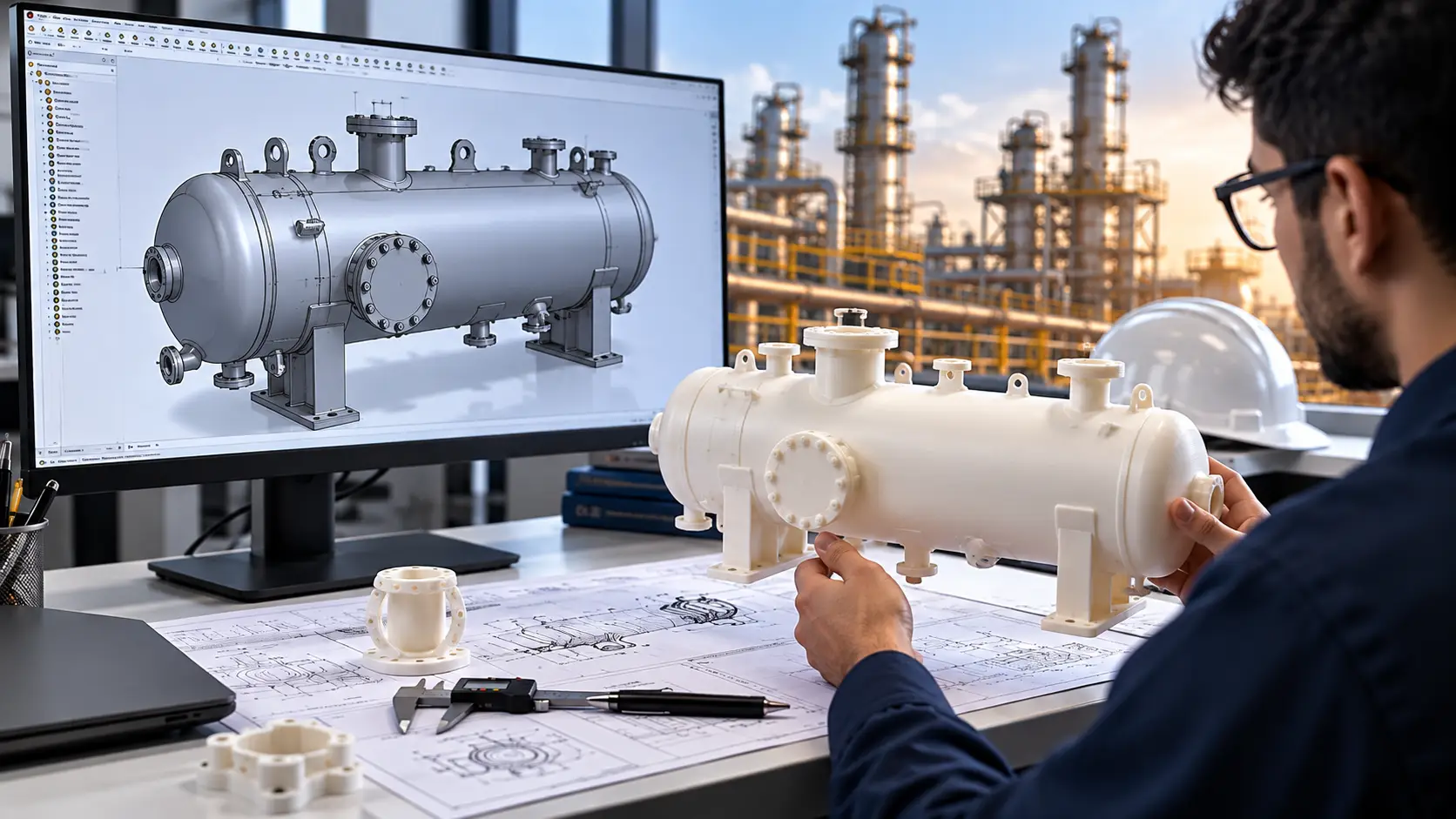
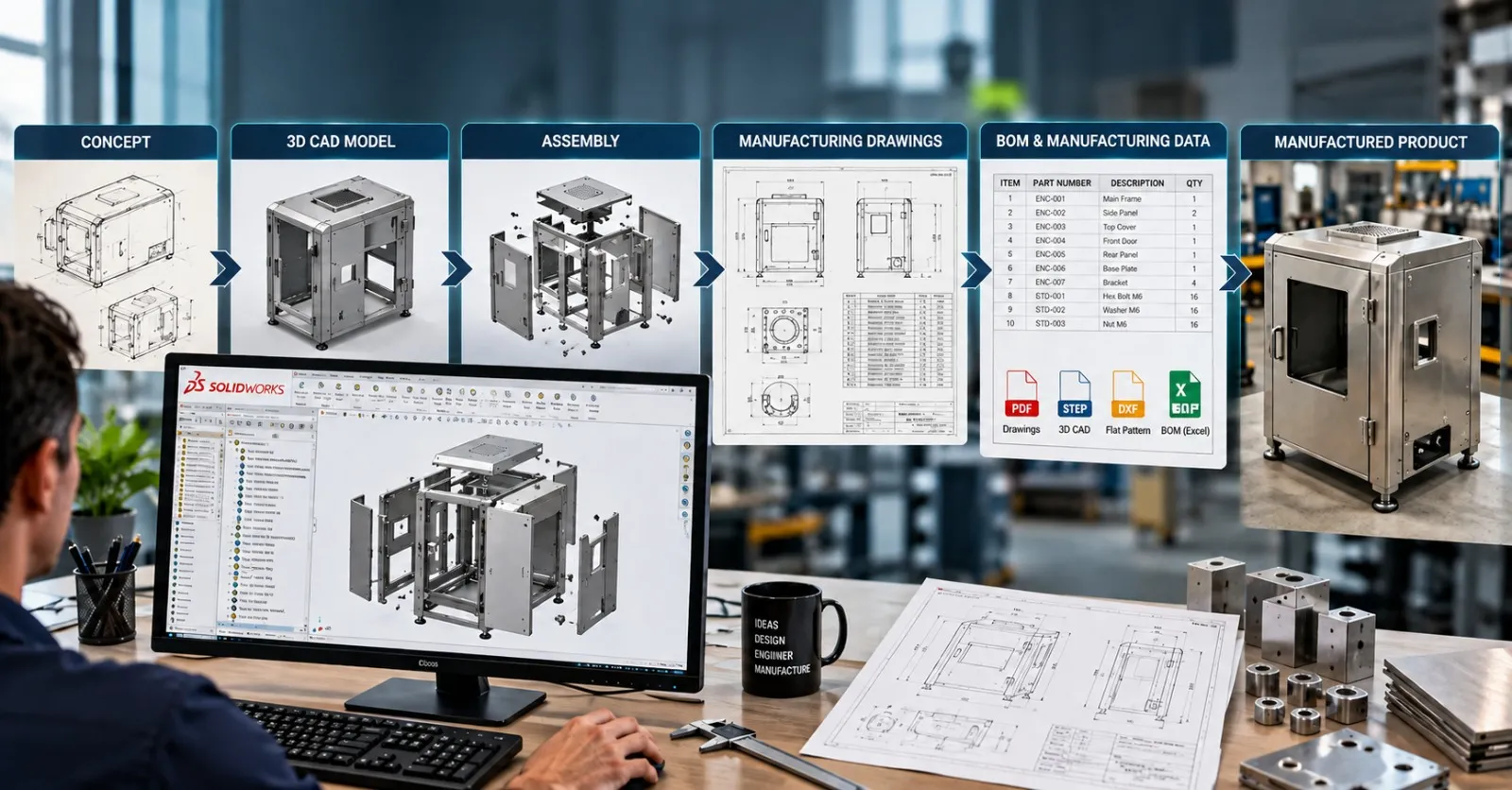
3D printing is an additive manufacturing process in which a physical object is produced from digital 3D model data. A typical workflow starts with a digital model created using CAD software, followed by preparation using slicing or manufacturing software.
Major technology families include material extrusion, vat photopolymerization, powder bed fusion, material jetting, binder jetting, and directed energy deposition.
Common materials include PLA, PETG, ABS, ASA, TPU, nylon, engineering polymers, photopolymer resins, metal alloys, and composite materials. Material selection should be based on the functional and environmental requirements of the finished component.
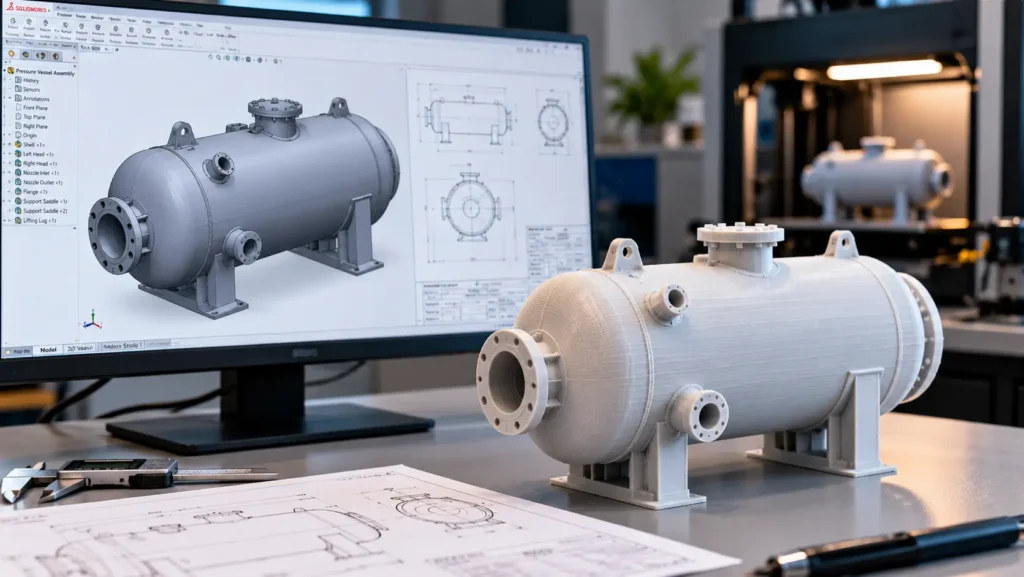
7 Steps in the 3D Printing Workflow: From CAD Model to Finished Part
- Create a 3D Model: The process begins with a digital model created using CAD software.
- Prepare the Model: Check for open surfaces, incorrect geometry, insufficient wall thickness, and other problems.
- Select Technology and Material: Choose the appropriate printing technology and material based on the application.
- Slice the Model: Slicing software converts the model into layers and generates printer instructions.
- Print the Component: The printer builds the component one layer at a time.
- Remove Supports and Post-Process: Remove supports and perform sanding, curing, machining, painting, heat treatment, or other finishing when required.
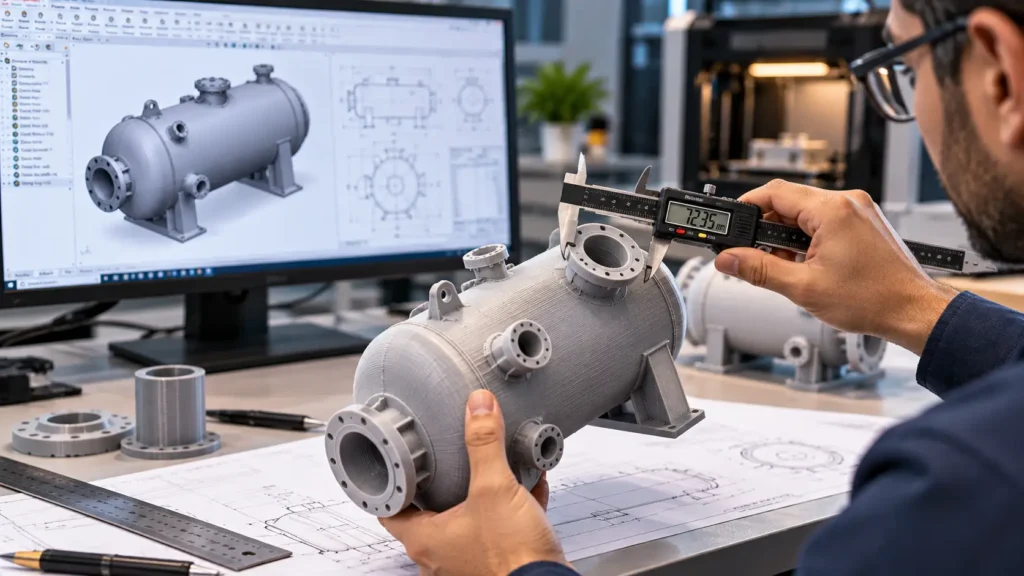
- Inspect the Final Part: Verify dimensions, appearance, fit, and application-specific requirements.
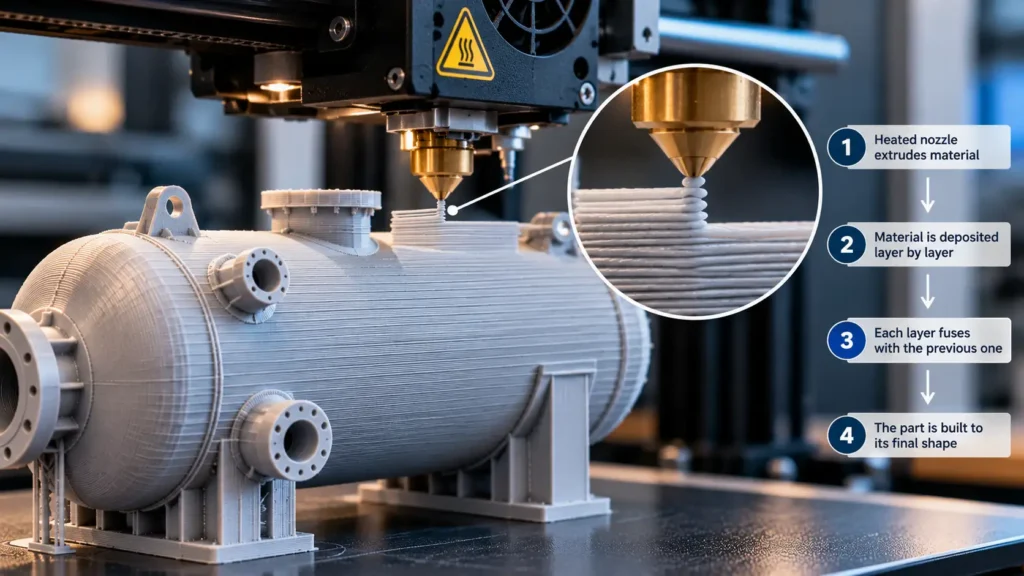
How 3D Printing Improves Prototyping, Customization and Design Iteration
- Rapid Prototyping: Physical models can be created, evaluated, modified, and reproduced without waiting for conventional tooling.
- Design Flexibility: Complex geometries, customized shapes, internal features, and lattice structures can be produced depending on the technology.
- Customization: Digital designs can be modified for specific requirements, making the technology useful for customized products and specialized components.
- Reduced Material Waste: Additive manufacturing adds material to create a component rather than generally starting with a larger block and removing material.
- Lower Tooling Requirements: Prototypes and some low-volume applications can reduce or eliminate the need for dedicated molds, dies, or other tooling.
- Faster Design Iteration: Digital designs can be modified and printed repeatedly during product development.
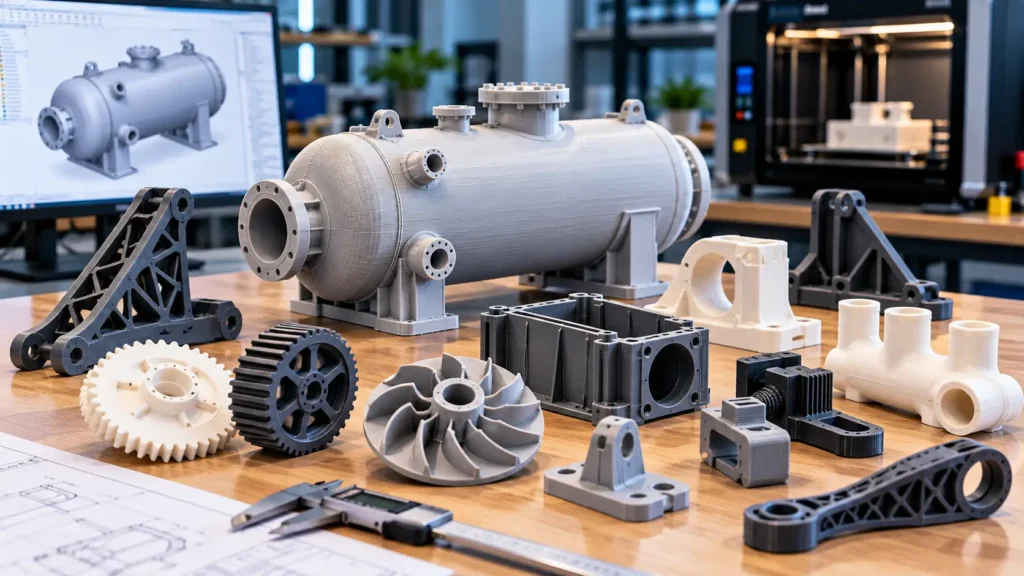
Where 3D Printing Is Used: Applications Across Engineering and Manufacturing
- Product Development: Physical prototypes can be used to evaluate form, fit, function, assembly, ergonomics, and appearance.
- Automotive: Applications include prototypes, customized components, design verification, fixtures, tooling, and selected production applications.
- Aerospace: Additive manufacturing can support lightweight and complex component designs, as well as prototyping and specialized manufacturing.
- Healthcare: Applications can include anatomical models, customized devices, surgical planning models, and other uses subject to applicable requirements.
- Industrial Manufacturing: Applications include machine components, brackets, housings, covers, fixtures, jigs, assembly aids, and replacement components.
- Architecture and Design: 3D printing can create architectural models, concept models, scale models, and presentation prototypes.
- Education and Research: 3D printers are used to demonstrate engineering, design, manufacturing, and scientific concepts.
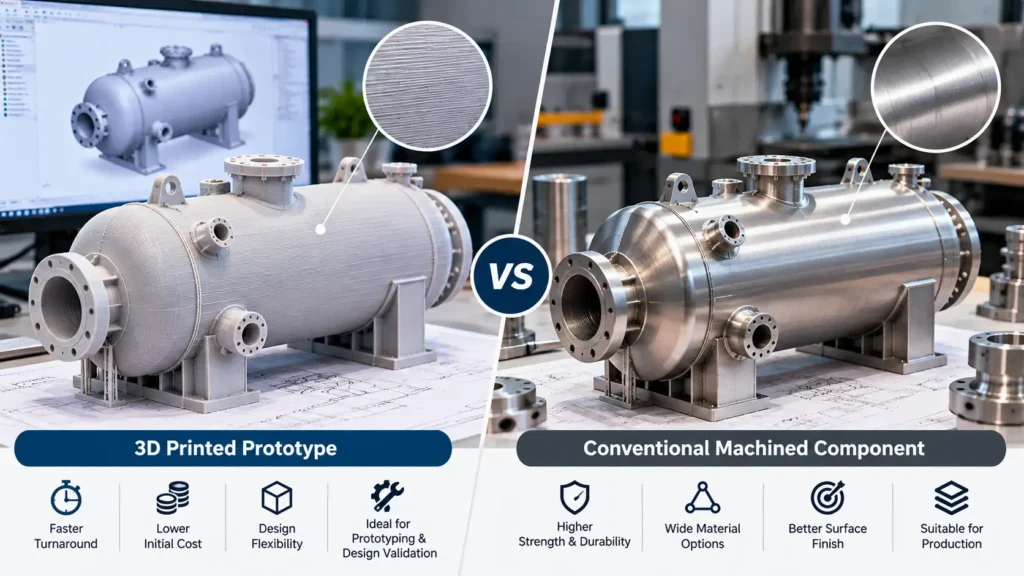
3D Printing vs. Conventional Manufacturing: Which Process Fits Your Part?
3D printing and traditional manufacturing are not necessarily competing approaches. Each has applications where its particular characteristics are useful.
3D printing generally builds parts layer by layer, while traditional methods may remove, form, or mold material. 3D printing is often useful for rapid prototyping, customization, complex geometries, and certain low-volume applications. Traditional processes can be more appropriate for high-volume production or applications requiring particular tolerances, materials, finishes, or production economics.
Key comparison factors include manufacturing principle, prototyping speed, customization, complex geometry, tooling, low-volume production, material options, surface finish, and production volume.
How to Plan a 3D Printing Project for Functional and Production-Ready Parts
- Define the Requirement: Determine whether the objective is prototyping, testing, customization, tooling, replacement parts, or production.
- Evaluate the Design: Check wall thickness, overhangs, holes, tolerances, moving components, assembly requirements, and support requirements.
- Select the Technology: Choose the appropriate additive manufacturing technology.
- Select the Material: Consider strength, flexibility, temperature, chemical exposure, environment, appearance, and service life.
- Optimize the Print: Adjust orientation, layer height, supports, infill, and other process parameters.
- Produce the Part: Manufacture the component using the prepared instructions.
- Inspect and Test: Check dimensions and functional requirements.
- Iterate if Necessary: Modify the digital design or manufacturing parameters and produce another version.
CAD Software, Printing Technologies and Standards Used in Additive Manufacturing
- CAD Software: Used to create and modify three-dimensional models.
- Slicing and Manufacturing Software: Converts models into printer instructions and allows process parameters to be configured.
- 3D Printing Technologies: Common technology families include material extrusion, vat photopolymerization, powder bed fusion, material jetting, binder jetting, and directed energy deposition.
- Industry Standards: ISO and ASTM standards cover terminology, design, materials, processes, testing, qualification, and other aspects of additive manufacturing.
Engineering Example: Validating a Mechanical Enclosure with 3D Printing
Consider a company developing a new mechanical enclosure. The engineering team creates the enclosure in CAD and needs to verify dimensions, assembly, screw locations, component clearance, and overall design.
Instead of immediately manufacturing production tooling, the team can produce a prototype using 3D printing.
Workflow: CAD Design → Design Review → 3D Printing → Assembly Test → Design Modification → Revised Prototype.
During the first prototype, the team may identify issues such as component interference, mounting-hole adjustments, insufficient clearance, assembly constraints, or reinforcement requirements. The CAD model can then be modified and another prototype produced.
What Affects 3D Printing Accuracy, Strength and Surface Quality?
- Material Selection: The wrong material can result in insufficient strength, excessive flexibility, poor temperature resistance, or unsuitable environmental performance.
- Dimensional Accuracy: Printed dimensions can vary with technology, material, machine, orientation, process parameters, and geometry.
- Surface Finish: Layer-based manufacturing can produce visible layer lines or other surface characteristics, and additional finishing may be required.
- Print Orientation: Orientation affects support requirements, surface finish, printing time, and mechanical behavior.
- Support Structures: Complex geometries may require supports, increasing material use and post-processing.
- Production Volume: The most appropriate manufacturing method depends on quantity and project economics.
- Post-Processing: Some applications require machining, sanding, curing, painting, heat treatment, or other finishing.
Design and Process Guidelines for Reliable 3D-Printed Components
- Design for the Selected Technology: Consider the capabilities and limitations of the intended printing technology.
- Choose Material Based on the Application: Consider mechanical, thermal, chemical, environmental, and functional requirements.
- Optimize Print Orientation: Balance surface quality, supports, strength, and printing time.
- Consider Tolerances: Design appropriate clearances for mating and moving components.
- Minimize Unnecessary Supports: Optimize geometry and orientation where practical.
- Test Functional Prototypes: Test important components under expected conditions.
- Inspect Critical Dimensions: Use appropriate measurement methods when dimensional accuracy is important.
- Document the Process: Record design versions, materials, machine parameters, and inspection requirements for repeatability.
When Does 3D Printing Make Business and Manufacturing Sense?
3D printing can be considered for rapid prototype development, frequent design changes, customized components, complex geometries, low-volume production, replacement or obsolete components, custom jigs and fixtures, product visualization, design validation, and reduced dependence on prototype tooling.
The decision should be based on the complete manufacturing requirement rather than simply choosing 3D printing because it is a newer technology.
From CAD Design to Prototype Validation: Engineering Support from Immersiv Techsphere
Immersiv Techsphere supports product development through 3D CAD modelling, mechanical design, and technical drawing preparation. Our team uses tools such as SolidWorks and Autodesk Inventor to develop detailed 3D models based on project requirements. These models help engineers evaluate component geometry, mounting points, clearances, and assembly compatibility.
Design reviews can identify potential interference issues before manufacturing begins. Based on feedback, CAD models and engineering drawings can be modified to improve design accuracy. Our expertise covers mechanical components, sheet metal enclosures, industrial equipment, and customized product designs.
Accurate CAD data also provides a foundation for physical prototyping and design validation. Immersiv Techsphere helps businesses refine product designs and prepare for the next stage of product development.
Frequently Asked Questions
3D printing is an additive manufacturing process that creates physical objects by building material layer by layer from digital 3D model data.
A digital 3D model is prepared using manufacturing software and converted into instructions for a 3D printer, which builds the object layer by layer.
Materials depend on the technology and can include PLA, PETG, ABS, ASA, TPU, nylon, resins, engineering polymers, composites, and metals.
Major families include material extrusion, vat photopolymerization, powder bed fusion, material jetting, binder jetting, and directed energy deposition.
Applications include rapid prototypes, product development, customized components, engineering parts, jigs and fixtures, architectural models, research, and selected manufacturing.
It can be suitable for customized parts, complex geometries, prototypes, and some low-volume production. Suitability depends on the application.
Consider material, part size, accuracy, surface finish, strength, production quantity, geometry, post-processing, and cost.
Choosing the Right 3D Printing Approach for Product Development
3D printing has become an important part of modern product development and manufacturing. By creating components directly from digital design data, additive manufacturing provides flexibility for prototyping, customization, complex geometries, and selected production applications.
Successful 3D printing depends on more than selecting a printer. Material selection, design, orientation, process parameters, post-processing, inspection, and application requirements all play an important role.
As additive manufacturing technologies and materials continue to develop, businesses can use 3D printing alongside conventional manufacturing to create new products, test designs, produce customized components, and improve development workflows.
Have a Project in Mind?
Need help with 3D animation, industrial visualization, HSE training animation, or product visualization? Tell us about your project and our team will get back to you.