

Table of Contents
Introduction
Welding, gas cutting, grinding, and other hot work activities are common across manufacturing plants, fabrication workshops, construction sites, oil & gas facilities, and industrial maintenance operations. However, these activities also introduce serious workplace hazards due to sparks, high temperatures, molten metal, flammable materials, and potential fire or explosion risks.
A small spark can ignite nearby combustible materials, while improper equipment handling or inadequate workplace preparation can lead to serious accidents.
Although organizations provide safety instructions, PPE guidelines, and permit-to-work procedures, explaining every potential hazard through written documents or classroom presentations can be challenging. Workers need to understand how hot work hazards develop, where risks exist, and what precautions must be followed before, during, and after the operation.
This is where Hot Work Safety Animation becomes a valuable training solution.
Using realistic 3D industrial environments, organizations can demonstrate welding hazards, cutting operations, fire risks, unsafe working practices, and preventive safety measures through visual training videos.
At Immersiv Techsphere, we develop customized HSE and EHS animations that transform complex industrial safety procedures into clear visual learning experiences for employees, contractors, and maintenance teams.
What Is Hot Work Safety?
Hot work refers to activities that generate heat, flames, sparks, or other ignition sources that could potentially cause a fire or explosion.
Common hot work activities include:
- Arc welding and gas welding
- Gas cutting and plasma cutting
- Metal grinding and abrasive cutting
- Brazing and soldering
- Torch operations
- Heating and other spark-producing activities
These operations are frequently performed in fabrication workshops, manufacturing facilities, construction projects, shipyards, and industrial maintenance areas.
Without appropriate safety precautions, hot work can expose workers to several hazards, including:
- Fire caused by sparks contacting combustible materials.
- Explosion risks in areas containing flammable gases or vapours.
- Burns caused by molten metal, hot surfaces, and welding sparks.
- Exposure to welding fumes and hazardous gases.
- Eye injuries caused by welding arcs and ultraviolet radiation.
- Injuries resulting from improper handling of gas cylinders and equipment.
A well-planned hot work safety training program helps employees recognize these risks before beginning their tasks.
Common Hot Work Hazards in Industrial Workplaces
Understanding how hazards develop is essential for preventing workplace incidents. A 3D safety animation can recreate these situations and demonstrate the consequences of unsafe practices without exposing workers to actual danger.
1. Fire Hazards from Welding Sparks
During welding and grinding, sparks and hot metal particles can travel beyond the immediate working area.
If combustible materials such as paper, wood, packaging, oil, or chemical residues are present nearby, these particles can trigger a fire.
Hot work safety animation can demonstrate:
- Sparks travelling towards nearby combustible materials.
- Fire developing in an unprotected working area.
- Improper use of welding screens and fire blankets.
- The importance of clearing or protecting surrounding materials.
- Correct positioning of fire extinguishers and fire protection equipment.
2. Gas Cutting and Cylinder Handling Hazards
Gas cutting operations involve combustible gases and oxygen supplied through cylinders, regulators, and hoses.
Incorrect connections, damaged hoses, gas leakage, or improper cylinder storage can create serious fire and explosion hazards.
Through 3D animation, workers can understand:
- Correct gas cylinder positioning and securing.
- Inspection of regulators, valves, and hoses.
- Identification of damaged connections and gas leakage.
- Safe handling and storage practices.
- Proper shutdown procedures after completing the operation.
3. Fire and Explosion in Confined or Restricted Areas
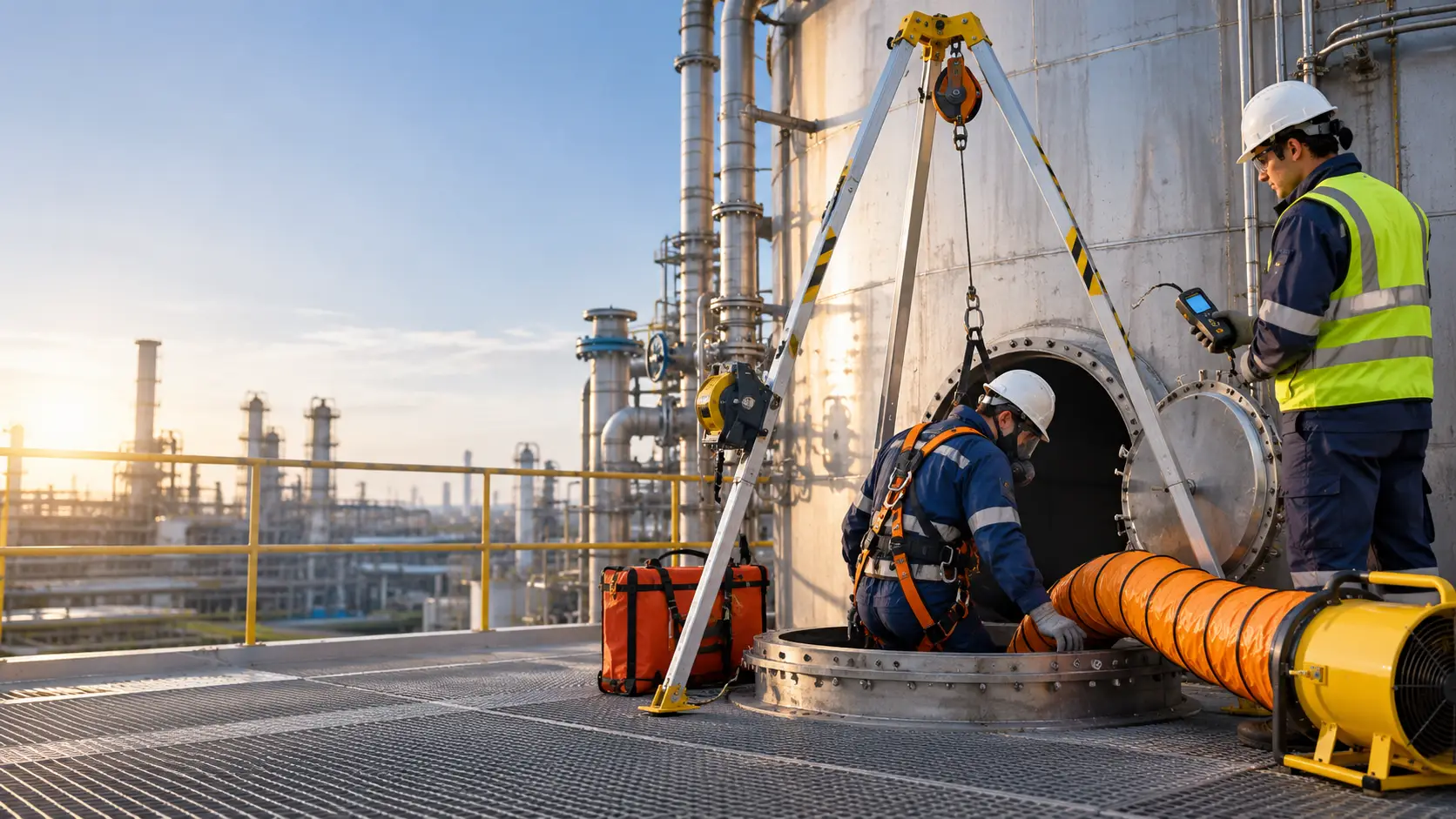
Hot work inside tanks, vessels, pipelines, and other enclosed spaces requires additional precautions.
Flammable residues, inadequate ventilation, and hazardous atmospheres can increase the risk of fire, explosion, and exposure to harmful gases.
A realistic 3D safety animation can illustrate:
- Potential flammable atmospheres inside industrial equipment.
- Isolation and preparation of equipment before hot work.
- Gas testing and atmospheric monitoring.
- Ventilation requirements.
- Permit-to-work authorization.
- Emergency response arrangements.
These visual scenarios are particularly useful for oil & gas facilities, chemical plants, and process industries.
4. Welding Fume and PPE Hazards
Welding operations can expose workers to hazardous fumes, gases, intense light, heat, and flying particles.
Incorrect PPE selection or improper use of protective equipment can increase the risk of occupational injuries.
Safety animation can demonstrate the correct use of:
- Welding helmets and appropriate eye protection.
- Flame-resistant clothing.
- Leather welding gloves.
- Safety footwear.
- Respiratory protection where required by the risk assessment.
- Welding screens and appropriate ventilation arrangements.
Showing correct and incorrect PPE practices helps workers understand why protective equipment is essential during hot work activities.
How Hot Work Safety Animation Improves Industrial Training
Traditional safety training explains what workers should do. However, complex industrial activities often require visual demonstrations to make procedures easier to understand.
3D Hot Work Safety Animation helps organizations communicate hazards, preventive measures, and emergency procedures through realistic industrial scenarios.
1. Visualizing Unsafe Working Conditions
An animation can recreate a fabrication workshop or industrial maintenance area where a worker begins welding without checking the surroundings.
The video can show sparks reaching combustible materials, smoke developing, and fire spreading.
The same scene can then demonstrate the correct approach, including area inspection, removal of combustible materials, fire-resistant shielding, and proper authorization.
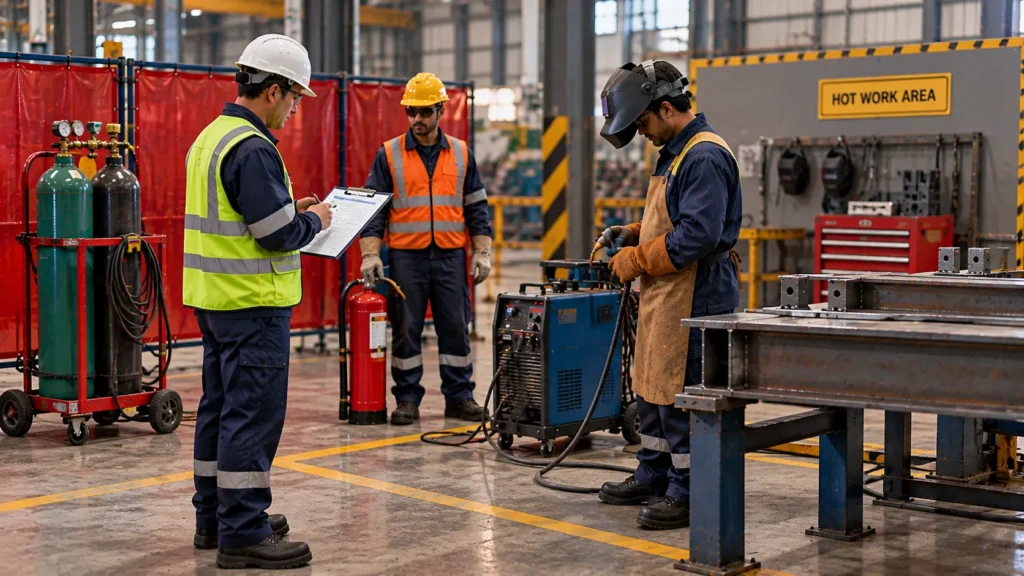
2. Demonstrating the Hot Work Permit Process
Hot work should begin only after the required workplace assessment and authorization have been completed.
A dedicated animation can explain the permit-to-work process through a step-by-step sequence:
- Identify the proposed hot work location and activity.
- Conduct a hazard assessment.
- Check surrounding materials and potential ignition sources.
- Isolate relevant equipment and energy sources where required.
- Verify atmospheric conditions when applicable.
- Arrange fire protection and fire watch personnel.
- Obtain the required authorization before starting work.
- Monitor the work area during the operation.
- Complete post-work inspection and close the permit.
The animation can also highlight the responsibilities of workers, supervisors, permit issuers, and fire watch personnel.
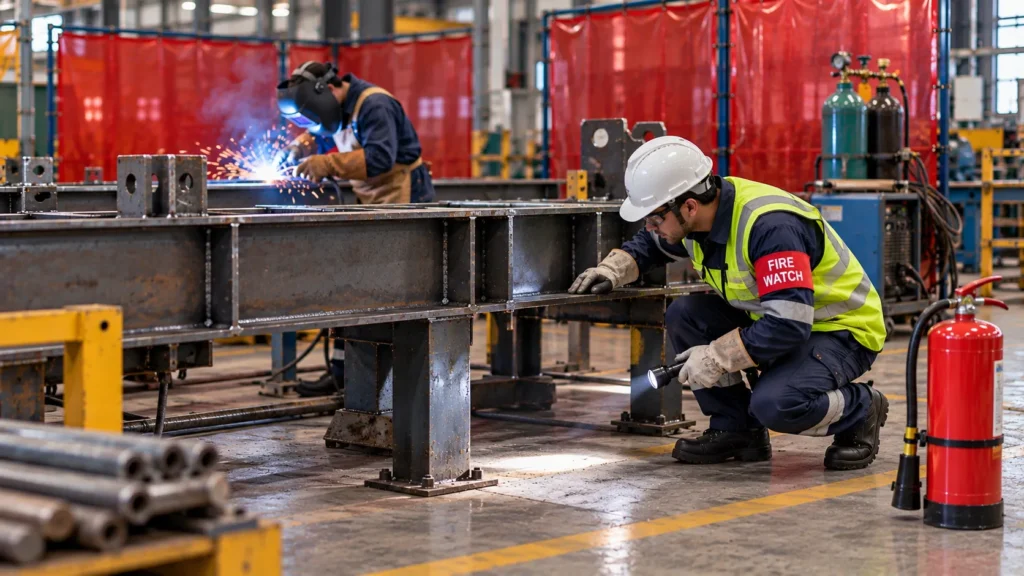
3. Showing the Role of a Fire Watch
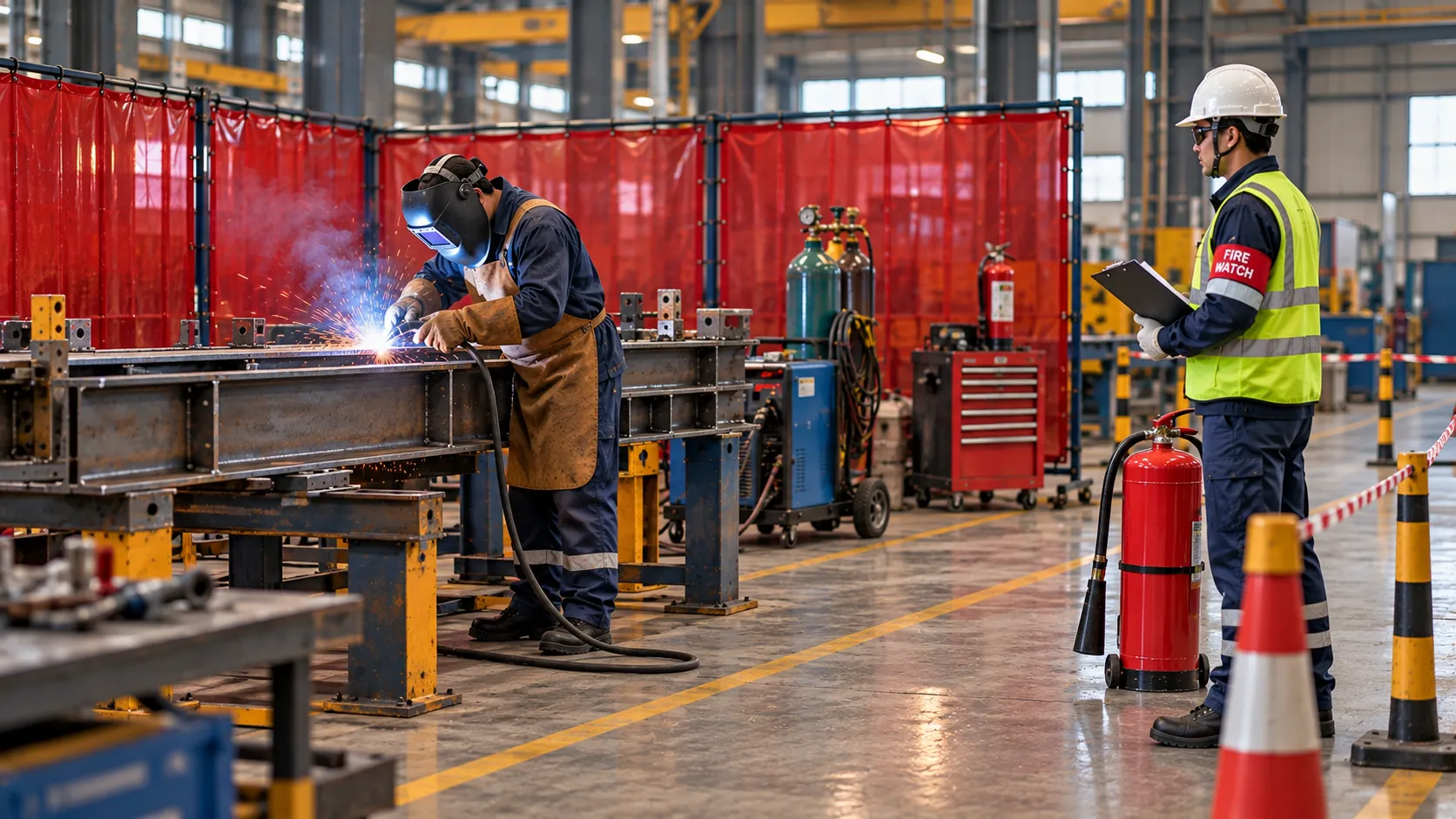
A fire watch plays an important role in monitoring the hot work area and responding to developing fire hazards.
Instead of explaining this responsibility through written instructions alone, animation can show a designated fire watch observing the operation, monitoring surrounding areas, maintaining communication, and keeping suitable firefighting equipment accessible.
It can also demonstrate the importance of monitoring the area after welding or cutting has stopped, according to the applicable site procedure.
4. Recreating Fire Emergency Scenarios
Fire emergencies can be difficult to demonstrate through conventional training without introducing unnecessary risks.
Using 3D industrial animation, organizations can safely recreate:
- Sparks igniting combustible materials.
- Smoke developing around a welding station.
- Fire spreading towards nearby equipment.
- Workers raising an emergency alarm.
- Safe shutdown of the operation.
- Evacuation through designated routes.
- Emergency response and fire-fighting arrangements.
These scenarios help employees understand how an unsafe situation can develop and what actions are expected during an emergency.
What Can Be Covered in a Hot Work Safety Animation?
At Immersiv Techsphere, hot work safety training can be developed around the actual operations, equipment, and workplace procedures of an organization.
Depending on the training requirements, the animation may cover:
1. Welding Safety Training
- Arc welding hazards and precautions.
- Welding machine and cable inspection.
- Welding screens and protective equipment.
- Safe positioning and workplace preparation.
2. Gas Cutting Safety
- Gas cylinder handling.
- Regulator and hose inspection.
- Torch operation and leak identification.
- Safe shutdown and storage procedures.
3. Grinding and Cutting Safety
- Grinding wheel inspection.
- Machine guards and protective covers.
- Spark direction and surrounding hazards.
- Eye, face, and hand protection.
4. Fire Prevention and Fire Watch
- Removal of combustible materials.
- Fire-resistant blankets and protective screens.
- Fire extinguisher availability.
- Fire watch responsibilities.
- Post-work fire monitoring.
5. Hot Work Permit and Authorization
- Permit application and approval.
- Workplace hazard assessment.
- Equipment isolation.
- Gas testing where applicable.
- Work authorization and permit closure.
6. Emergency Response
- Fire detection and alarm activation.
- Emergency communication.
- Safe evacuation.
- Emergency shutdown.
- Fire response according to site procedures.
Our Approach to Developing Hot Work Safety Animation
An effective safety animation should represent the actual working environment rather than simply show generic welding activities.
At Immersiv Techsphere, we combine engineering understanding, 3D visualization, and animation workflows to develop industrial safety training content.
Our development process includes:
1. Understanding Safety Requirements
We review available SOPs, risk assessments, hot work permits, equipment details, and training requirements to understand the intended safety message.
2. Script and Storyboard Development
The safety procedure is converted into a structured script and visual storyboard. Each scene is planned around a particular hazard, unsafe action, preventive measure, or emergency response.
3. 3D Modelling and Environment Creation
Industrial workshops, welding equipment, gas cylinders, workers, PPE, fabrication components, and surrounding environments are developed using 3D modelling techniques.
4. Animation Production
The complete scenario is animated to demonstrate worker activities, hazard development, safety precautions, and correct operating practices.
5. AI-Assisted Content Development
AI-assisted workflows can support selected stages of production, including visual development, voice generation, subtitles, and multilingual content preparation.
6. Review and Final Delivery
The animation is reviewed with the client’s safety and operations teams to ensure that the visuals and procedures match the intended training requirements.
Final videos can be delivered for employee induction, toolbox talks, refresher training, internal presentations, and digital learning platforms.
Why Choose Customized 3D HSE Animation for Hot Work Training?
Every industrial facility has different equipment, operating conditions, workplace layouts, and safety procedures.
Generic safety videos may introduce basic concepts, but they may not always reflect the actual working conditions of a particular facility.
Customized 3D HSE animation offers several advantages:
- Site-Specific Visualization: Recreate actual workshops, fabrication areas, equipment, and industrial environments.
- Clear Hazard Demonstration: Show how sparks, flames, gas leakage, and other hazards can develop.
- Consistent Training: Deliver standardized safety messages across employees, contractors, and multiple shifts.
- Safer Learning Environment: Demonstrate dangerous situations without physically recreating hazardous incidents.
- Multilingual Communication: Add voiceovers and subtitles to support diverse workforces.
- Reusable Training Content: Use videos during induction, refresher sessions, toolbox talks, and safety awareness programs.
The objective is to make safety procedures easier to understand and apply in real working environments.
Build Better Hot Work Safety Awareness with Immersiv Techsphere
Preventing welding, cutting, and fire-related incidents requires more than distributing safety instructions. Employees need to recognize hazards, understand preventive measures, and know their responsibilities before starting hot work activities.
Hot Work Safety Animation provides a practical way to demonstrate these requirements through realistic industrial scenarios.
At Immersiv Techsphere, we develop customized HSE Animation, EHS Animation, and 3D Industrial Safety Training Videos for manufacturing plants, fabrication facilities, oil & gas companies, construction sites, and other industrial environments.
Our animation capabilities include welding safety, gas cutting procedures, fire prevention, PPE awareness, permit-to-work training, emergency response, and incident recreation.
Whether you need a single hot work safety video or a complete library of industrial safety training animations, we can help transform your procedures into clear visual learning content.
Have a hot work safety procedure that is difficult to explain through conventional training?
Explore our HSE Animation Services and discuss your industrial safety animation requirements with Immersiv Techsphere.
Frequently Asked Questions (FAQs)
Hot Work Safety Animation is a visual training method that uses 2D or 3D animation to demonstrate hazards and preventive measures associated with welding, gas cutting, grinding, and other spark-producing industrial activities.
Hot work safety training helps employees recognize fire and explosion hazards, understand permit requirements, use appropriate PPE, inspect equipment, and follow preventive measures before, during, and after hot work operations.
Welding safety animation can cover fire hazards, welding sparks, burns, fumes, UV radiation, gas leakage, electrical hazards, improper PPE usage, and unsafe working conditions.
Yes. 3D animation can visually explain workplace inspection, hazard assessment, equipment isolation, atmospheric testing where required, permit authorization, fire watch responsibilities, and permit closure.
Yes. Customized videos can be developed using actual workshop layouts, welding equipment, gas cutting systems, workplace photographs, SOPs, and company-specific safety procedures.
Yes. 3D animation can recreate sparks igniting combustible materials, fire spreading, gas leakage scenarios, and emergency response procedures in a controlled virtual environment.
Manufacturing, fabrication, construction, shipbuilding, oil & gas, chemical processing, power generation, heavy engineering, and industrial maintenance companies can use hot work safety animation for employee and contractor training.
Yes. Safety animations can include multilingual voiceovers and subtitles to help communicate important safety instructions to workers from different linguistic backgrounds.
Have a Project in Mind?
Need help with 3D animation, industrial visualization, HSE training animation, or product visualization? Tell us about your project and our team will get back to you.