

Table of Contents
Introduction
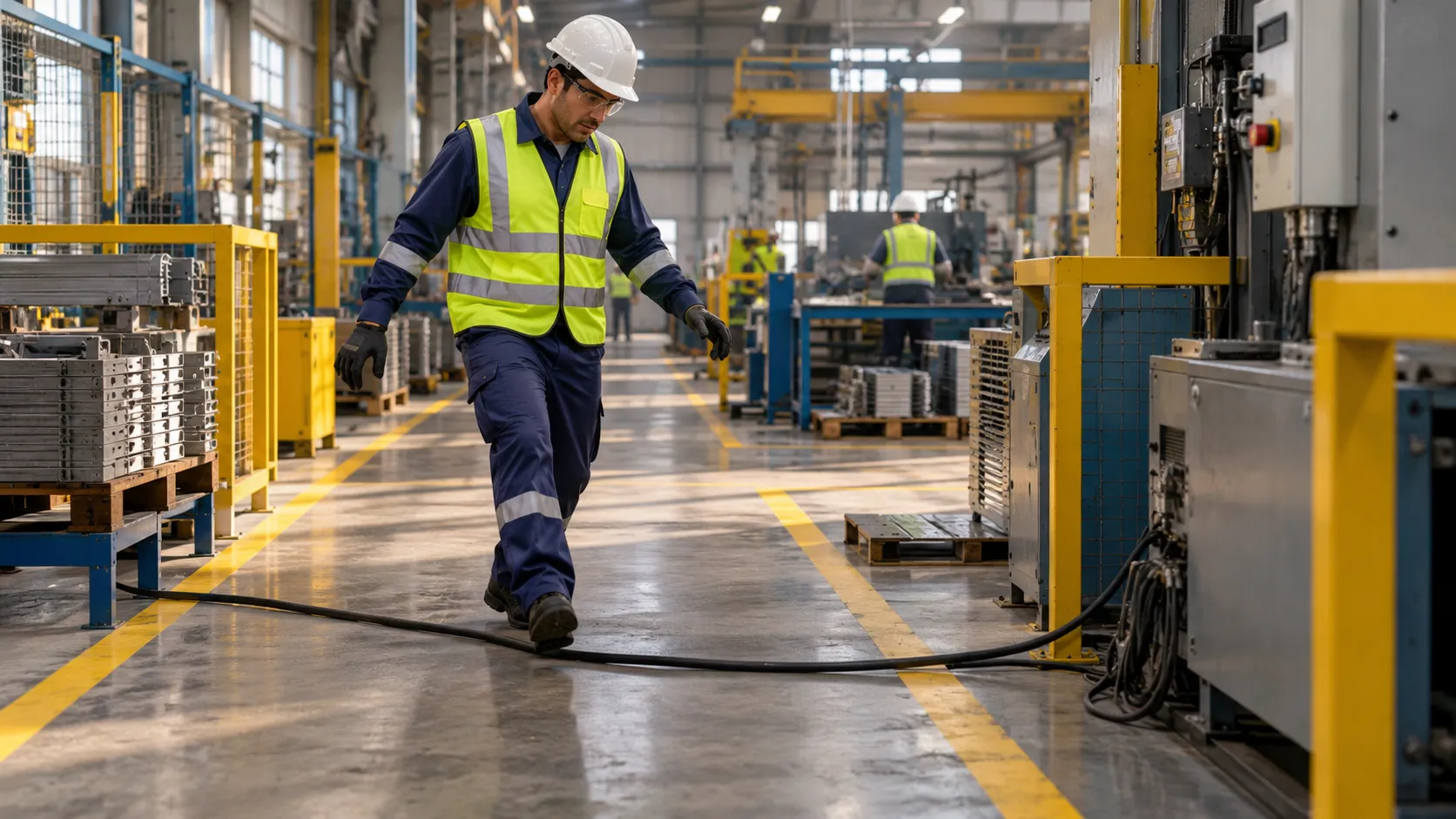
A worker walks through a manufacturing area and notices a loose electrical cable lying across a passage. Another employee trips over it but manages to regain balance without falling. Nobody is injured, and work continues as usual.
But should this incident be ignored?
Definitely not.
This is a near-miss incident. Although no injury or damage occurred, the situation could easily have resulted in an accident.
In industrial environments, such situations happen more often than organizations realize. A falling object that narrowly misses a worker, a forklift moving too close to a pedestrian, or an unexpected equipment movement can all indicate potential safety problems.
This is why near-miss reporting training is an important part of workplace safety management. It helps employees recognize warning signs, understand what needs to be reported and take the right steps before a close call becomes a serious incident.
What Is a Near-Miss Incident?
A near miss is an unplanned workplace event that does not result in injury, illness or property damage but has the potential to cause harm.
It is often considered an early warning sign of an existing workplace hazard or a weakness in safety procedures.
Some common industrial near-miss examples include:
- A tool falling from an elevated platform but missing workers below.
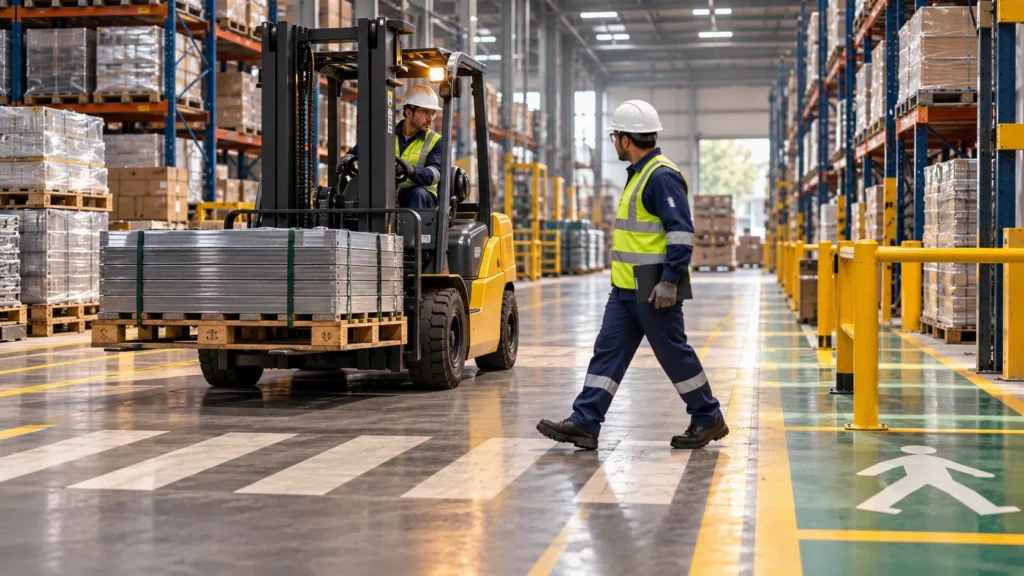
- A forklift narrowly avoiding a pedestrian in a busy warehouse.
- A worker slipping on an oily surface without falling.
- An electrical spark occurring without causing a fire.
- A machine starting unexpectedly while an operator is nearby.
- A suspended load swinging close to another employee.
These situations may not immediately affect production or worker health, but they highlight conditions that need attention.
According to OSHA, investigating close calls and near misses helps employers identify workplace hazards and weaknesses in their safety programmes before similar events cause injuries or damage.
Why Is Near-Miss Reporting Important in Industrial Workplaces?
Many workplace accidents do not happen without warning. In several cases, smaller incidents, unsafe conditions and repeated close calls appear before a more serious event.
However, when workers do not report these situations, organizations lose an opportunity to identify and correct the underlying problems.
An effective near-miss reporting system helps organizations:
1. Identify Hidden Workplace Hazards
Near-miss reports help safety teams identify unsafe equipment, poor housekeeping, inadequate machine guarding, improper material handling and other workplace hazards.
2. Prevent Similar Incidents
Investigating a near miss helps organizations understand what went wrong and introduce corrective actions before the same situation happens again.
3. Improve Worker Participation
When employees are encouraged to report unsafe conditions, they become active participants in workplace safety rather than simply following instructions.
4. Identify Repeated Safety Problems
Multiple reports involving similar equipment, locations or activities can highlight recurring safety issues that require management attention.
5. Strengthen Safety Awareness
Discussing real workplace near misses helps employees understand how everyday actions and unsafe conditions can contribute to accidents.
Near-miss reporting can also act as a leading indicator of safety performance. Organizations can review reporting trends, employee participation and corrective-action completion to understand how effectively their safety management activities are working.
Why Do Industrial Workers Sometimes Avoid Reporting Near Misses?
Even when organizations have a reporting procedure, employees may hesitate to report close calls.
Some common reasons include:
- Lack of awareness: Workers may not understand what qualifies as a near miss.
- Fear of blame: Employees may worry that reporting an incident will lead to disciplinary action.
- Complicated reporting procedures: Long forms and unclear reporting channels can discourage participation.
- Time pressure: Workers may consider reporting an unnecessary interruption to their regular tasks.
- Lack of feedback: When previous reports receive no visible response, employees may stop reporting similar situations.
These challenges show why simply introducing a reporting form is not enough.
Workers need to understand the purpose of reporting, recognize different types of near misses and know exactly what to do when they encounter one.
This is where structured near-miss reporting training becomes valuable.
What Should Near-Miss Reporting Training Cover?
Effective training should focus on practical workplace situations rather than only explaining safety definitions and reporting policies.
Employees should be able to recognize a potential near miss, understand the reporting process and know how their information contributes to workplace safety improvements.
1. Recognizing Near Misses and Unsafe Conditions
The first step is helping workers identify situations that could result in injury or damage.
Training should include examples from actual industrial activities, such as:
- Material handling and lifting operations.
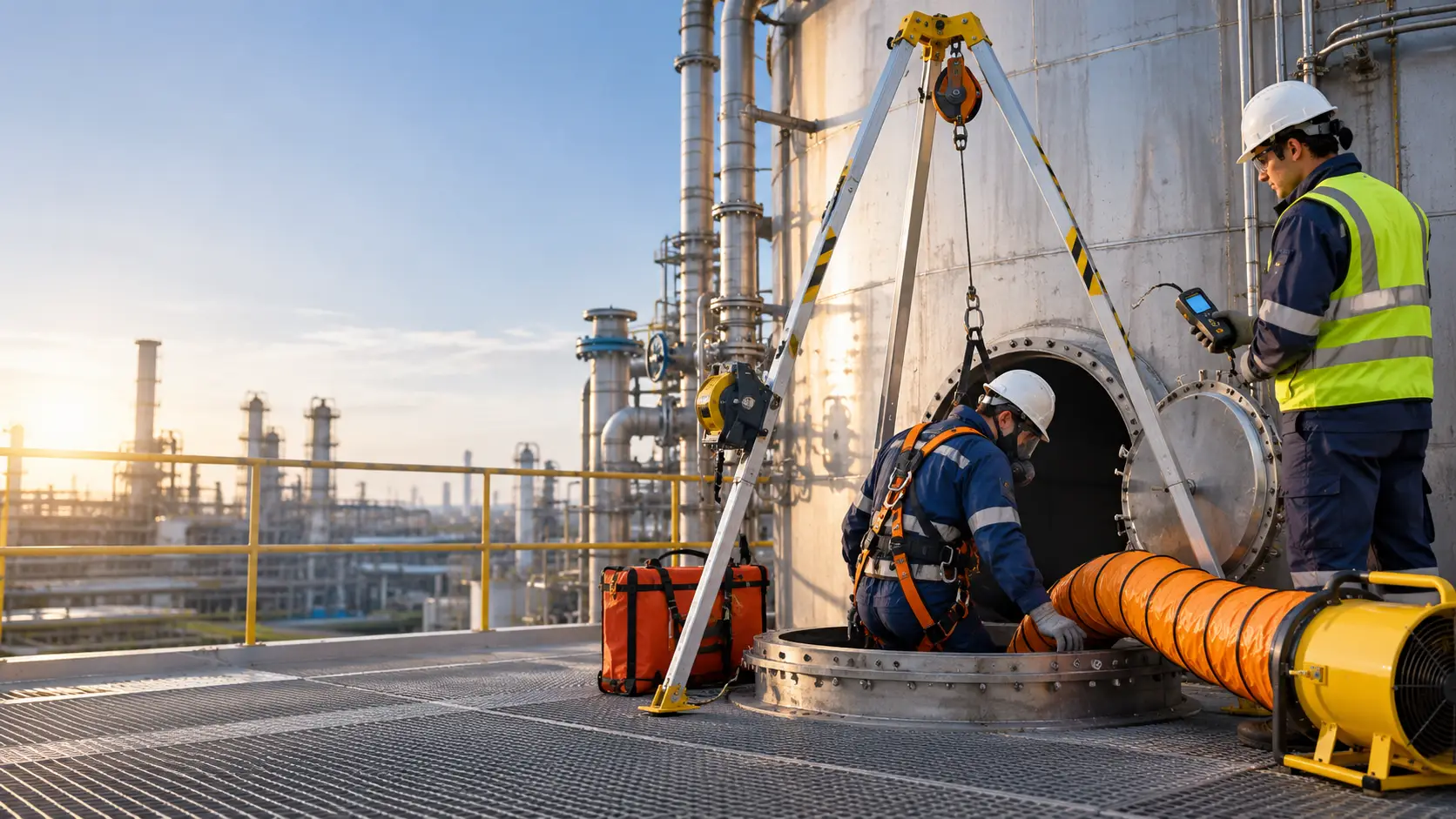
- Working at height.
- Electrical maintenance.
- Machine operation and maintenance.
- Forklift and vehicle movement.
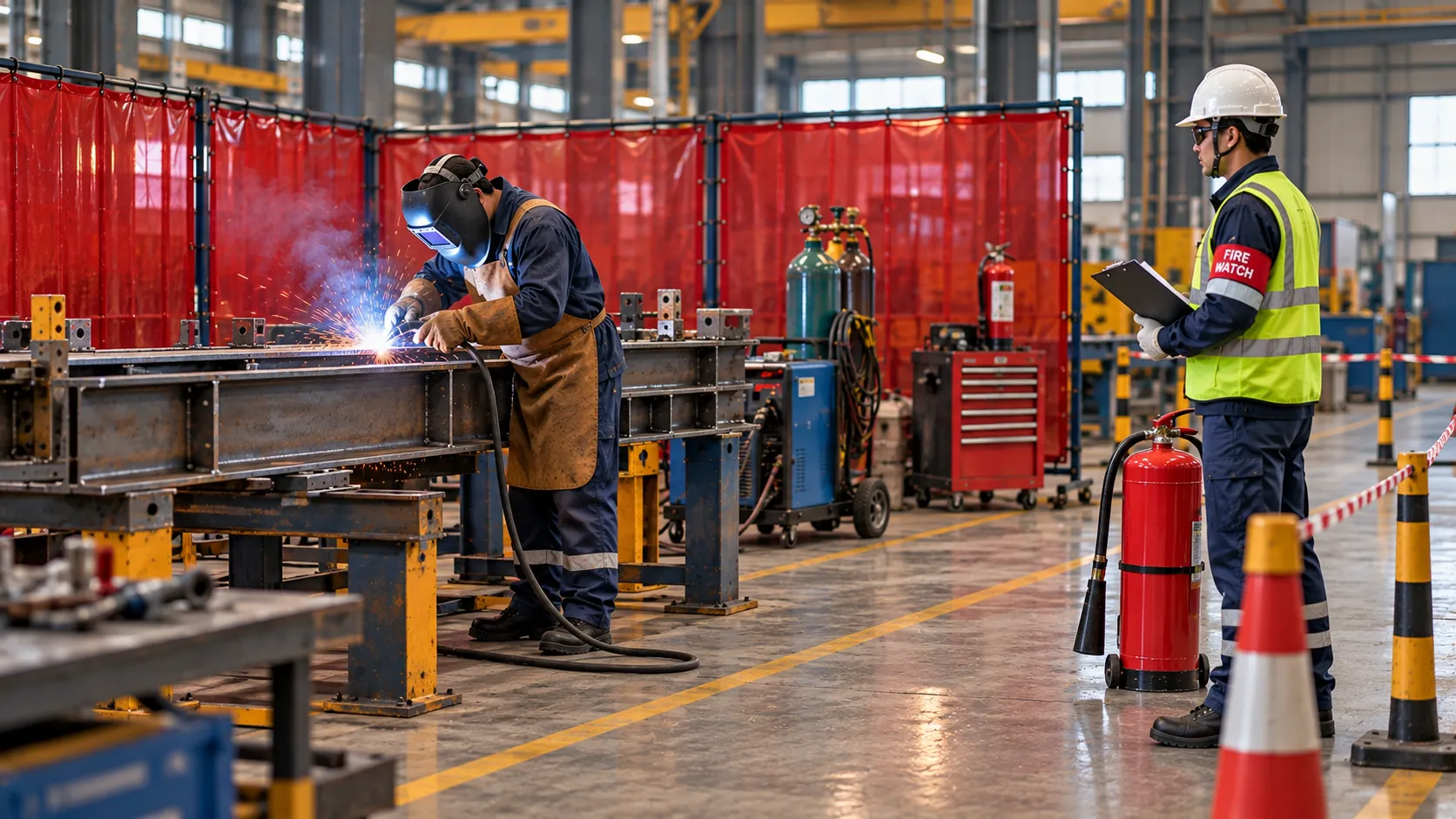
- Hot work and welding activities.
- Slips, trips and falls.
Workers should understand that a situation does not need to cause an injury to qualify as a near miss.
2. Understanding What Information to Report
A useful near-miss report should provide enough information for the safety team to understand and investigate the event.
Employees should learn to record:
- What happened?
- Where did it happen?
- When did it happen?
- Which activity was being performed?
- What unsafe condition or action was involved?
- What could have happened if the situation had developed further?
- Were any immediate actions taken to control the hazard?
Reports should focus on factual observations rather than assumptions or personal blame.
3. Following the Correct Reporting Procedure
Every employee should know how to report a near miss within their organization.
Depending on the workplace, this may involve informing a supervisor, contacting the EHS department, completing a paper-based form or using a digital reporting system.
Training should demonstrate the reporting process step by step so employees know whom to contact and what information to provide.
If an immediate danger is present, workers should follow site emergency and hazard-control procedures rather than waiting to complete a report.
4. Understanding Investigation and Corrective Actions
Reporting is only the beginning.
After a near miss is reported, the responsible team should review the circumstances, identify contributing factors and determine appropriate corrective actions.
For example, if a worker narrowly avoids being struck by a falling object, the investigation should examine more than the worker’s position.
It may also need to consider:
- Whether materials were stored securely.
- Whether the lifting procedure was followed.
- Whether the exclusion zone was properly established.
- Whether workers received appropriate training.
- Whether supervision and equipment controls were adequate.
The objective is to identify underlying causes and prevent recurrence, not simply assign blame.
5. Sharing Lessons Learned with Employees
Near-miss investigations become more useful when their findings are communicated to the workforce.
Employees should understand what happened, why it happened and what changes have been introduced.
Sharing lessons learned through toolbox talks, safety meetings, visual notices and refresher training helps prevent similar situations across different teams and departments.
How 3D EHS Animation Improves Near-Miss Reporting Training
One of the challenges in industrial safety training is explaining situations that employees may not easily recognize in their daily work.
A written procedure can explain what a near miss is, but it may not clearly demonstrate how a particular hazard develops or how quickly a situation can become dangerous.
3D EHS animation provides a visual way to communicate these scenarios.
Instead of relying entirely on text-based presentations, organizations can use realistic industrial animations to demonstrate workplace hazards, unsafe actions and the correct reporting response.
At Immersiv Techsphere, we develop customized HSE and EHS training animations that help organizations communicate industrial safety procedures through visual learning.
For near-miss reporting training, animation can be used to demonstrate:
Workplace Hazard Scenarios: Show realistic situations involving forklifts, falling objects, electrical hazards, machinery and material handling.
Near-Miss Recreation: Recreate a close-call incident step by step to explain what happened and what could have gone wrong.
Correct and Incorrect Actions: Compare unsafe practices with the correct safety procedures employees should follow.
Reporting Procedures: Visually explain how workers should notify supervisors, document incidents and communicate relevant information.
Lessons Learned: Demonstrate how corrective actions can reduce the possibility of similar incidents occurring again.
These animations can be developed for safety induction, employee awareness programmes, toolbox talks, refresher training and digital EHS learning modules.
Making Safety Training More Practical with Visual Scenarios
Consider a warehouse where a forklift narrowly misses a pedestrian while reversing.
A near-miss reporting animation can recreate the situation and explain:
- The pedestrian entering the vehicle movement area.
- The forklift operator having limited visibility.
- The close call occurring without physical injury.
- The worker recognizing the event as a near miss.
- The reporting procedure followed after the event.
- The corrective measures introduced to improve pedestrian and vehicle segregation.
This approach helps employees connect safety procedures with situations they may encounter during regular operations.
It also allows organizations to create consistent training material for multiple locations, departments and workforce groups.
Building a Strong Near-Miss Reporting Culture
Training alone cannot create an effective reporting system. Organizations also need to establish an environment where employees feel comfortable communicating safety concerns.
Some practical steps include:
- Make reporting procedures simple and accessible.
- Encourage workers to report close calls without unnecessary fear of blame.
- Train supervisors to respond positively to reports.
- Investigate reported events and communicate the findings.
- Monitor repeated hazards and overdue corrective actions.
- Include near-miss discussions in regular safety meetings.
- Provide refresher training using relevant workplace scenarios.
Most importantly, employees should see that their reports lead to meaningful action.
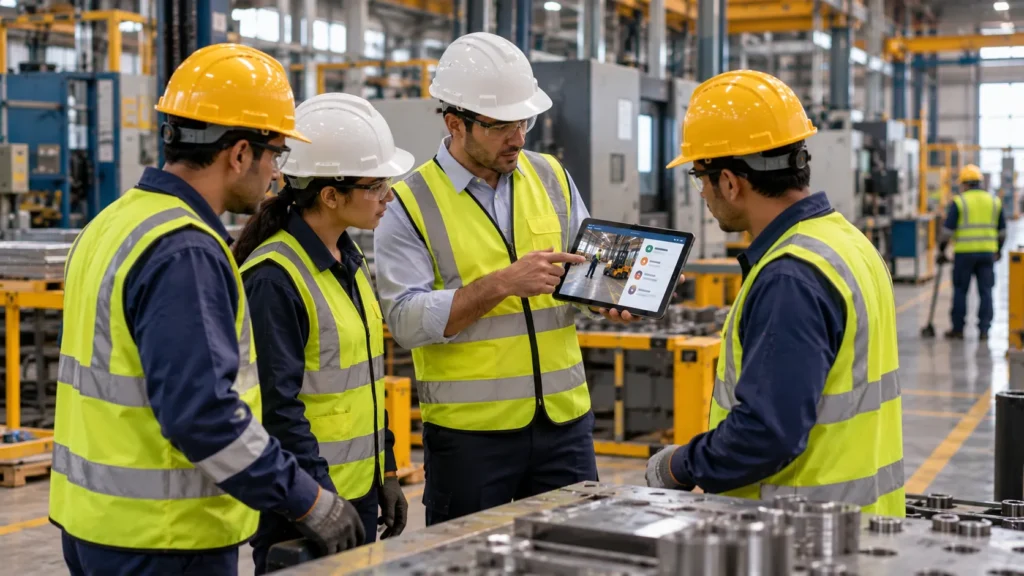
When workers understand that reporting helps protect themselves and their colleagues, near-miss reporting becomes a shared responsibility rather than just another administrative task.
Conclusion
A near miss should never be treated as an incident that ended without consequences. It should be treated as an opportunity to understand a hazard and prevent a potentially serious workplace accident.
Effective near-miss reporting training helps industrial workers recognize warning signs, communicate unsafe conditions and understand the importance of corrective actions.
By combining practical safety instruction with realistic 3D EHS animations, organizations can make near-miss scenarios easier to understand and reporting procedures easier to follow.
At Immersiv Techsphere, we create customized 3D HSE and EHS animations for industrial safety training, employee awareness, hazard identification and workplace procedure communication.
Our goal is to transform complex industrial safety information into clear visual learning experiences that help employees understand not only what to do, but also why it matters.
Need customized EHS animation for your industrial workforce? Explore our HSE Animation Services to develop visual safety training content tailored to your workplace, operations and training requirements.
Have a Project in Mind?
Need help with 3D animation, industrial visualization, HSE training animation, or product visualization? Tell us about your project and our team will get back to you.