

Table of Contents
Introduction
Chemical transfer is a routine activity in many industrial facilities. Chemicals are frequently transferred between storage tanks, drums, IBC containers, process vessels, reactors and production equipment through pumps, pipelines and flexible hoses.
Although these operations may appear straightforward, even a small mistake during chemical transfer can create serious workplace hazards. An incorrectly connected hose, incompatible fitting, loose coupling or damaged gasket can result in chemical leakage, splashing, vapour release or direct worker exposure.
The challenge is that workers do not always recognize these risks before starting the operation. Written instructions may explain the correct procedure, but they may not clearly demonstrate what happens when something goes wrong.
This is where Chemical Transfer Safety Training supported by 3D EHS animation becomes valuable. By visualizing actual transfer operations, connection errors, chemical leaks and exposure scenarios, organizations can help employees understand potential hazards and the importance of following approved safety procedures.
Understanding Chemical Transfer Hazards in Industrial Operations
Chemical transfer involves moving hazardous or non-hazardous substances from one location to another using a controlled transfer system.
Common examples include:
- Transferring chemicals from storage tanks to process vessels.
- Pumping solvents and liquids into mixing tanks.
- Filling and emptying chemical drums and IBC containers.
- Transferring acids and alkalis in chemical processing facilities.
- Handling chemical solutions in pharmaceutical manufacturing.
- Loading and unloading chemical tankers.
- Transferring cleaning agents in industrial maintenance operations.
Each operation has its own hazards depending on the chemical properties, transfer equipment, operating pressure, temperature and workplace conditions.
Some common risks include:
- Chemical leakage: Loose connections, damaged hoses, worn-out seals or incorrect fittings can cause chemical releases during transfer.
- Chemical splashes: Opening connections under residual pressure or handling liquid chemicals without appropriate precautions can expose workers to splashes.
- Vapour inhalation: Volatile chemicals may release vapours during open transfer, disconnection or accidental leakage.
- Chemical incompatibility: Using unsuitable hoses, seals, gaskets or fittings can result in material degradation, leakage or equipment failure.
- Overfilling: Incorrect monitoring of the receiving tank can cause overflow, spillage and potential exposure.
- Static electricity and ignition: Transfers involving flammable liquids may create electrostatic hazards, requiring suitable bonding, grounding and ignition control measures.
Understanding these hazards is the first step towards developing effective chemical handling safety procedures.
Common Connection Errors During Chemical Transfer
One of the most important aspects of chemical transfer safety is ensuring that all connections are correct before starting the operation.
A small connection error can become a serious incident once the pump starts and the system is pressurized.
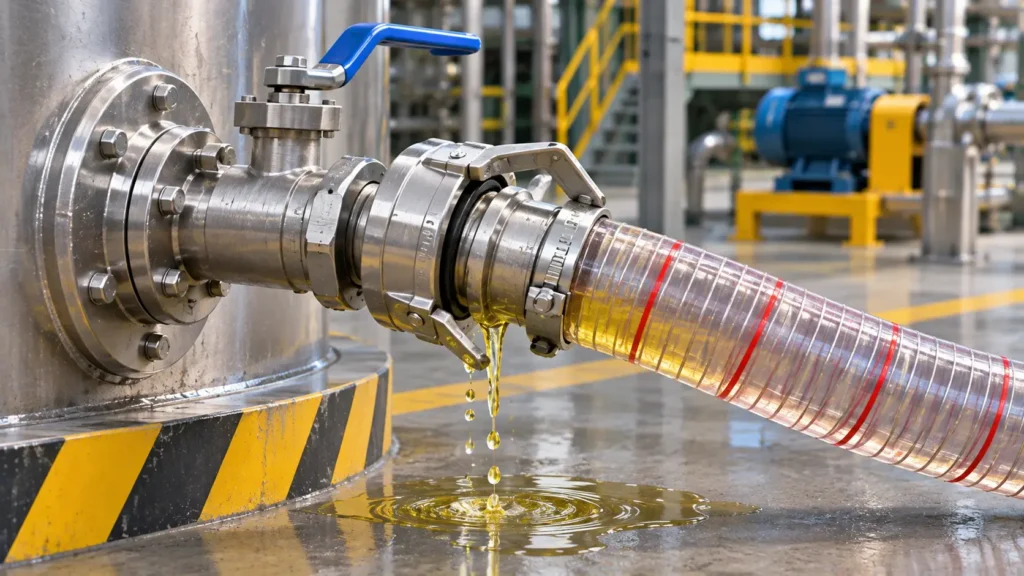
Some common connection-related mistakes include:
A. Incorrect Hose Connection
Workers may connect a transfer hose to the wrong inlet, outlet or chemical line.
This can result in chemical contamination, an unexpected release or an incorrect transfer destination.
A 3D safety animation can demonstrate how workers should verify line identification, connection points and transfer routing before initiating the operation.
B. Loose Couplings and Fittings
Improperly secured couplings can allow chemicals to escape when the transfer system is operating.
Animation can show how a loose connection develops into a leakage scenario and why approved connection and inspection procedures are important.
C. Damaged Seals and Gaskets
Worn-out or chemically incompatible seals may fail during operation.
Workers should understand the importance of checking the condition and compatibility of sealing components before use.
D. Incorrect Valve Alignment
Opening the wrong valve or following an incorrect valve sequence can redirect chemicals into unintended pipelines or equipment.
A visual training module can demonstrate the correct valve identification and operating sequence based on the approved plant procedure.
E. Failure to Verify Connections Before Starting
Starting a transfer pump without completing the required pre-start checks can increase the likelihood of leakage and equipment-related incidents.
Training should demonstrate the importance of verifying hose connections, coupling security, valve positions, receiving capacity, containment arrangements and other site-specific requirements.
Chemical Leakage: Visualizing What Can Go Wrong
Chemical leakage is one of the most important scenarios to include in industrial chemical transfer safety training.
A leak may develop gradually through a damaged hose or gasket, or occur suddenly because of a failed connection or equipment malfunction.
Depending on the chemical, the consequences may include:
- Skin and eye contact with hazardous substances.
- Inhalation of toxic or irritating vapours.
- Chemical burns and respiratory injuries.
- Fire or explosion involving flammable chemicals.
- Contamination of nearby equipment and work areas.
- Environmental pollution and damage.
Traditional safety instructions often describe these consequences through written warnings and photographs.
However, 3D EHS animation can visually demonstrate the entire sequence of events.
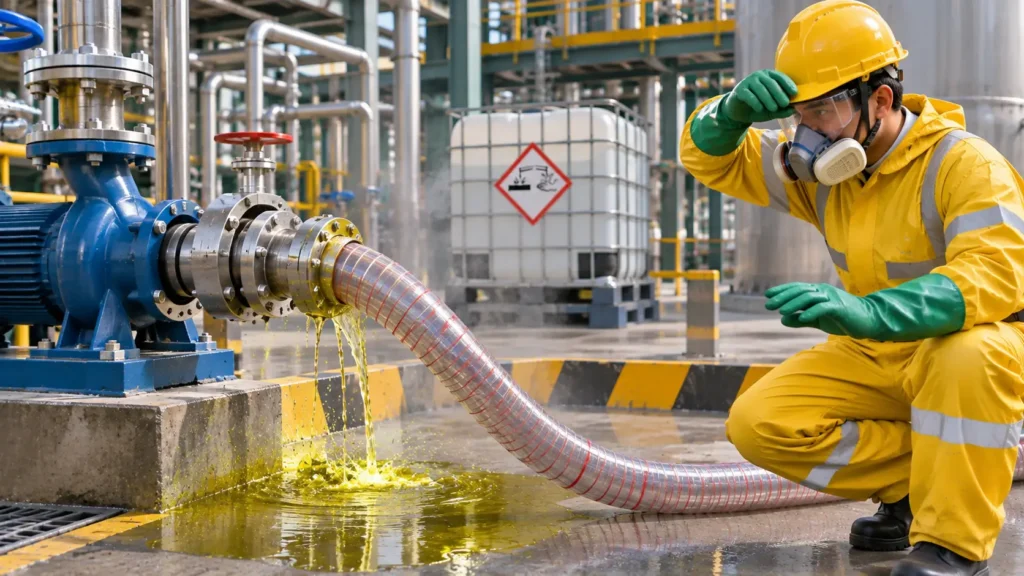
For example, an animation can show:
- An operator connecting a transfer hose to a chemical storage tank.
- An incorrectly secured coupling remaining unnoticed.
- The transfer pump starting.
- Chemical leakage developing around the connection.
- Liquid spreading across the surrounding floor or entering a designated containment area.
- A worker noticing the leak and activating the site-specific emergency response procedure.
This visual sequence helps employees understand how a seemingly minor mistake can develop into a larger safety incident.
It also provides an opportunity to demonstrate the consequences of ignoring early warning signs.
Chemical Exposure Risks: Skin Contact, Eye Contact and Inhalation
Chemical exposure can occur through different routes depending on the substance and the nature of the transfer operation.
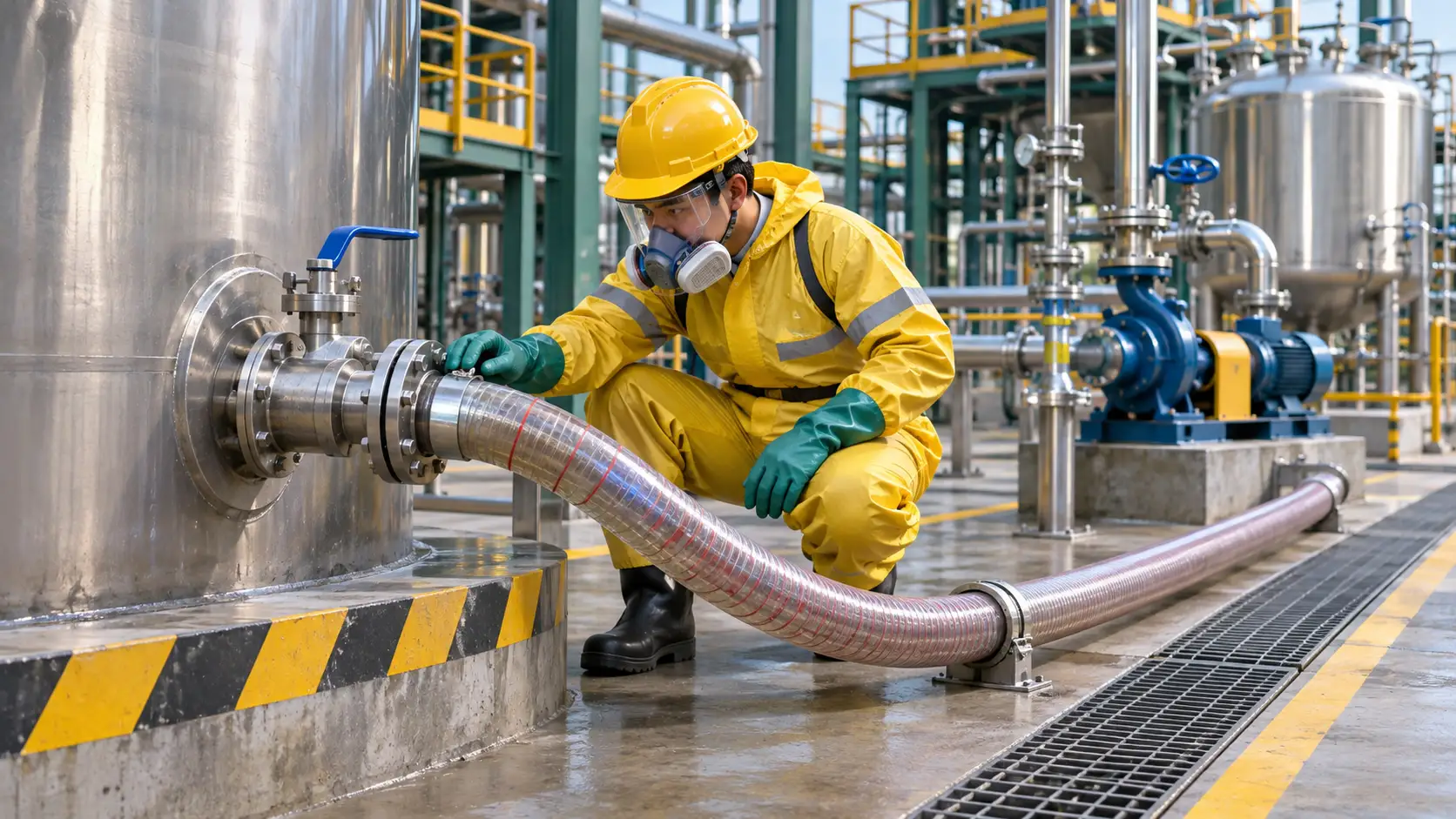
- Skin Contact A leaking hose, contaminated coupling or accidental splash may expose workers’ hands, arms or other body parts. Training should explain the importance of chemical-compatible gloves, protective clothing and the correct procedures for handling contaminated equipment.
- Eye Exposure Pressurized liquid release or accidental splashing during connection and disconnection can cause serious eye injuries. Workers should understand the required eye and face protection for the specific chemical and operation.
- Inhalation Exposure Volatile chemicals may release hazardous vapours during transfer, particularly when handling systems are open or when leakage occurs. Workers should be trained to recognize relevant warning signs, understand the role of ventilation and follow approved respiratory protection and emergency procedures.
- Secondary Contamination Chemical contamination may spread through footwear, gloves, tools and other equipment. An animation can demonstrate how an initially localized incident may affect nearby workers and work areas if appropriate isolation and decontamination procedures are not followed.
What Should Chemical Transfer Safety Training Cover?
An effective chemical transfer safety training program should cover the complete operation rather than focusing only on PPE or general chemical awareness.
The training content should be developed around the facility’s actual chemicals, equipment, operating procedures and risk assessments.
Important topics include:
1. Chemical Identification
Workers should understand chemical labels, hazard pictograms, Safety Data Sheets (SDS) and relevant handling precautions.
2. Pre-Transfer Inspection
Demonstrate the required checks for hoses, couplings, seals, valves, pumps, receiving tanks and containment arrangements.
3. Connection Verification
Explain how to identify the correct transfer line, verify compatible fittings and ensure connections are properly secured.
4. PPE Requirements
Show the appropriate PPE identified through the chemical hazard assessment and workplace procedures.
5. Safe Transfer Operation
Demonstrate the approved starting sequence, monitoring requirements, flow control and communication between operators.
6. Leak Recognition
Help workers identify visible leakage, unusual pressure changes, unexpected flow conditions and other warning signs relevant to the equipment.
7. Emergency Response
Explain the site’s approved emergency notification, isolation, evacuation, spill response and medical assistance procedures.
8. Post-Transfer Safety
Demonstrate approved shutdown, depressurization, disconnection, residual chemical management and equipment storage procedures.
These topics should be aligned with the organization’s chemical risk assessment, applicable regulations and established operating procedures.
How 3D EHS Animation Improves Chemical Transfer Safety Training
Chemical transfer operations involve several interconnected components, including tanks, pipelines, pumps, valves, hoses and operators.
Explaining the relationship between these components through text alone can be difficult, especially for new employees and contract workers.
3D EHS animation transforms complex chemical handling procedures into visual learning experiences.
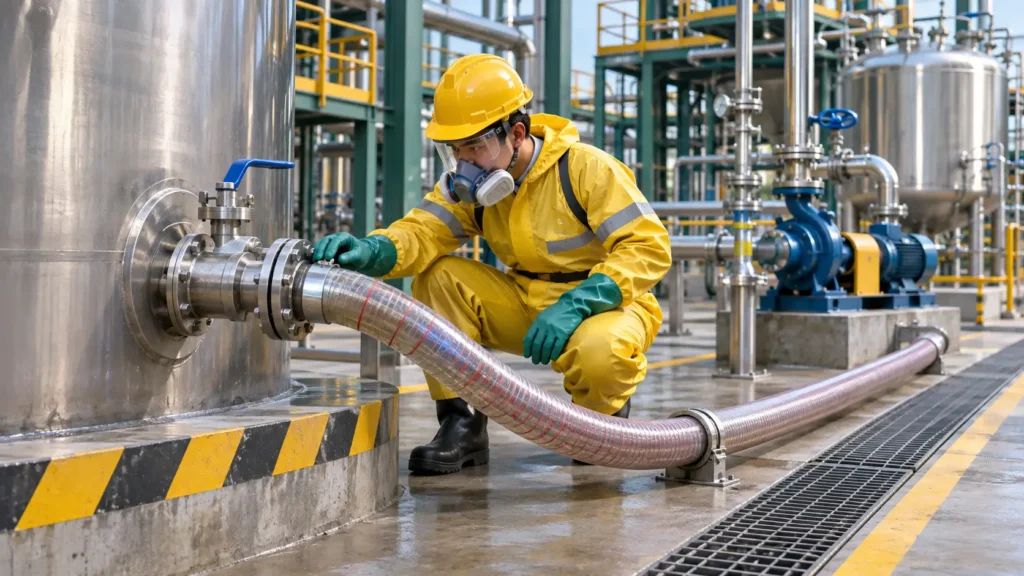
Here are some practical applications.
- Visualizing the Complete Transfer Process A 3D animation can recreate a chemical transfer area, showing storage tanks, pumps, pipelines, connections and receiving vessels. Workers can observe the complete operation and understand how different components work together.
- Demonstrating Incorrect and Correct Connections A side-by-side visual comparison can show the difference between a correctly secured connection and an incorrect or loose connection. This helps employees recognize common mistakes before performing the actual operation.
- Simulating Chemical Leak Scenarios Animations can demonstrate leakage from hose connections, damaged fittings, faulty seals and other failure points. The simulation can also illustrate how a leak spreads and why early identification and reporting are important.
- Explaining Chemical Exposure Visual scenarios can demonstrate possible skin contact, eye splashes and inhalation hazards without exposing workers to actual chemicals. This is particularly useful when training employees about high-risk substances.
- Demonstrating Emergency Response 3D animation can show the approved response sequence, including alarm activation, communication, access restriction, evacuation and emergency team coordination. The response must always follow the facility’s emergency response plan and the chemical-specific instructions.
- Standardizing Training Across Multiple Locations Organizations operating multiple plants or production facilities can use customized animation modules to deliver consistent safety messages across different shifts and locations. This is especially useful for employee induction, contractor training, refresher sessions and toolbox talks.
Why Chemical Transfer Safety Cannot Depend on PPE Alone
Personal Protective Equipment is an important part of chemical safety, but it should not be considered the only line of defence.
According to the NIOSH Hierarchy of Controls, workplace hazards should be addressed through a preferred sequence of controls:
- Elimination
- Substitution
- Engineering controls
- Administrative controls
- Personal Protective Equipment (PPE)
For chemical transfer operations, this may involve selecting safer chemicals where feasible, using closed transfer systems, installing suitable containment and emergency shut-off arrangements, implementing inspection procedures and providing appropriate PPE.
Safety training helps workers understand how these controls work and what responsibilities they have during daily operations.
A useful training animation should therefore explain not only what PPE to wear but also how engineering safeguards, operating procedures and emergency systems contribute to overall risk reduction.
Developing Customized Chemical Transfer Safety Animations
Every chemical processing facility has different equipment configurations, transfer procedures and workplace hazards.
A generic animation may explain basic chemical safety principles, but it may not represent the actual equipment or procedures used at a particular site.
At Immersiv Techsphere, we develop customized 3D EHS and HSE training animations based on industrial processes, equipment layouts and client-provided safety documentation.
Our development approach typically includes:
Step 1: Understanding the Operation
Review the chemical transfer process, equipment details, workplace layout and training objectives.
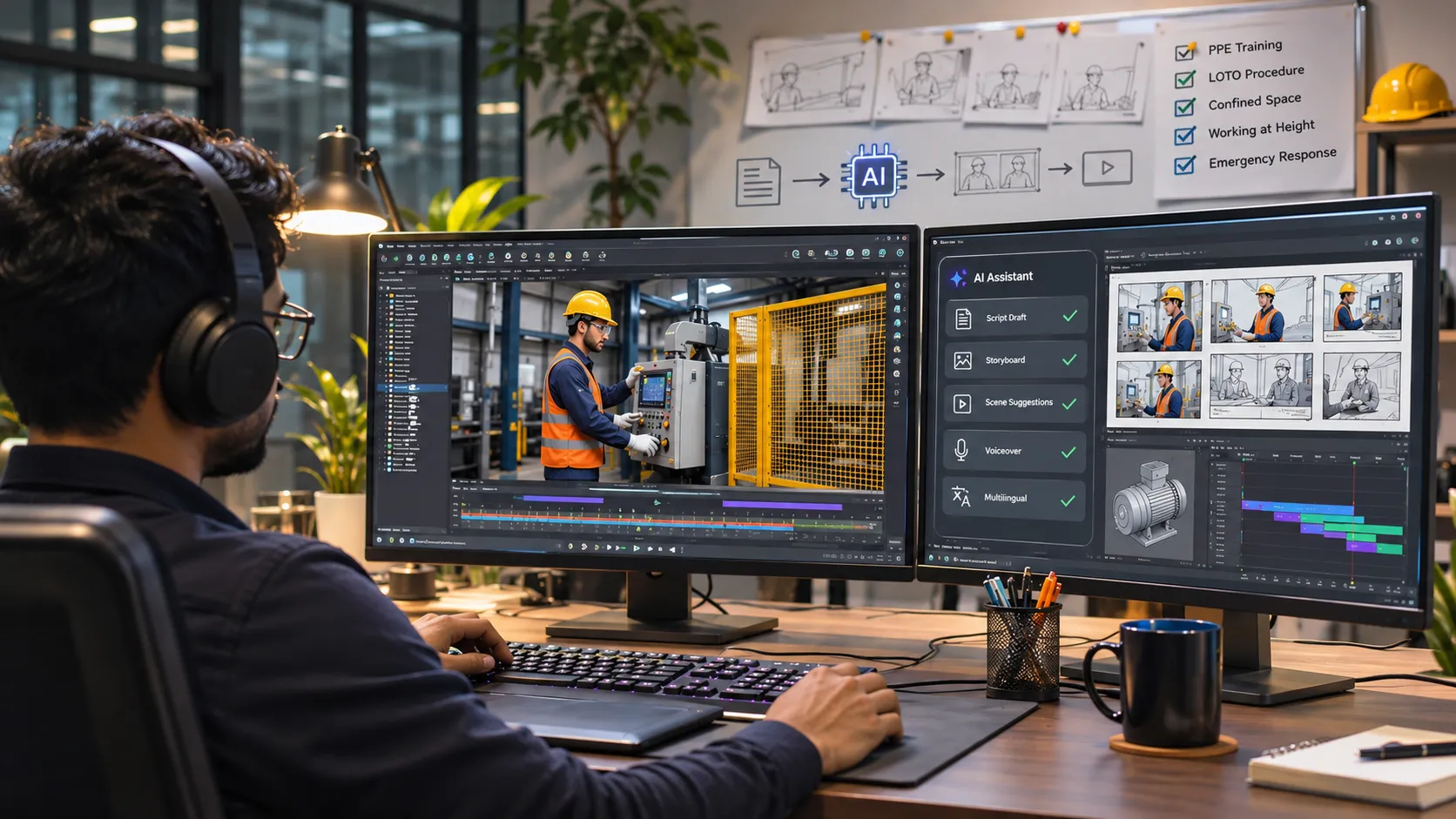
Step 2: Script and Storyboard Development
Convert the approved operating procedures and identified hazards into a structured visual sequence.
Step 3: 3D Environment and Equipment Modelling
Develop the required tanks, pipelines, pumps, valves, hoses, connections and industrial surroundings.
Step 4: Animation Production
Visualize the correct transfer process, common mistakes, leakage scenarios, exposure risks and emergency response actions.
Step 5: Technical and Safety Review
Review the animation with the client’s engineering, operations and EHS teams to verify technical accuracy and alignment with approved procedures.
Step 6: Final Training Video Delivery
Deliver the completed animation for employee induction, safety meetings, toolbox talks, refresher training and digital learning platforms.
The final content can include voiceovers, subtitles and multilingual versions depending on workforce requirements.
Conclusion
Chemical transfer operations require careful coordination between equipment, operating procedures and trained personnel. An incorrectly connected hose, damaged fitting or unnoticed leak can create significant exposure and operational risks.
Effective Chemical Transfer Safety Training should help workers understand these risks before they encounter them in real working conditions.
By combining technical information with realistic 3D EHS animation, organizations can demonstrate connection errors, chemical leakage, exposure scenarios and emergency response procedures in a clear and structured manner.
At Immersiv Techsphere, we create customized industrial safety animations that help manufacturing companies, chemical plants, pharmaceutical facilities and process industries communicate complex safety procedures through realistic visual experiences.
Need a customized chemical transfer safety animation for your facility? Share your operating procedures, equipment references and training requirements with our team to discuss a suitable 3D EHS animation solution.
Have a Project in Mind?
Need help with 3D animation, industrial visualization, HSE training animation, or product visualization? Tell us about your project and our team will get back to you.