

Table of Contents
Introduction
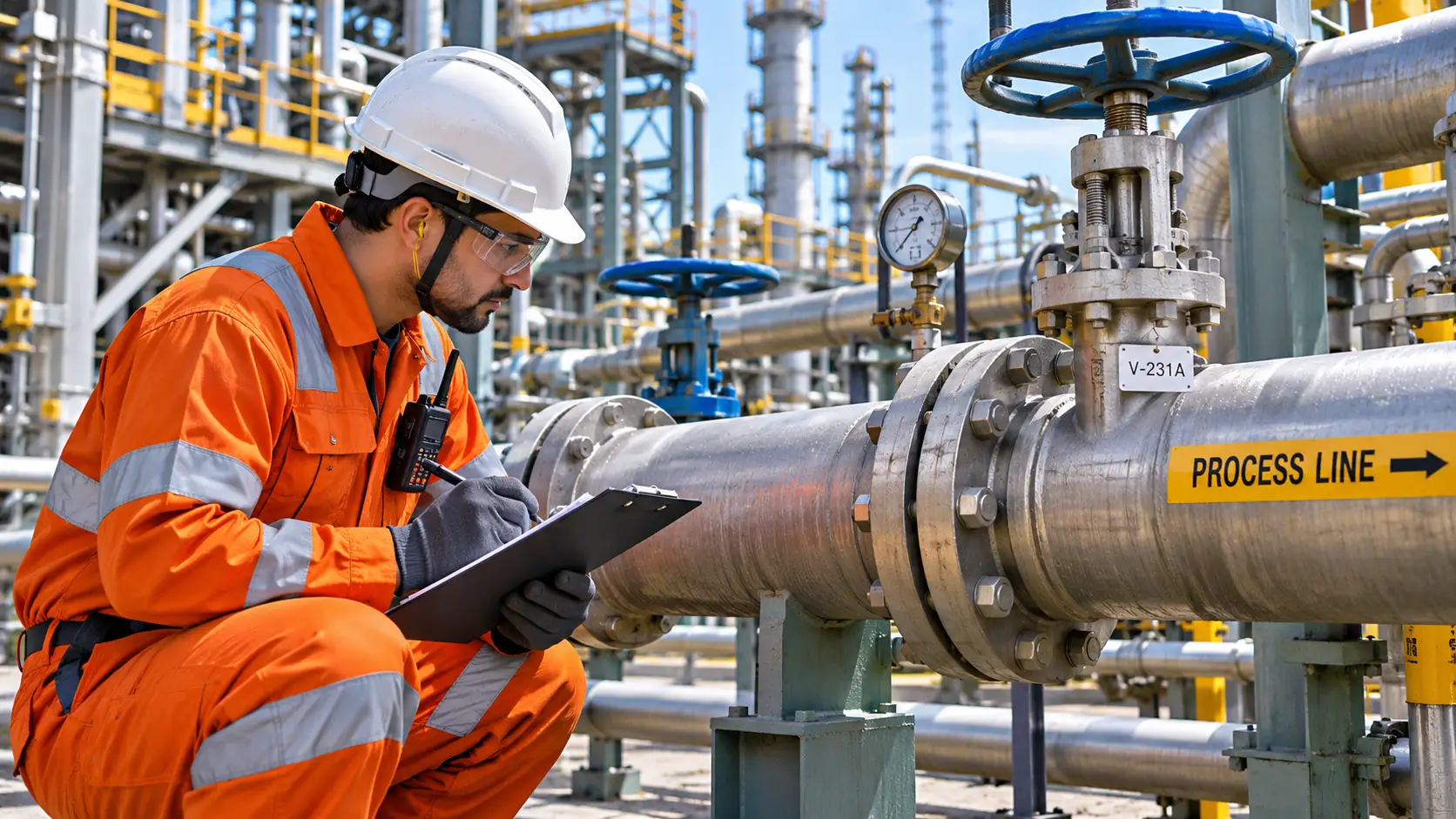
In oil & gas facilities, offshore platforms, drilling rigs, and other industrial workplaces, workers regularly perform tasks at height. Maintenance activities, equipment installation, lifting operations, inspections, and routine work often involve handling tools and materials in elevated areas.
While these activities may seem routine, a small mistake can create a serious safety hazard. A wrench slipping from a worker’s hand, a loose bolt falling from a platform, or an unsecured component dropping during maintenance can cause severe injuries, damage equipment, or even result in a fatality.
This is why Dropped Object Prevention Training is an important part of safety awareness programs across oil & gas, offshore, construction, and other high-risk industries. Understanding how dropped object incidents occur and what precautions can prevent them helps workers make safer decisions during everyday operations.
What Is a Dropped Object?
A dropped object is any object that falls from its original position and has the potential to cause injury, damage, or harm. It can be something as small as a hand tool, fastener, or loose material, or something much larger, such as equipment components, lifting accessories, pipes, or structural elements.
Dropped object incidents can occur during routine maintenance, equipment installation, inspection, lifting operations, drilling activities, or work performed on elevated platforms.
The severity of an incident depends on several factors, including the object’s weight, height of the fall, impact location, and whether people are present in the area below.
For example, a small metal tool falling from an offshore platform may appear insignificant, but when dropped from considerable height, it can generate enough impact force to cause serious injury. This makes dropped object hazards particularly important in workplaces where personnel regularly work above one another.
Why Dropped Object Prevention Is Important in Oil & Gas and Offshore Operations
Oil & gas and offshore workplaces often involve complex structures, multiple work levels, heavy equipment, and continuous maintenance activities. Workers may operate on drilling derricks, elevated walkways, scaffolding, platforms, cranes, pipe racks, and other structures where falling objects can become a major risk.
Unlike ground-level work, activities at height can expose workers in different areas to the same hazard. A maintenance technician working on an upper platform may unintentionally create a risk for personnel working below.
Dropped object incidents can lead to:
- Serious injuries, including head injuries and fractures
- Fatal accidents involving personnel working below elevated areas
- Damage to machinery, pipelines, instruments, and other equipment
- Disruption of offshore or industrial operations
- Production delays and unplanned maintenance
- Investigation costs and potential regulatory consequences
In offshore environments, the situation can become even more challenging because access to emergency medical support may be limited compared with onshore facilities. Preventing an incident is therefore far more effective than responding after an accident has occurred.
Common Causes of Dropped Object Incidents
Most dropped object incidents are associated with preventable conditions, unsafe practices, equipment failures, or a combination of these factors.
1. Unsecured Tools While Working at Height
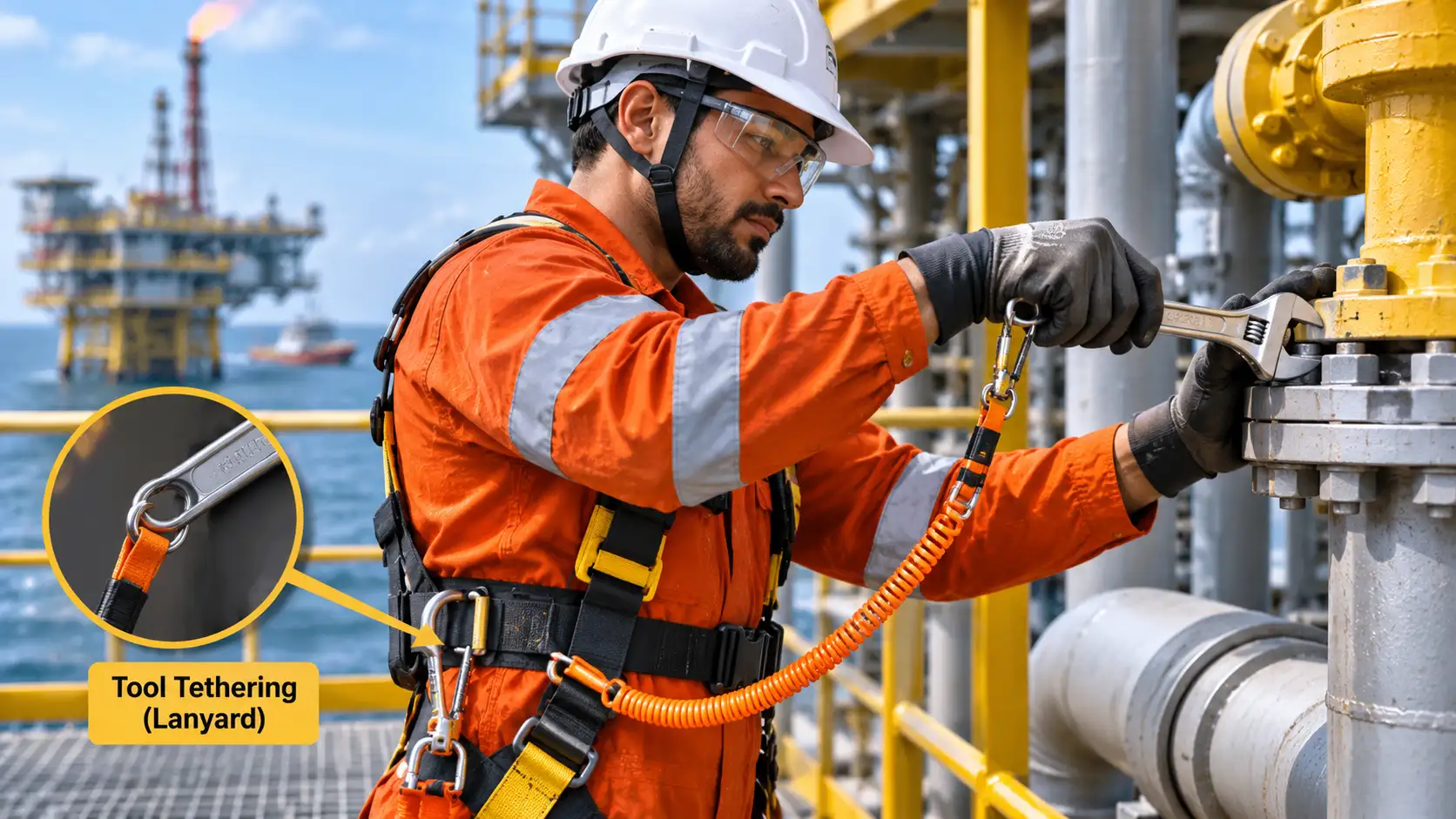
Hand tools such as spanners, screwdrivers, hammers, measuring instruments, and handheld equipment can easily slip from a worker’s hand during maintenance or inspection.
When workers operate at height, tools should be secured using suitable tool lanyards or tethering systems wherever required. Using the correct tethering arrangement for the tool and task helps reduce the possibility of tools falling.
2. Loose Materials and Equipment
Materials stored on platforms, scaffolding, elevated walkways, or near open edges can fall due to vibration, movement, wind, or accidental contact.
Loose bolts, nuts, fittings, scrap materials, temporary equipment, and small components should not be left unattended in areas where they can become falling object hazards.
3. Improper Housekeeping
Poor housekeeping is one of the common contributors to workplace safety incidents. Tools, materials, packaging, and unused equipment left around elevated work areas increase the risk of objects being kicked, displaced, or accidentally pushed over an edge.
Maintaining clean and organised work areas helps reduce these hazards and makes it easier to identify unsecured items before work begins.
4. Equipment Failure and Corrosion
Dropped objects do not always result from human error. Corroded brackets, damaged fasteners, deteriorated supports, loose fittings, failed grating clips, or poorly maintained equipment can also cause objects to fall.
Regular inspections are important to identify components that may have become loose, damaged, or weakened due to operating conditions, weather exposure, vibration, or corrosion.
5. Improper Material Handling and Lifting Operations
During crane operations, material transfer, equipment installation, and maintenance activities, improperly secured loads or accessories can become falling object hazards.
Workers should understand the importance of using suitable lifting equipment, checking securing arrangements, following approved procedures, and keeping people away from areas exposed to suspended or moving loads.
What Should Dropped Object Prevention Training Cover?
Dropped object prevention training should help workers recognise hazards during their daily activities instead of simply memorising safety instructions.
Training should explain how to assess a work area, identify objects that could fall, understand the risks associated with working at height, and apply preventive measures before starting a task.
Key topics should include:
- Identifying potential dropped object hazards
- Tool tethering and equipment securing methods
- Safe storage and handling of materials
- Inspection of tools, equipment, fasteners, and supports
- Housekeeping in elevated work areas
- Establishing and maintaining exclusion zones
- Safe practices during lifting and maintenance operations
- Reporting unsafe conditions and near-miss incidents
Workers should also understand their responsibility to stop and reassess a task if they identify an unsecured object, unsafe access condition, or potential falling object hazard.
How Can Dropped Object Hazards Be Prevented?
Preventing dropped objects requires a combination of proper planning, equipment, workplace controls, and worker awareness. A few simple precautions followed consistently can significantly reduce the risk of falling objects.
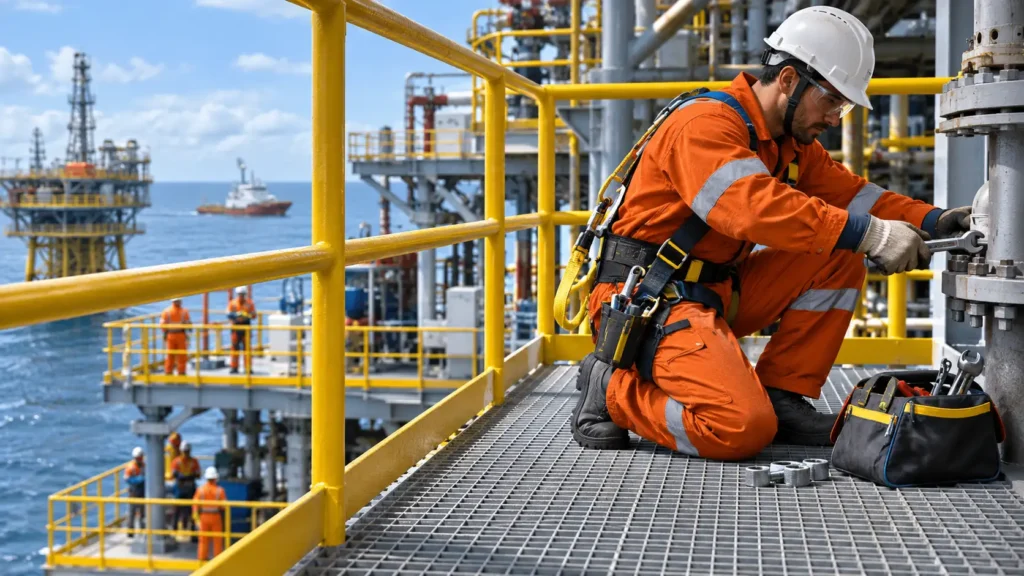
- Secure Tools and Equipment: Tools used at height should be secured with suitable tethering systems wherever required. Tool lanyards, attachment points, tool bags, and secure storage arrangements should be selected according to the equipment and working conditions.
- Inspect Work Areas Before Starting: Before beginning work, workers should check the area for loose materials, unsecured equipment, damaged supports, and objects that could fall during the task. Inspections should also include the area below the work location wherever relevant.
- Maintain Good Housekeeping: Materials and tools should be stored properly when not in use. Keeping elevated platforms, scaffolding, walkways, and access areas clear of unnecessary items reduces the risk of objects being displaced.
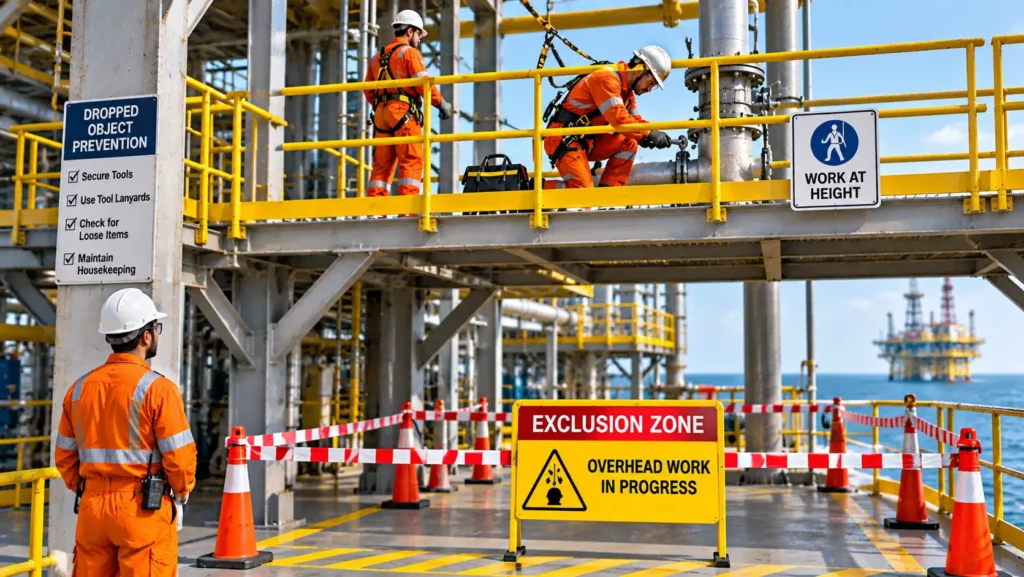
- Establish Exclusion Zones: When overhead work is being carried out, the area below should be assessed and controlled. Barricades, warning signs, restricted access, and exclusion zones can help prevent people from entering areas exposed to falling objects.
- Follow Safe Lifting and Maintenance Procedures: Workers should follow approved lifting procedures, use appropriate equipment, inspect lifting accessories, and ensure materials are secured before movement. Maintenance activities should also include checks for loose components and damaged equipment.
Why 3D Safety Animation Is Effective for Dropped Object Training
Explaining dropped object hazards through written instructions or classroom presentations can sometimes make it difficult for workers to visualise how an incident actually happens.
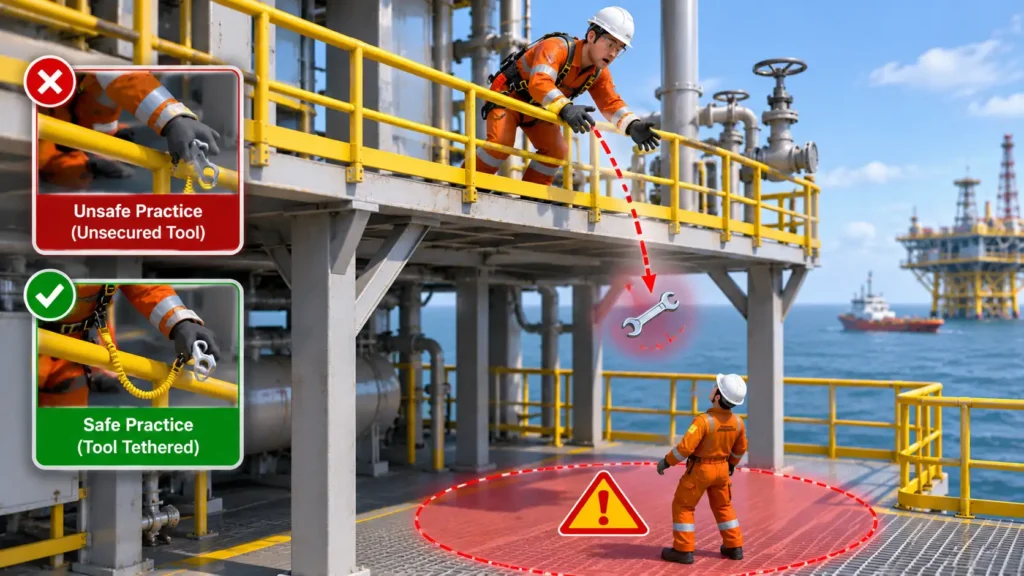
For example, explaining the consequences of an unsecured tool falling from an elevated platform may not create the same understanding as watching a realistic incident scenario.
This is where 3D safety animation can make a difference.
A custom safety animation can recreate an offshore platform, drilling rig, elevated maintenance area, or industrial structure and demonstrate how a dropped object incident may occur.
The animation can show:
- A worker carrying out maintenance at height
- A tool or component becoming unsecured
- The object falling through different levels
- Personnel exposed to the falling object hazard
- The potential consequences of an unsafe activity
- Correct procedures for securing tools and materials
- Preventive measures that should be followed
Instead of relying entirely on verbal explanations, workers can see the hazard, understand the sequence of events, and learn what should have been done differently.
Making Safety Procedures Easier to Understand
Safety procedures often contain technical instructions that workers need to remember and apply in real situations. Visual training helps break these instructions into practical steps.
For example, a dropped object prevention video can demonstrate a pre-job inspection, proper tool tethering, safe positioning during maintenance, housekeeping, and the importance of maintaining an exclusion zone.
This makes the training more relatable to the actual work environment and helps workers connect safety requirements with their daily responsibilities.
How Immersiv Techsphere Supports Dropped Object Prevention Training
At Immersiv Techsphere, we develop custom 3D safety animations, HSE training videos, industrial animations, and visual training content for organisations working in oil & gas, offshore, manufacturing, construction, and other industrial sectors.
Dropped object prevention training can be developed around specific workplace environments, equipment, maintenance procedures, and safety requirements. Instead of using generic scenarios, companies can communicate hazards and preventive measures that are relevant to their actual operations.
Our animation process can include:
- Realistic 3D recreation of industrial and offshore environments
- Visual demonstration of dropped object hazards
- Incident recreation to explain unsafe practices
- Correct and incorrect work practice comparison
- Tool tethering and material securing demonstrations
- Safety procedure and preventive measure visualisation
- Custom training videos for workforce induction and safety awareness
Custom 3D safety animations can also support multilingual training programs, making it easier for organisations to communicate safety instructions to workers from different backgrounds and experience levels.
The goal is not simply to create an animation, but to make complex safety situations easier to understand and communicate.
Frequently Asked Questions (FAQs)
It teaches workers how to identify falling object hazards and prevent incidents through proper tool securing, inspections, housekeeping, and safe working practices.
Falling objects on offshore platforms can cause serious injuries, damage equipment, and disrupt operations, making preventive safety measures essential.
Unsecured tools, loose equipment, poor housekeeping, improper material handling, and inadequate inspections are common causes of dropped object incidents.
3D safety animation visually demonstrates falling object hazards, unsafe practices, potential consequences, and preventive measures through realistic workplace scenarios.
Yes, training videos can be customised around specific equipment, offshore environments, maintenance activities, workplace hazards, and company safety procedures.
Conclusion
Dropped object incidents are often preventable, but prevention depends on workers recognising hazards before they turn into accidents. Proper tool securing, equipment inspections, housekeeping, safe lifting practices, and awareness of overhead hazards are all essential parts of a safe working environment.
For oil & gas and offshore operations, safety training should be practical, easy to understand, and relevant to the tasks workers perform every day. Combining established safety procedures with realistic 3D safety animation and HSE training videos can help organisations communicate risks more effectively and build better hazard awareness across their workforce.
Have a Project in Mind?
Need help with 3D animation, industrial visualization, HSE training animation, or product visualization? Tell us about your project and our team will get back to you.