

Table of Contents
Introduction
Technical communication is one of the biggest challenges in industrial engineering projects. As equipment becomes more sophisticated, explaining its design, operation, and installation to clients, suppliers, operators, and project stakeholders becomes increasingly difficult.
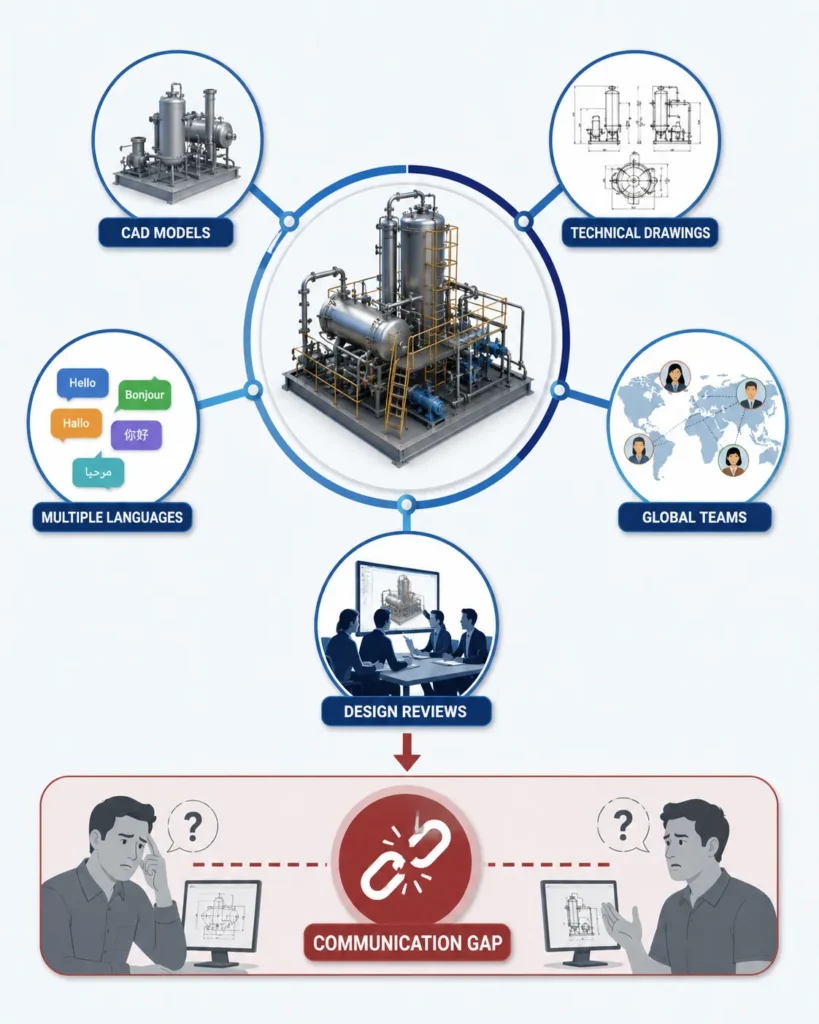
Engineering teams often rely on 3D CAD models, technical drawings, P&IDs, and documentation. While these engineering deliverables provide precise design information, they often require technical expertise to interpret effectively. A procurement manager, project owner, investor, maintenance team, or overseas client may struggle to understand how an industrial system actually works simply by reviewing engineering drawings.
This communication gap frequently results in:
- Extended design review cycles
- Multiple clarification meetings
- Delayed approvals
- Incorrect expectations
- Increased project risk
- Costly revisions during manufacturing or installation
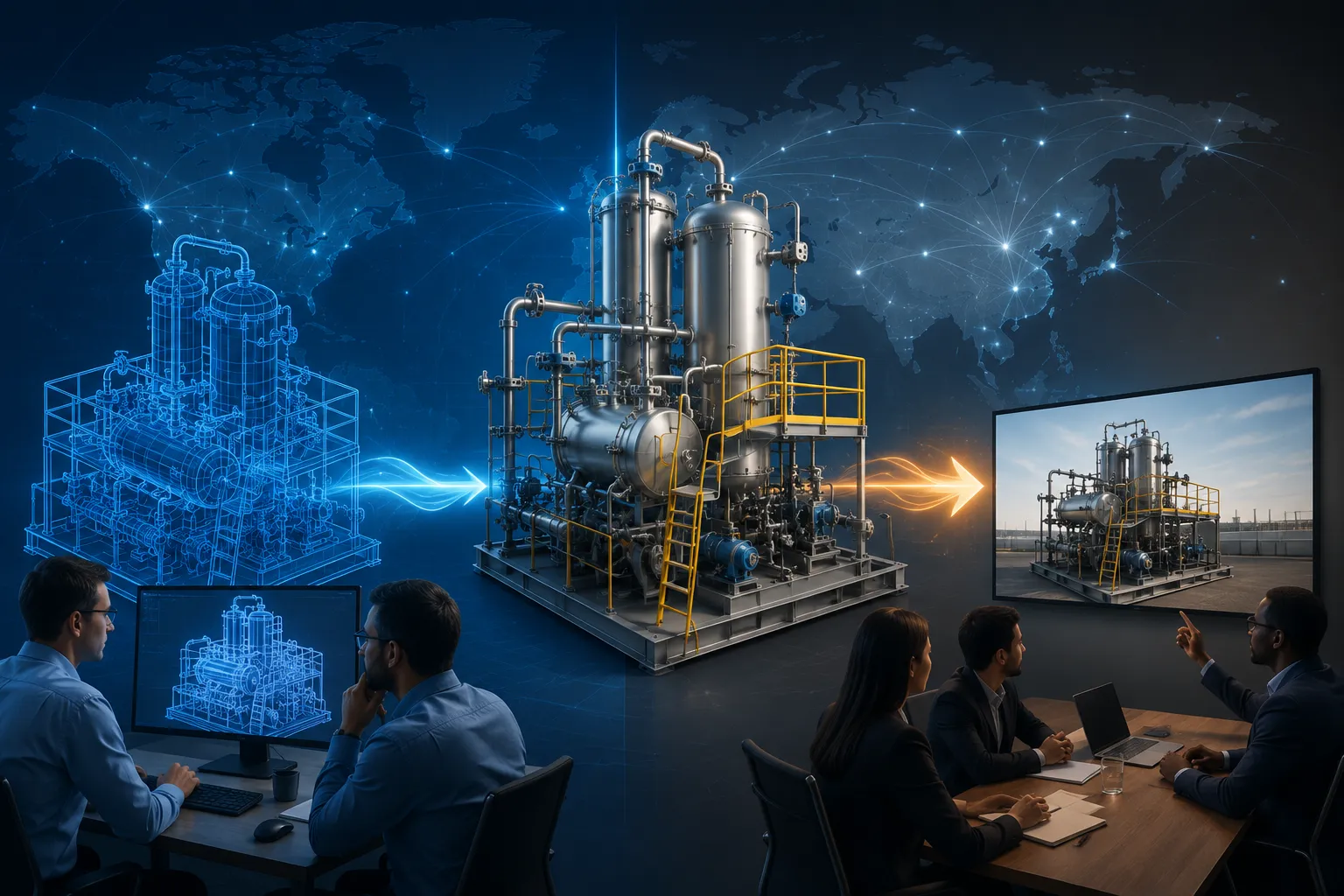
Process equipment animation solves this challenge by transforming engineering data into clear visual communication. Instead of asking stakeholders to interpret technical drawings, animations demonstrate how equipment operates, how components interact, and how an entire process functions.
At Immersiv Techsphere, industrial animations are developed directly from engineering CAD models, enabling manufacturers and engineering companies to communicate complex equipment more effectively throughout the project lifecycle.
What is Process Equipment Animation?
Process equipment animation is a specialized form of industrial animation that visually explains the operation, assembly, movement, and process flow of industrial equipment using engineering-grade 3D models.
Rather than creating marketing visuals alone, engineering animations accurately represent real equipment behavior.
Typical process equipment animations include:
- Equipment operation animations
- Assembly and disassembly sequences
- Installation animations
- Maintenance procedures
- Process flow visualization
- Material movement animations
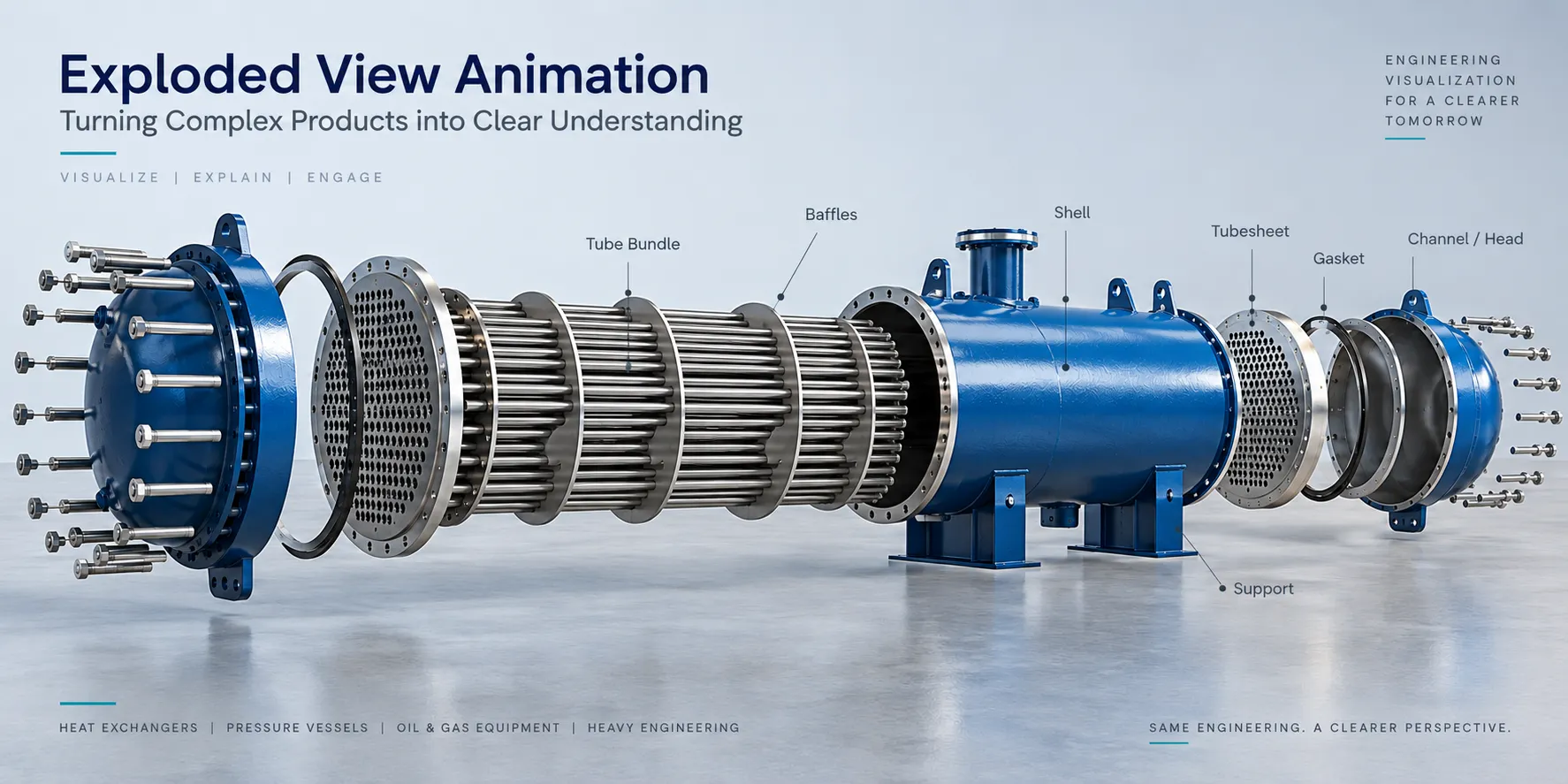
- Internal mechanism visualization
- Safety demonstrations
- Manufacturing process animations
For example, instead of providing hundreds of pages of fabrication drawings for a process skid, an animation can clearly demonstrate:
- How fluids move through the system
- Equipment operating sequence
- Valve operations
- Component interactions
- Maintenance access
- Assembly workflow
- Overall plant process
The result is faster understanding with significantly less technical interpretation.
To see how these concepts are applied in real industrial projects, explore our industrial animation portfolio, featuring process equipment, manufacturing, and engineering visualization examples.
Why Technical Communication is Difficult in Industrial Projects
1. Engineering Documentation is Highly Technical
Industrial projects involve numerous engineering documents, including:
- 3D CAD assemblies
- General arrangement drawings
- Piping layouts
- Manufacturing drawings
- BOMs
- P&IDs
- Technical specifications
While engineers understand these documents, many project stakeholders do not.
2. Modern Equipment Contains Multiple Interacting Systems
Industrial equipment rarely consists of a single machine.
Instead, it combines multiple systems such as:
- Mechanical assemblies
- Hydraulic systems
- Pneumatic systems
- Electrical components
- Automation controls
- Material handling systems
- Safety mechanisms
Explaining how these systems interact through static drawings is challenging.
3. Global Teams Have Different Technical Backgrounds
Today’s engineering projects often involve stakeholders across multiple countries.
These teams may include:
- Clients
- Consultants
- EPC contractors
- OEM manufacturers
- Investors
- Plant operators
- Maintenance personnel
Each audience requires a different level of technical understanding.
Visual communication creates a common language for everyone involved.
4. Miscommunication Delays Projects
When equipment is misunderstood, projects often experience:
- Design revisions
- Approval delays
- Procurement confusion
- Manufacturing errors
- Installation issues
- Increased project costs
Many of these problems originate from unclear communication rather than poor engineering.
How Process Equipment Animation Improves Technical Communication
1. Converts Complex Engineering into Easy-to-Understand Visuals
Industrial animation transforms engineering data into logical visual sequences.
Instead of asking viewers to interpret drawings, animations demonstrate:
- Equipment movement
- Process flow
- Operating principles
- Functional relationships
- Mechanical interactions
Complex engineering becomes significantly easier to understand.
2. Creates a Universal Communication Language
Visual communication reduces dependence on written documentation.
Whether stakeholders speak English, German, Arabic, Japanese, or another language, animations communicate equipment behavior in a consistent and intuitive way.
This is especially valuable for global engineering projects involving international teams.
3. Accelerates Design Reviews and Client Approvals
When stakeholders clearly understand equipment functionality, review cycles become shorter.
Process equipment animations help:
- Reduce clarification meetings
- Minimize revision requests
- Speed up approvals
- Improve design confidence
Faster understanding leads to faster project decisions.
4. Aligns Engineering Intent with Client Expectations
One of the biggest project risks occurs when clients approve designs without fully understanding them.
Animations allow stakeholders to visualize:
- Equipment operation
- Installation sequence
- Maintenance accessibility
- Production workflow
- User interaction
This alignment reduces misunderstandings before manufacturing begins.
5. Improves Technical Presentations
Industrial animations strengthen technical communication during:
- Client presentations
- Technical proposals
- Design reviews
- Engineering meetings
- Sales demonstrations
- Investor presentations
- Trade exhibitions
Instead of explaining complex equipment verbally, engineering teams can demonstrate it visually.
Applications of Process Equipment Animation
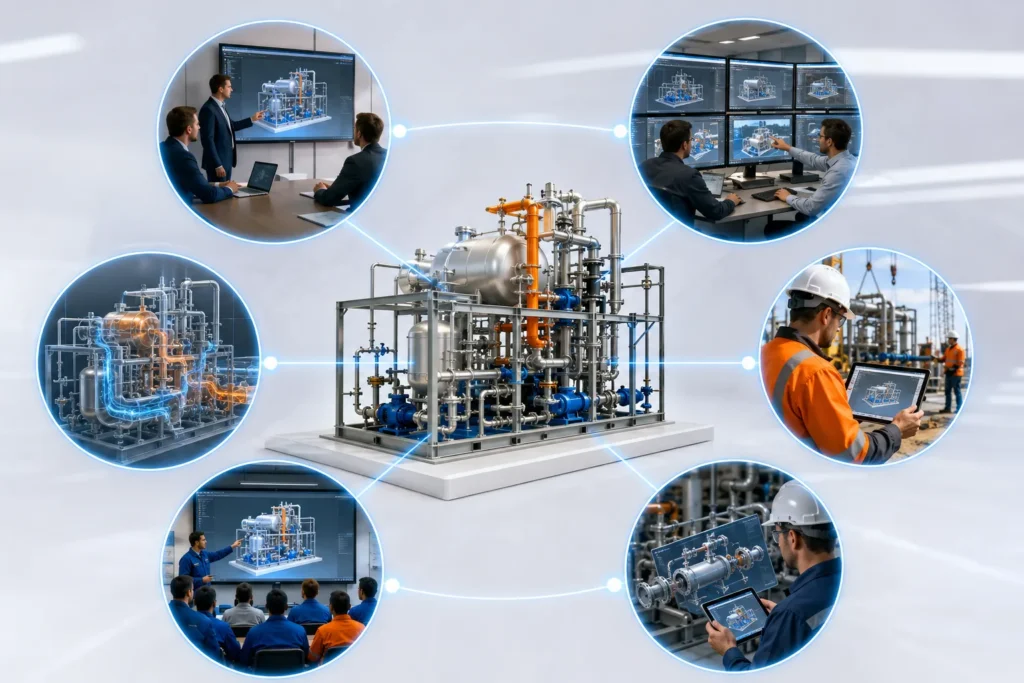
Process equipment animation supports multiple stages of the engineering lifecycle.
1. Sales and Business Development
Industrial animations help prospective customers quickly understand equipment capabilities, making technical sales presentations more engaging and easier to follow.
2. Engineering Design Reviews
Animations provide a visual representation of the final system before manufacturing begins, helping engineering teams identify issues earlier and improve collaboration.
3. Manufacturing Planning
Production teams can visualize assembly sequences, component relationships, and manufacturing workflows before fabrication starts.
4. Installation Planning
Installation animations demonstrate equipment positioning, assembly order, lifting sequences, and commissioning workflows.
5. Operator Training
Animations allow operators to understand equipment functionality before working with the actual machine, reducing learning time and improving operational readiness.
6. Maintenance Training
Maintenance teams can visualize internal mechanisms, disassembly procedures, and service sequences without relying solely on manuals.
7. Safety Communication
Industrial animation can demonstrate safe operating procedures, hazard zones, lockout/tagout sequences, and emergency response scenarios in a clear visual format.
Industries That Benefit from Process Equipment Animation
Process equipment animation is valuable across many industrial sectors, including:
- Oil and Gas
- Chemical Processing
- Water and Wastewater Treatment
- Pharmaceutical Manufacturing
- Food Processing
- Power Generation
- Mining and Minerals
- Cement Plants
- Material Handling Systems
- Heavy Machinery
- Industrial Automation
- Manufacturing Equipment
- Process Plants
- EPC Projects
Why CAD-Based Animation Improves Accuracy
The effectiveness of industrial animation depends on engineering accuracy.
Animations developed directly from CAD models offer several advantages:
- Accurate equipment geometry
- Real assembly relationships
- Correct component positioning
- Authentic equipment motion
- Realistic installation sequences
- Consistent engineering data
Because the animation reflects the actual design, stakeholders gain a more reliable understanding of the final equipment.
At Immersiv Techsphere, CAD-driven industrial animation workflows ensure that product visualization accurately represents engineering intent while improving communication throughout the project lifecycle.
Best Practices for Effective Process Equipment Animation
To maximize technical communication, engineering animations should:
- Be developed from approved CAD models.
- Focus on explaining equipment functionality rather than adding unnecessary visual effects.
- Break complex operations into logical, step-by-step sequences.
- Highlight critical components and process flows.
- Include labels and callouts where appropriate.
- Match the target audience’s technical knowledge.
- Maintain engineering accuracy throughout the animation.
Well-structured animations improve understanding while reducing ambiguity during project discussions.
Frequently Asked Questions
Process equipment animation is a 3D engineering visualization that explains how industrial equipment operates, is assembled, installed or maintained using accurate CAD-based models.
It converts complex engineering information into clear visual content, making it easier for clients, operators, suppliers, and project teams to understand equipment functionality without relying solely on technical drawings.
Industrial animation services are commonly used by equipment manufacturers, EPC companies, engineering consultants, process industries, OEMs, automation companies, and industrial machinery manufacturers.
Yes. By improving understanding during design reviews and client presentations, industrial animations help reduce miscommunication, minimize revisions, and accelerate approvals.
Yes. Professional engineering animations are typically developed using existing CAD data to ensure accurate geometry, component relationships, and equipment behavior.
Conclusion
In industrial engineering, successful projects depend not only on sound design but also on effective technical communication. As equipment becomes more advanced and project teams become increasingly global, the ability to clearly explain complex systems is essential.
Process equipment animation bridges the gap between engineering data and stakeholder understanding by supporting engineering visualization best practices that improve collaboration throughout design, manufacturing, installation and training. CAD-driven visualizations simplify complex equipment, reduce communication gaps, accelerate approvals, and help stakeholders make informed decisions throughout the engineering project lifecycle.
At Immersiv Techsphere, our industrial animation services combine engineering accuracy with clear visual storytelling to help manufacturers, EPC companies, and industrial engineering teams communicate complex equipment with confidence. Whether the objective is client presentations, design reviews, installation planning, training, or process visualization, CAD-driven animations make technical communication more effective and easier to understand.
Have a Project in Mind?
Need help with 3D animation, industrial visualization, HSE training animation, or product visualization? Tell us about your project and our team will get back to you.