

Table of Contents
Introduction
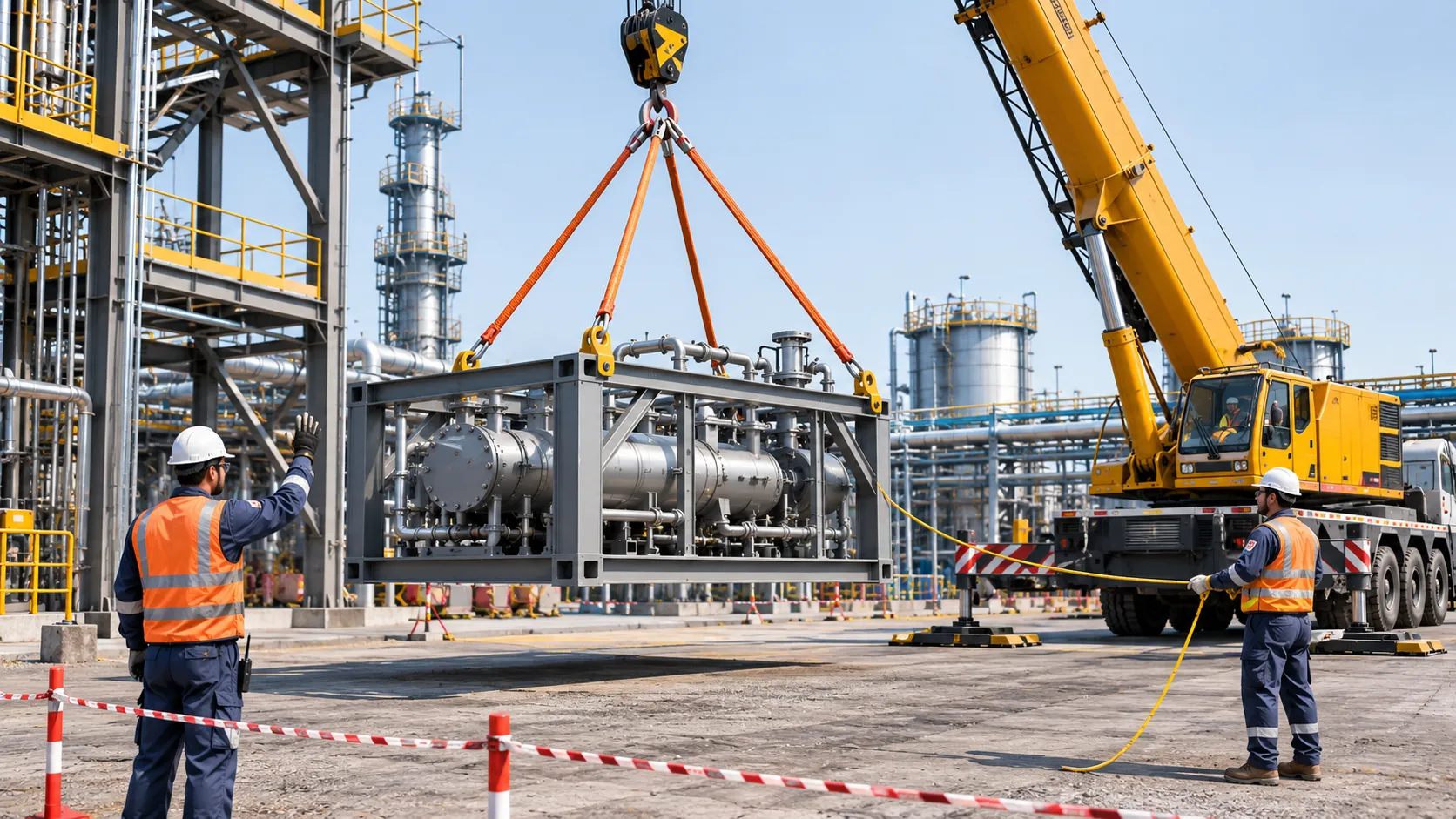
Crane lifting operations are a routine part of many industrial activities. From moving heavy machinery and structural steel to handling equipment in manufacturing plants, construction sites and oil and gas facilities, cranes help move loads that would otherwise be difficult to handle.
But every lifting operation involves more than just operating a crane.
The load must be properly assessed, rigging equipment must be selected correctly, the lifting path must be planned, and everyone involved must understand their responsibilities. Even a small mistake, such as an incorrectly attached sling, an uncontrolled load swing or a missed hand signal, can create a serious workplace hazard.
This is why crane lifting and rigging safety requires proper planning, coordination and hazard awareness.
Traditional safety instructions and toolbox talks explain the rules, but workers may find it difficult to understand how lifting hazards develop in real working conditions. This is where 3D EHS animation can make a difference by visualizing load movement, rigging failures, suspended-load hazards and communication breakdowns before workers encounter them on-site.
In this article, we explore common crane lifting hazards, load-control challenges, rigging safety practices and how 3D safety animation can improve lifting operation training.
Understanding Crane Lifting and Rigging Operations
Crane lifting operations involve several interconnected activities, including load preparation, rigging, lifting, movement, positioning and lowering.
Each stage requires coordination between different personnel, such as:
- Crane Operator: Operates the crane and controls lifting and load movement.
- Rigger: Selects, inspects and attaches the appropriate lifting accessories to the load.
- Signal Person: Communicates lifting instructions to the crane operator using approved hand signals or communication devices.
- Lifting Supervisor: Oversees the lifting operation and ensures that the approved lifting plan is followed.
- EHS Personnel: Support hazard identification, risk assessment and implementation of safety procedures.
The exact responsibilities depend on the lifting plan, equipment, site procedures and applicable regulations.
A lifting operation is only as safe as the coordination between these activities. If one person misunderstands the load condition, lifting direction or movement instruction, the entire operation can be affected.
For example, a crane operator may begin lifting while a rigger is still adjusting the sling position. Similarly, a signal person may lose visibility of the load but continue giving instructions.
These situations demonstrate why communication and role clarity are essential in crane lifting safety.
Common Crane Lifting and Rigging Hazards
Crane-related incidents can develop from equipment failure, improper rigging, environmental conditions or human error. Understanding these hazards helps workers identify unsafe conditions before lifting begins.
A. Incorrect Sling Selection and Rigging Configuration
Selecting the wrong sling type or configuration can compromise the stability of a lifted load.
Different lifting applications may require wire rope slings, chain slings or synthetic web slings. Each has specific working load limits, inspection requirements and application restrictions.
Common rigging-related problems include:
- Using slings with insufficient rated capacity.
- Incorrect sling angle calculations.
- Damaged or worn lifting accessories.
- Improper attachment to lifting points.
- Uneven load distribution between sling legs.
- Using unsuitable shackles, hooks or connecting hardware.
For example, when the angle between sling legs increases from the vertical, the tension in each sling leg increases for the same supported load. If the rigging arrangement is not evaluated correctly, individual sling components may become overloaded.
A pre-lift inspection should verify the condition, identification, rated capacity and suitability of all lifting accessories. The rigging arrangement must also be checked against the load characteristics and approved lifting plan.

B. Uncontrolled Load Swing
A suspended load can start swinging when the crane accelerates, decelerates, rotates or moves the load too quickly.
External factors such as wind, sudden movements and incorrect lifting techniques can increase load instability.
Uncontrolled load movement can result in:
- Collision with nearby structures or equipment.
- Workers being struck by the swinging load.
- Damage to machinery and surrounding installations.
- Loss of load positioning control.
- Increased tension or shock loading in lifting accessories.
For example, when a crane operator suddenly stops a travelling movement, the suspended load may continue moving due to inertia. This creates a swinging motion that can bring the load into contact with nearby structures.
Workers should understand that a suspended load does not always move exactly with the crane. Proper movement control, adequate clearance and effective communication are necessary throughout the operation.
C. Working Under Suspended Loads
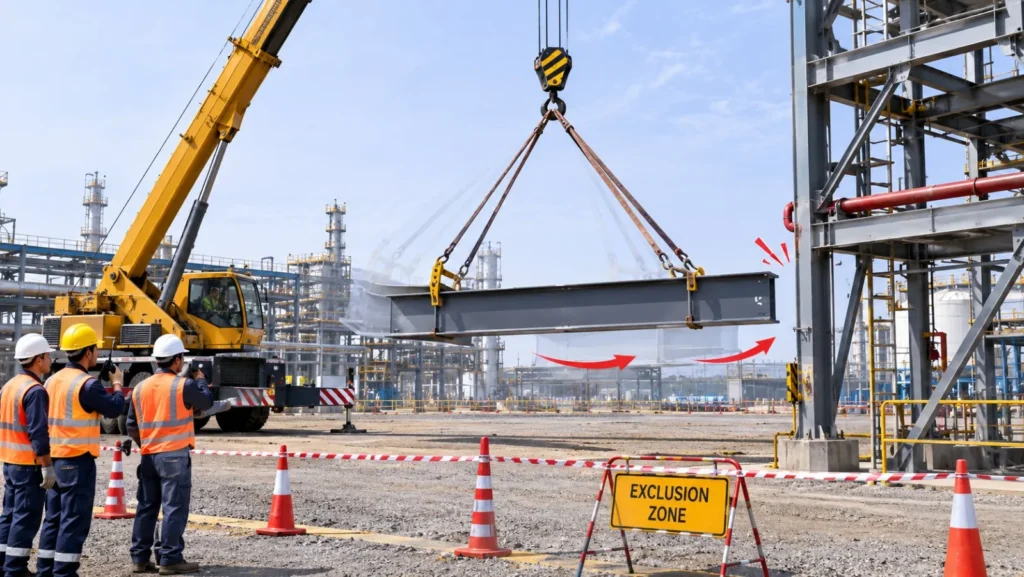
One of the most critical hazards in crane lifting operations is allowing personnel to enter the danger zone beneath a suspended load.
A dropped load, rigging failure or unexpected movement can result in severe injuries or fatalities.
Common unsafe situations include:
- Workers walking beneath suspended materials.
- Personnel standing between a suspended load and a fixed structure.
- Workers attempting to manually stabilize an unstable load from an unsafe position.
- Uncontrolled access to the lifting area.
A clearly defined exclusion zone should be established around the lifting area, with access restricted to authorized personnel.
Training should demonstrate why workers must never position themselves beneath suspended loads and how to identify safe standing positions during lifting activities.
D. Poor Load Weight Assessment and Centre of Gravity
Before lifting, the load weight and centre of gravity must be understood.
An incorrect weight estimate can result in crane overload or an unsuitable rigging arrangement.
Similarly, if the centre of gravity is not aligned with the lifting arrangement, the load may tilt or rotate unexpectedly when lifted.
Consider a fabricated steel equipment assembly with an uneven weight distribution. If the lifting points are selected without considering the centre of gravity, one side may rise before the other.
This can cause:
- Unequal sling loading.
- Load tilting or rotation.
- Unexpected movement during initial lifting.
- Contact with nearby equipment.
- Damage to lifting points or components.
A controlled test lift, performed according to the approved lifting procedure, can help verify load balance and rigging stability before proceeding with the full lift.
E. Environmental and Site Conditions
Crane lifting safety also depends on the surrounding work environment.
Factors such as wind speed, ground conditions, overhead power lines, restricted visibility and nearby operations can affect lifting activities.
For example, lifting a large fabricated structure in windy conditions can create significant resistance and uncontrolled movement.
Similarly, operating a mobile crane on unsuitable or inadequately assessed ground can introduce stability risks.
Before lifting begins, site conditions should be assessed against the crane manufacturer’s operating limitations and the approved lifting plan.
Communication Risks During Crane Lifting Operations
Communication is one of the most important parts of a safe lifting operation. The crane operator, rigger and signal person must work together to ensure that every movement is understood.
However, industrial work environments often create communication challenges.
A. Poor Visibility Between Operator and Signal Person
The crane operator may not have a direct view of the load, landing area or rigging team.
This is common when lifting materials behind structures, inside industrial plants or across large construction sites.
In such situations, a designated signal person should provide clear instructions using an appropriate communication method.
Depending on site conditions, this may include:
- Standard crane hand signals.
- Two-way radio communication.
- Approved audible signals.
- Other suitable communication systems.
B. Conflicting or Unclear Hand Signals
Using incorrect or inconsistent hand signals can result in unintended crane movement.
For example, if the operator misunderstands a signal to lower the load as a signal to raise it, the load may move in the wrong direction.
The lifting team should agree on the communication method and signals before starting the operation.
OSHA’s crane standard, 29 CFR 1926.1419, addresses signal-person requirements, communication methods and the need to stop operations if communication is interrupted.

C. Multiple People Giving Instructions
When several workers communicate with the crane operator simultaneously, conflicting instructions can create confusion.
A clearly designated signal person should normally coordinate crane movements, with the applicable exception for stop or emergency-stop signals.
Importantly, anyone who identifies an immediate safety concern should be able to communicate a stop signal.
D. Communication Failure During Critical Lifting Stages
Certain lifting stages require additional attention:
- Initial lifting and load balancing.
- Crane rotation and horizontal movement.
- Passing through restricted areas.
- Positioning loads near structures.
- Final lowering and placement.
If radio communication is interrupted or the operator cannot understand the signal person, the operation should be stopped safely until communication is restored.
A practical safety principle: If a signal is unclear, the crane should not continue moving the load based on assumptions.
Essential Crane Lifting and Rigging Safety Practices
A safe lifting operation starts before the crane hook leaves the ground. The following practices help reduce the likelihood of equipment failure, load instability and communication-related incidents.
1. Prepare and Review the Lifting Plan
Every lifting operation should be planned according to its complexity and associated risks.
The lifting plan should consider:
- Load weight and dimensions.
- Centre of gravity and lifting points.
- Crane capacity and configuration.
- Lifting accessories and rigging arrangement.
- Ground conditions and crane positioning.
- Load travel path and landing location.
- Environmental conditions.
- Exclusion zones and personnel positioning.
- Communication arrangements and emergency procedures.
Complex or high-risk lifts may require a detailed written lifting plan prepared by a suitably competent person.
2. Inspect Rigging Equipment Before Use
Inspect all lifting accessories before use and follow the manufacturer’s requirements and applicable inspection procedures.
Check for:
- Broken or damaged wire rope strands.
- Deformed hooks and shackles.
- Cuts, tears or abrasion in synthetic slings.
- Damaged stitching.
- Missing or unreadable identification tags.
- Evidence of corrosion or excessive wear.
Any equipment identified as defective should be removed from service according to the site’s equipment-control procedure.
3. Verify Load Capacity and Sling Configuration
The working load limit (WLL) of lifting accessories must be suitable for the actual lifting configuration.
The rigger should consider the sling type, sling angle, number of supporting legs, attachment arrangement and load distribution.
Never assume that a multi-leg sling arrangement automatically distributes the load equally between all legs.
4. Establish an Exclusion Zone
Define the lifting area and restrict access to unauthorized personnel.
Workers should remain clear of suspended loads and avoid standing in potential crush zones between the load and fixed objects.
The load route should be selected to minimize exposure of personnel to suspended loads wherever reasonably practicable.
5. Conduct a Pre-Lift Briefing
Before lifting begins, all team members should understand:
- The lifting sequence.
- Individual responsibilities.
- Communication methods and hand signals.
- Emergency stop procedures.
- Restricted access areas.
- Potential obstructions and hazards.
This briefing helps ensure that everyone involved understands the same lifting procedure.
6. Perform a Controlled Test Lift
Where required by the lifting procedure, raise the load a short distance to verify its balance, rigging arrangement and stability.
The team should check for unexpected tilting, shifting, sling movement or other abnormal conditions before proceeding.
If the load is unstable, lower it safely and correct the rigging arrangement before continuing.
7. Maintain Safe Load Movement
Crane movements should be controlled and consistent with the crane manufacturer’s instructions and lifting plan.
Avoid sudden acceleration, abrupt stopping and unnecessary load movement.
Tag lines may be used where appropriate to help control load orientation and rotation. They should be handled from safe positions, with workers remaining clear of potential entanglement and crush hazards.
How 3D EHS Animation Helps Visualize Crane Lifting Hazards
Explaining crane lifting hazards through written procedures and static safety posters is useful, but it may not always communicate the actual sequence of events that can lead to an incident.
For example, workers may know that an incorrect sling angle is dangerous, but understanding how it increases sling tension can be more difficult without a visual explanation.
Similarly, a written instruction may say that workers should maintain a safe distance from suspended loads, but it may not clearly demonstrate how a swinging load can create a crush hazard.
3D EHS animation helps bridge this gap by converting complex lifting procedures and safety risks into realistic visual scenarios.
Here are some practical applications.
A. Visualizing Incorrect Rigging Practices
A 3D safety animation can demonstrate the difference between correct and incorrect rigging configurations.
The animation can show:
- Incorrect sling attachment.
- Improper sling angles.
- Uneven load distribution.
- Damaged lifting accessories.
- Incorrect hook and shackle positioning.
By showing both unsafe and safe practices, workers can better understand why specific rigging procedures must be followed.
B. Demonstrating Uncontrolled Load Movement
A realistic 3D animation can recreate a situation where a suspended load starts swinging because of sudden crane movement or an incorrect lifting sequence.
The sequence can show how the load approaches nearby structures, creates a collision risk and puts workers in danger.
The animation can then demonstrate the appropriate preventive measures, including controlled crane movement, exclusion zones and suitable load-control techniques.
C. Recreating Communication Failure Scenarios
Communication-related incidents are particularly suitable for visual training.
For example, a 3D animation can demonstrate:
- A signal person standing outside the operator’s line of sight.
- The crane operator receiving an unclear instruction.
- The load moving in an unintended direction.
- A worker entering the potential danger zone.
- The correct response through a stop signal and safe lifting procedure.
This helps employees understand that communication is not just an administrative requirement. It is an essential part of controlling physical hazards.
D. Showing Suspended Load and Crush Hazards
3D animation can visually demonstrate how a suspended load can create danger even when the crane and rigging equipment appear to be functioning normally.
A scenario may include a worker standing between a moving steel component and a fixed structure.
The animation can show the load’s movement, the worker’s position and the resulting crush hazard, followed by the correct exclusion-zone arrangement.
E. Creating Site-Specific Lifting Safety Training
Every industrial facility has different lifting requirements.
A manufacturing plant may regularly lift machine assemblies, while an oil and gas facility may handle heavy equipment, pressure vessels, piping modules and structural components.
Using 3D modelling and animation, training scenarios can be developed around actual equipment, work environments and lifting procedures.
This makes the training content more relevant to the workers who will perform those activities.
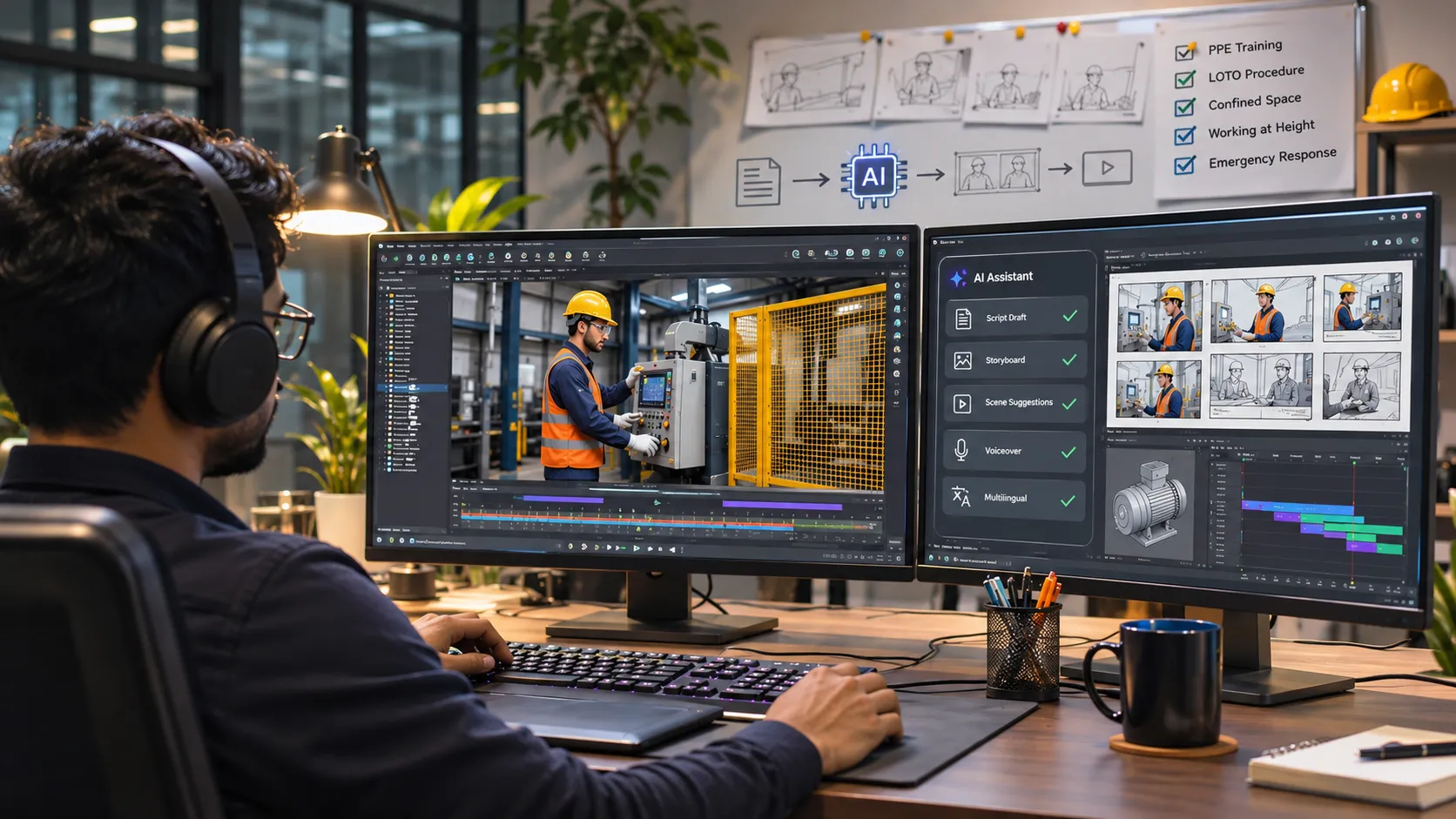
At Immersiv Techsphere, we develop 3D EHS animations, industrial safety animations and technical training videos to help organizations explain complex industrial operations, workplace hazards and safe operating procedures through visual communication.
Explore our Immersiv Techsphere website to learn more about our engineering and animation capabilities.
Developing an Effective Crane Lifting Safety Animation
A useful crane lifting safety animation should be based on the actual lifting procedure, not just a visually impressive crane sequence.
The development process should begin with understanding the operation and identifying the hazards that need to be communicated.
A typical workflow includes:
Step 1: Understand the Lifting Operation
Review the lifting plan, SOP, risk assessment, equipment details and site-specific requirements.
Step 2: Identify Critical Hazards
Identify possible rigging failures, load instability, communication errors, collision risks and unsafe personnel positioning.
Step 3: Develop the Storyboard
Convert the identified hazards into a logical visual sequence, including the unsafe activity, possible consequences and recommended safe practices.
Step 4: Create 3D Models and Environments
Develop the crane, lifting accessories, load, workers, PPE and surrounding industrial environment.
Step 5: Animate the Safety Scenarios
Show crane movement, rigging configurations, load swing, communication sequences and safe working practices.
Step 6: Review Technical and Safety Accuracy
The animation should be reviewed by relevant engineering and EHS personnel to ensure that equipment movement, rigging arrangements and safety instructions are consistent with approved procedures.
Step 7: Use the Animation in Training
The final video can be incorporated into toolbox talks, contractor induction, lifting safety awareness sessions, refresher training and digital learning modules.
Crane Lifting Safety Checklist Before Starting an Operation
A pre-lift checklist helps teams verify that the essential safety requirements have been addressed.
| Safety Check | What to Verify |
|---|---|
| Lifting plan | Approved and understood by the lifting team |
| Load assessment | Weight, dimensions and centre of gravity verified |
| Crane capacity | Suitable for the planned configuration and lift |
| Rigging equipment | Correct type, capacity and condition |
| Lifting points | Suitable and verified for the load |
| Signal person | Designated and competent where required |
| Communication | Signals and communication methods agreed |
| Exclusion zone | Established and access controlled |
| Site conditions | Ground, wind, visibility and obstructions assessed |
| Pre-lift briefing | Roles, sequence and emergency actions discussed |
This checklist is a general training aid, not a replacement for a site-specific lifting plan, risk assessment, statutory requirements or equipment manufacturer’s instructions.
Who Can Benefit from Crane Lifting Safety Animation?
Crane lifting and rigging safety training is relevant to several industries where heavy materials and equipment are regularly handled.
| Industry | Potential Training Applications |
|---|---|
| Oil & Gas | Lifting pressure vessels, piping modules, skids and heavy equipment |
| Construction | Structural steel erection, precast lifting and material handling |
| Manufacturing | Machine installation, equipment movement and assembly handling |
| Power Plants | Turbine components, generators and maintenance lifting |
| Shipbuilding | Heavy component handling and equipment installation |
| Warehousing & Logistics | Overhead crane operations and heavy material handling |
Organizations can use 3D EHS animation for employee induction, contractor safety training, equipment-specific training, toolbox talks and refresher programs.
Conclusion: Making Crane Lifting Safety Easier to Understand
Crane lifting and rigging safety depends on several interconnected factors: proper planning, correct equipment selection, load stability, competent personnel and effective communication.
A lifting operation can become dangerous when even one of these elements is overlooked. Incorrect rigging, uncontrolled load movement, poor visibility or unclear signals can quickly turn a routine activity into a serious workplace incident.
Organizations should therefore go beyond simply communicating safety rules. Workers need to understand how hazards develop, what can go wrong and how to respond safely.
3D EHS animation provides a practical way to demonstrate these situations through realistic industrial scenarios. By visualizing rigging errors, suspended-load hazards, communication failures and correct lifting practices, organizations can make safety training more engaging and easier to understand.
At Immersiv Techsphere, we create customized 3D EHS safety animations and industrial training videos that help organizations communicate workplace hazards, operating procedures and safe work practices.
If your organization needs visual training for crane operations, rigging activities or other industrial safety procedures, explore our capabilities at Immersiv Techsphere.
Frequently Asked Questions (FAQs)
Crane lifting and rigging safety involves planning and controlling lifting activities to prevent load drops, equipment failures, uncontrolled movement and worker injuries. It includes correct crane selection, rigging equipment inspection, load assessment, communication and personnel safety.
Common hazards include incorrect sling selection, overloaded lifting accessories, improper rigging configurations, uncontrolled load swing, falling loads, working beneath suspended loads, crane instability and communication failures.
Communication ensures that the crane operator, rigger and signal person coordinate every lifting movement. Unclear hand signals, interrupted radio communication or multiple conflicting instructions can result in unintended crane movement and serious incidents.
A signal person communicates movement instructions to the crane operator using approved hand signals, voice communication or other suitable methods. The signal person helps coordinate lifting activities, particularly when the operator cannot clearly see the load or its travel path.
3D EHS animation demonstrates lifting hazards through realistic visual scenarios. It can show incorrect rigging, load swing, suspended-load risks, communication breakdowns and correct safety procedures, helping workers understand hazards before performing actual lifting activities.
Yes. Customized 3D safety animations can be developed using industry-specific equipment, lifting procedures, workplace layouts and operational scenarios. They can support training requirements in oil and gas, construction, manufacturing, power generation and other industrial sectors.
Applicable requirements depend on the country, industry, equipment and type of lifting operation. Relevant references include OSHA’s crane and derrick construction standards, the UK’s LOLER 1998 regulations, HSE lifting-operation guidance and applicable national standards and manufacturer instructions.
Have a Project in Mind?
Need help with 3D animation, industrial visualization, HSE training animation, or product visualization? Tell us about your project and our team will get back to you.